How Humidity in Southeast Asia Affects Solid Wood Furniture: A Practical Guide for Singapore Homes
I still remember the afternoon I spent at a 4-room HDB flat in Bedok last month. The owner had bought a beautiful American light luxury dining table online, and within six weeks, two of the leaves had begun to cup upward by nearly 2 mm. The home sat on the 10th level, the windows were closed because of afternoon haze, and the indoor humidity reading on my hygrometer was 78%. That single visit reminded me how unforgiving the climate of Singapore can be for homeowners investing in solid wood — whether a bed frame with a tall headboard, a six-seater dining table, or a 1.8-metre wardrobe. This article explains, with concrete numbers, what humidity actually does to wood and how to buy and care for pieces that will last in Tampines, Punggol, Bedok, and beyond.
Why is Singapore's indoor humidity so hostile to solid wood furniture?
Singapore's outdoor relative humidity (RH) averages 70–80% across the year, and indoor RH in air-conditioned flats often cycles between 45% and 70% as compressors switch on and off. Solid wood is hygroscopic — it absorbs and releases moisture until it reaches an equilibrium moisture content (EMC) with the surrounding air. When EMC swings across a 25-point range, a 2-metre-long oak tabletop can move 4–6 mm in size, which is enough to open joints, lift veneer, and bow a headboard panel away from its frame. Air-conditioned Singapore homes usually settle between 55% and 65% RH, which is workable, but corners near kitchen通风口, balconies, and unventilated back walls in HDB corridors can sit at 70%+ for hours every day. That sustained 70%+ is where the damage starts.
What does humidity actually do to a solid wood sofa, bed frame, or wardrobe?
Wood responds to moisture in five predictable ways. Knowing them helps you spot trouble early.
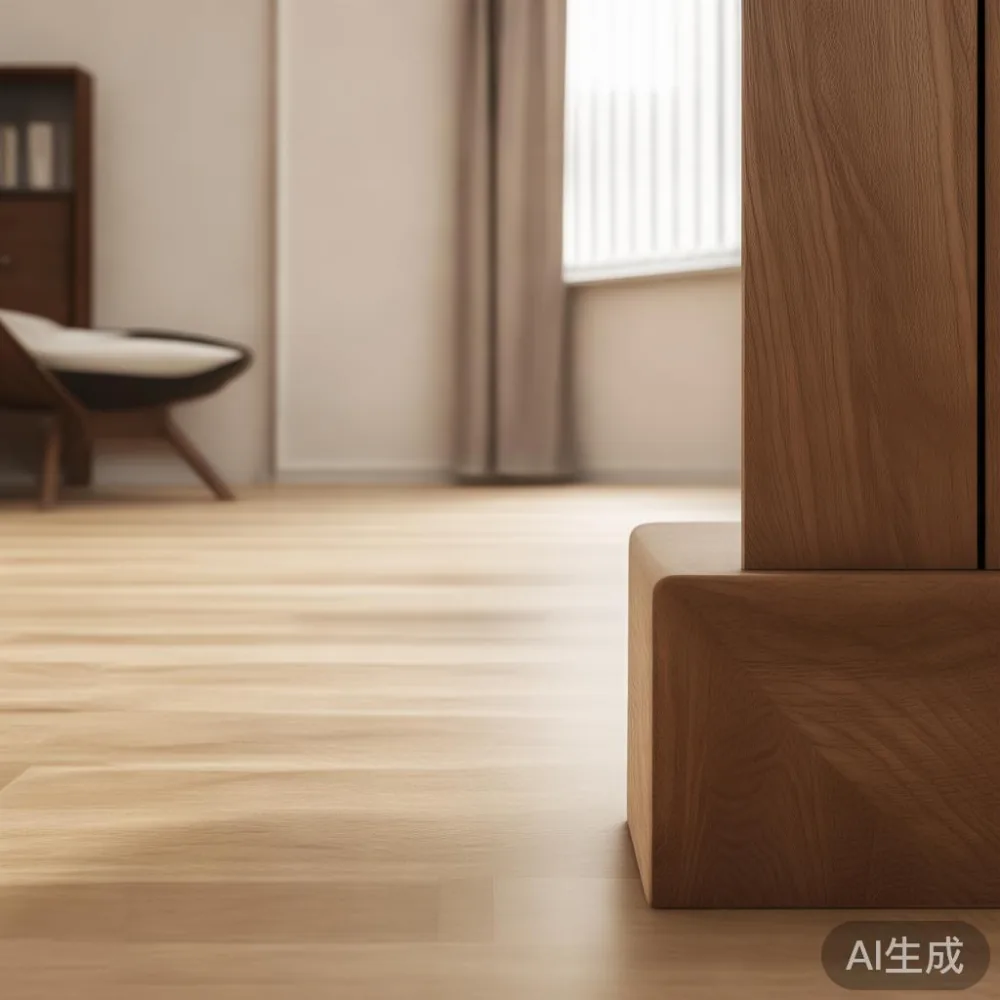
- Expansion and contraction: Tangential movement is roughly twice radial movement, meaning a 200 cm oak plank can change width by 4–6 mm across a 20-point RH swing.
- Cupping and crowning: Uneven moisture release across a wide board — common on a dining table leaf or a marble table top with a wood base — makes edges curl. The 2 mm cup I measured in Bedok is on the mild end; I have seen 5 mm cupping on imported walnut tables within four months.
- Joint failure: Mortise and tenon joints, dovetails, and bed-frame brackets all rely on tight glue lines. Above 70% RH, the glue softens and the joint slips, producing the tiny gaps you can fit a 0.3 mm shim into.
- Mould and mildew: Surface mould can appear within 48–72 hours above 75% RH, especially on unfinished undersides of nightstands or inside wardrobe backs that sit against HDB walls.
- Finish clouding: Polyurethane and lacquer blush when moisture gets underneath, leaving a milky haze that no amount of buffing will remove without refinishing.
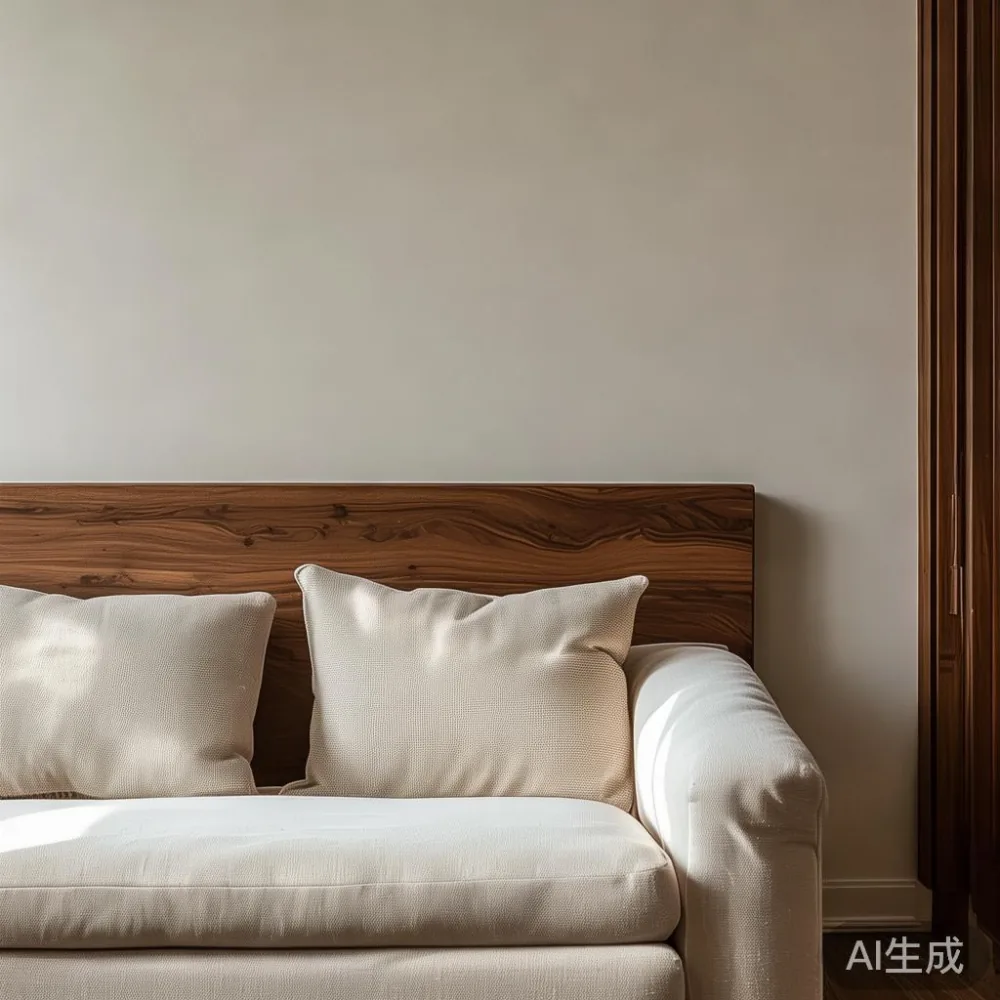
A solid wood bed frame with a built-in headboard is particularly exposed because the headboard is the largest vertical panel and is often pushed against a feature wall that sweats during the monsoon months of November through January.
How is moisture content measured, and what number should I look for?
A pin or pinless moisture meter gives a reading as a percentage. For Singapore homes, kiln-dried solid wood should arrive at 8–12% moisture content (MC). Anything above 14% is a red flag, because that wood will shrink once placed in a 55% RH room, and the shrinkage will show up at the joints within the first two months. Reputable Foshan factories, including MIDHILL, typically kiln-dry to 10–12% MC before assembly and then acclimatise stock in shaded, fan-ventilated warehouses for 14–21 days before export crating. When my colleague visited the MIDHILL workshop last quarter, he noted three dehumidifiers running inside the packing hall, holding RH at 50% — exactly the conditions the wood was finished in.
What is the difference between Italian light luxury bed frame and modern furniture?
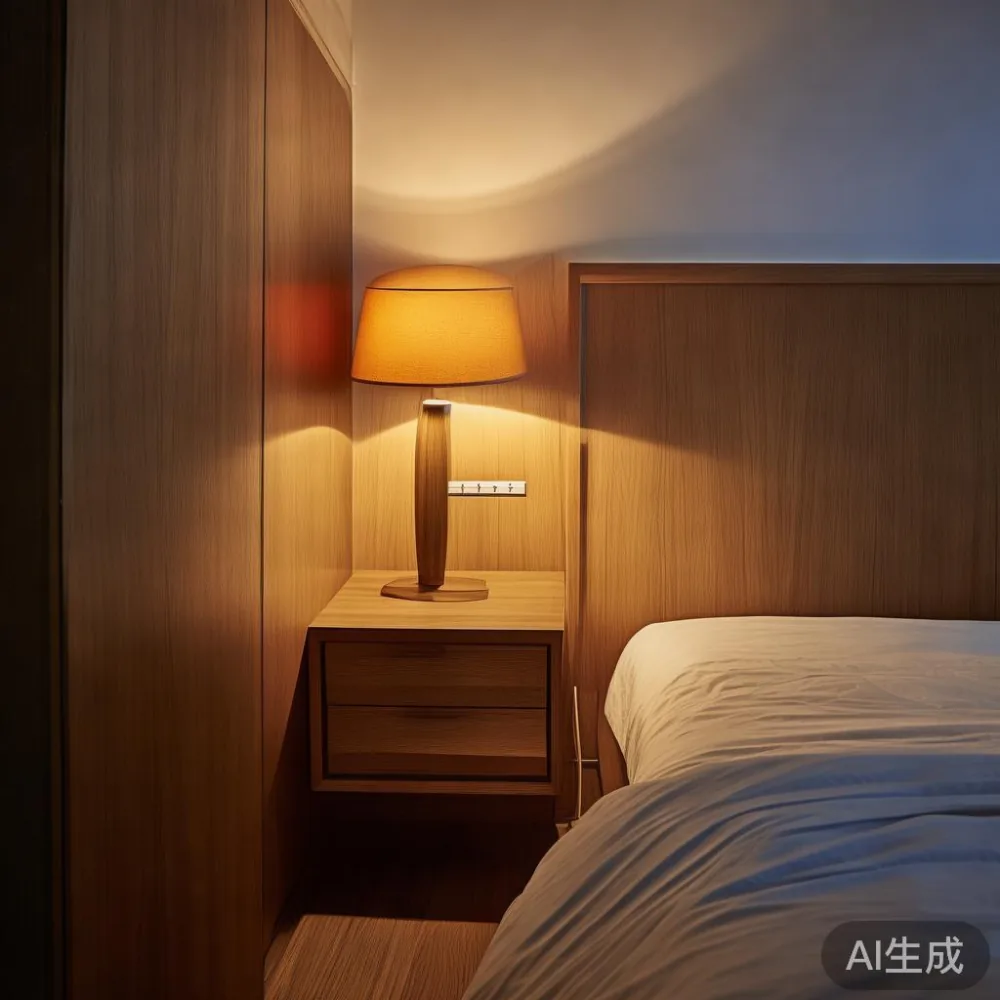
An Italian light luxury bed frame is a modern furniture piece built around restrained proportions, hand-rubbed open-grain surfaces, and solid hardwoods such as European ash or walnut, with a headboard usually upholstered in plain-weave linen or top-grain leather and finished with a 1.2–1.6 mm deep pore-filling lacquer. Compared with a generic flat-pack modern bed frame — which often pairs an engineered-wood headboard with paper-laminate panels and staples, weighs 35–45 kg for a queen, and is shipped in three flat boxes — the Italian light luxury version uses kiln-dried solid hardwood, weighs 70–95 kg for a queen, ships in one or two crate-protected cartons, and carries a written structural warranty of 8–10 years. The construction difference shows up in how each frame reacts to a Singapore HDB bedroom swinging between 55% and 75% RH: the laminate piece shows bubbling and edge peel within 6–12 months, while the solid-wood headboard expands and contracts as one piece and remains flat.
What should I check before buying any solid wood piece for an HDB or condo?
A short pre-purchase checklist saves hundreds of SGD in refinishing later. Run through these seven points in the showroom or warehouse:
- Ask for the kiln-dried MC reading. 8–12% is the safe band. Anything above 14% walk away.
- Knock on the underside. A dull thud means hollow panels or plywood cores; a clean tap indicates solid hardwood.
- Lift the corner. A solid wood 2-metre dining table in ash typically weighs 38–48 kg. A marble table of the same size weighs 75–95 kg. Lighter usually means veneer over MDF.
- Inspect the joinery. Look for dovetails on drawers of a nightstand, mortise-and-tenon on bed-frame brackets, and no visible staples.
- Smell the finish. A strong solvent smell means the lacquer is still off-gassing and may not have fully cured. Wait 14–21 days before placing it against a feature surface.
- Check the underside finish. If the underside of a wardrobe top or a bed-frame headboard is raw wood, reject the piece. Unfinished undersides wick moisture straight from the wall.
- Confirm warranty terms in writing. A 10-year structural warranty, lifetime refinishing service, and 14-day returns window are the benchmarks a serious exporter should meet. Shipping at
How do I get a king-size headboard through a Singapore HDB door and lift?
This is the practical question most showroom staff forget to ask. HDB corridor doors are 91 cm wide and lift openings are roughly 80 cm wide by 200 cm deep. A king-size headboard of 180 cm wide by 120 cm tall will not fit flat through either, so order it split or confirm the supplier knocks it down into two panels of 90 cm each. At MIDHILL, for example, headboards above 160 cm wide are split into two with two alignment dowels and one concealed steel bracket, and reassembly takes about 15 minutes with an Allen key. If you are buying a tall upholstered headboard for a French provincial corner sofa for HDB flat configuration, the same split-delivery rule applies to the sofa's 95 cm wide by 75 cm tall side wings.
Which wood species hold up best in Singapore's climate?
Not all hardwoods behave the same. The table below ranks common species by tangential movement — lower is more stable — and gives an indicative retail price per cubic foot in SGD for reference.
| Species | Tangential movement (%) | Relative stability | Approx. SGD per ft³ |
|---|---|---|---|
| Teak (Burmese / plantation) | 4.0 | Excellent | 180–240 |
| European ash | 4.2 | Very good | 95–130 |
| White oak | 4.4 | Very good | 110–150 |
| Walnut (American) | 4.8 | Good | 160–220 |
| Rubberwood | 5.2 | Acceptable | 35–55 |
| Beech | 5.6 | Marginal | 60–85 |
| Mango / acacia | 6.8 | Poor in 70%+ RH | 40–70 |
For an upholstered headboard on a solid wood bed frame, teak or European ash gives the flattest panels across the year. For a dining table that gets daily wipe-downs, the high oil content of teak resists water marks within 30 seconds of a spill, which matters in family HDBs where children eat at the table three times a day.
How should I acclimatise new furniture once it arrives in my flat?
Most warping happens in the first 21 days. Follow this routine:
- Day 1–3: Open all cartons in the room where the piece will live, run the air-conditioner at 24°C, and leave the furniture unwrapped. A reading of 55–60% RH on your hygrometer is the target.
- Day 4–7: Wipe all surfaces with a soft, dry microfibre cloth to remove packing dust, which holds moisture against the finish.
- Day 8–14: Move the bed frame, wardrobe, or nightstand into its final position but keep it 8–10 cm off any HDB wall using felt spacers, so air can move behind it.
- Day 15–21: Only after the third week should you place a mattress against the headboard or load books into the wardrobe. By this point the wood will have stabilised within 0.5% MC of the room.
How do I keep a headboard, wardrobe, or nightstand looking new for the next decade?
Three habits and one piece of hardware cover 90% of the work. First, keep indoor RH between 50% and 60% with a dehumidifier set to 55% — a 12-litre desiccant unit costs SGD 280–360 and pulls about 6–8 litres a day in a 90 m² flat. Second, dust weekly with a dry microfibre cloth, not a feather duster, because feather dusters push moisture-laden dust into the grain. Third, wax solid wood twice a year using a paste wax containing carnauba; one 200 g tin costs SGD 18–45 and treats six to ten pieces. The piece of hardware is a set of four humidity dataloggers placed at floor level near the bed frame, dining table, wardrobe, and the balcony door — at SGD 12–18 each, they pay for themselves the first time you catch a 72% spike before mould forms on a nightstand.
When is the right moment to call a professional for refinishing?
Send a piece out for refinishing the moment you see any of these signs: a milky haze on a lacquered headboard that does not buff out, mould spots larger than a 5-cent coin on a wardrobe back, black tide lines along the dining table grain, or any joint that has opened more than 1 mm. A full sand-and-refinish on a 1.8-metre dining table in Singapore costs roughly SGD 280–420 and takes 7–10 working days. Refinishing a king-size headboard runs SGD 180–260. Both firms typically include one round of return delivery within Punggol, Sengkang, Tampines, and Bedok for orders above SGD 350, and the work carries a 12-month touch-up warranty — a useful policy, since Singapore's climate tends to find the weak spot within the first monsoon after a refinish.
Where does MIDHILL fit into all of this?
Foshan-based MIDHILL has been making solid wood pieces for export since 2008 and now ships to more than fifteen markets, including Singapore. Their production lines focus on kiln-drying to 10–12% MC, hand-applied open-grain lacquers, and split-delivery headboards sized for HDB corridors. Each shipment leaves the workshop with a 10-year structural warranty, lifetime refinishing service, and 14-day return window, and shipping is free past SGD 470 to any Singapore HDB or condominium. For buyers in Tampines, Bedok, and Punggol, the practical upshot is simple: a piece that is correctly dried, properly finished, and sensibly acclimatised will outlast a decade of Singapore humidity, even when the daily RH reading touches 80% during the December monsoon.