How Southeast Asian Humidity Shapes the Solid Wood Headboard You Bring Home
I grew up in a Tampines HDB flat where my parents kept a heavy rosewood bed frame that creaked louder every monsoon season. Last month, when I toured a Punggol condo project with a furniture colleague who supplies hotel groups across Southeast Asia, the same problem showed up on every floor we walked: cupping on dining surfaces, swollen drawer rails on a wardrobe, and a hairline crack running down the headboard of a newly delivered solid wood bed frame. The culprit was not poor craftsmanship; it was moisture in the air doing exactly what moisture does to wood. Below is a field-tested guide for anyone in Singapore, Kuala Lumpur, or Jakarta weighing a European-style headboard against what the local climate actually allows.
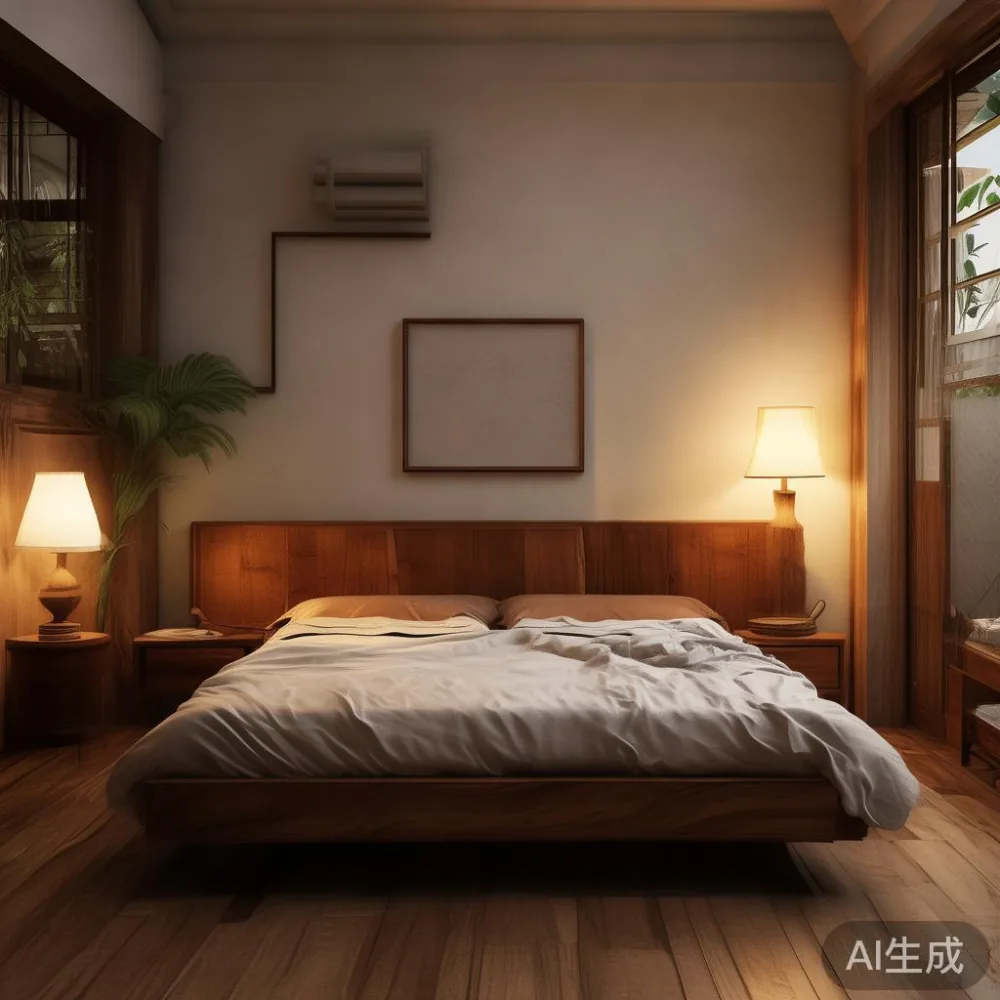
Why Southeast Asian Air Is the Hardest Test for a Solid Wood Headboard
Singapore's relative humidity sits between 70 and 85 percent for most of the year, and in Bedok or Tampines corridor flats it often reads 5 to 10 points higher than the official NEA figures because of stagnant air and lack of cross-ventilation. Wood is hygroscopic: it absorbs and releases water until it reaches equilibrium moisture content with its surroundings. A kiln-dried at 8 to 10 percent MC (the standard a Foshan workshop ships at) and placed into a 75 to 80 percent indoor environment will slowly climb toward 14 to 16 percent MC, and with that climb comes swelling across the grain, small surface checks, and the gentle cupping you sometimes see on a dining table top after the second rainy quarter. A kiln-dried headboard behaves the same way, just on a smaller, more visible canvas.
The numbers get sharper when you compare climates. A Milan showroom sits around 45 to 60 percent RH for most of the year; a Paris apartment, 50 to 65 percent. A Kuala Lumpur condo can sit at 75 to 90 percent RH for weeks at a time. That gap is exactly why Italian and French makers ship their pieces with tighter tolerances, lower factory MC, and longer acclimatisation guidance. A Chinese-made bed frame from a serious workshop in Foshan is kiln-dried to 8 to 10 percent MC, wrapped in moisture-barrier wrap, and crated for a 7 to 12 day sea voyage to Singapore. When you compare a European bed vs Italian light luxury bed, the build looks similar on paper, but the climate battle each one is engineered for is completely different.
What Humidity Actually Does to Wood, in Plain Numbers
Wood moves roughly 1 percent across the grain for every 4 percent change in MC. On a 180 cm wide headboard panel, that translates to about 2 to 4 mm of width change between a dry February afternoon and a wet November week. A 200 cm long dining table top can cup by 1 to 2 mm at the edges over a single monsoon stretch. A wardrobe door that fit perfectly in March may stick in October, then sit a hair proud in January. None of this is a defect; it is physics. What matters is whether the construction absorbs that movement gracefully.
The species matters too. White oak moves about 0.18 percent across the grain per 1 percent MC change; ash, 0.20; rubber-tungsten, 0.16; beech, 0.21. A kiln-dried oak headboard in a Tampines flat will show roughly 3 to 5 mm of seasonal width change across an 180 cm panel. The same panel in rubber-tungsten, a common Southeast Asian species, shows 15 to 25 percent less movement, which is one reason pieces with mixed tropical hardwoods often age more calmly than a 100% European oak import.
Will My New Headboard Actually Fit Through the HDB Lift and Corridor?
This is the question every Singapore buyer asks after the humidity conversation, and the answer changes the spec sheet before anything else. A standard HDB passenger lift in a block like Bedok Reservoir or Punggol East measures roughly 1.1 m wide, 1.4 m deep, and 2.3 m tall, with a door opening around 0.8 m wide by 2.1 m high. A modern condo lift is similar or slightly larger, around 1.2 m by 1.5 m by 2.4 m, but the door opening is often the bottleneck. A king-size bed frame with an attached headboard panel can run 200 to 220 cm wide by 110 to 130 cm tall, and that is before the crating adds 5 to 8 cm on every side.
Last month I watched a delivery team in Punggol spend 25 minutes fighting a 195 cm wide headboard through a 78 cm lift door. The crew chief finally tilted the panel vertically, slid the long edge under the ceiling rail, and dropped it onto a folded blanket. It worked, but the same panel in a 5-piece modular headboard would have walked in unassembled in under 4 minutes per section. The takeaway: a headboard designed to ship in 2 to 4 segments, each under 95 cm wide and 130 cm tall, will move through 99 % of Singapore lifts and most KL condominium service lifts without drama. A 3-door wardrobe and a 200 cm dining table follow the same logic; segmented construction is not a cost cut, it is a lift-survival strategy.
Is a European Light Luxury Bed Worth It in a Singapore Bedroom?
Buyers often ask whether a European light luxury bed is worth it once you factor in humidity, lift access, and the SGD price tag, which usually runs SGD 2,800 to SGD 6,400 for a queen set with a fabric-upholstered headboard, before GST. The honest answer is that the value is real if three things are true: the wood is properly kiln-dried, the construction is segmented for your lift, and the finish can be re-coated every 5 to 7 years. European light luxury here means restrained silhouettes, low-sheen finishes, no carved ornament, and a 2 to 5 mm reveal line on the headboard panels. American light luxury tilts warmer and chunkier, with deeper cushions and walnut tones. Post-modern light luxury leans into curve-back headboard shapes and mixed-material side tables.
The comparison buyers quietly run is a light luxury bed vs Japandi bed. Japandi frames are usually lower, in oak or ash, with paper-woven or thin-fabric headboard inserts, and they typically price 20 to 35 percent below a European light luxury set. What you give up with Japandi is segment-friendly construction (many are single-panel) and the thicker, more silent glide available: structural timber frames with ten-year hardware. Both can work in Singapore. The deciding factor is usually lift width, headboard thickness, and how often you intend to refinish.
How to Style a European Light Luxury Bed in a Bedroom That Lives at 80 Percent Humidity
Once the piece is in the room, the styling is the easy part. The hard part is keeping the air around the bed honest. Aim for 50 to 65 percent RH at the headboard wall with a small dehumidifier rated 6 to 12 L per day, sized to your room. A 12 sqm by Pentris room needs roughly an 8 L unit; a 16 to 20 sqm by master needs 10 to 12 L. Pull the bed 8 to 12 cm off the plaster wall so air can move behind the headboard; trapped air holds moisture and feeds mildew on the back panel. Keep a gap of 30 to 50 cm between the bed and a humidifier, and never point an AC vent at the lower profile. A nightstand with a closed back panel needs a 2 to 3 cm gap from the wall for the same reason.
On the visual side, designer European light luxury furniture in this climate tends to look better with breathable linen, washed cotton, and a single low-sheen marble table as a side piece rather than a high-gloss lacquered one. Lacquer and high-gloss finishes trap moisture against the substrate and telegraph every micro-wave in the wood; matte open-pore finishes breathe and age more kindly. Pair the bed with a solid wood sofa in ash or white oak, a dining table in walnut or rubber-tungsten, and a closed-back wardrobe with 3 to 5 mm reveal lines for a cohesive quiet look.
What I Looked For on My Own Punggol Visit
On the Punggol walkthrough, the pieces that survived two wet seasons in a 105 sqm condo with a young family were the ones built with three quiet habits: kiln-drying to 8 to 10 percent MC, a 5 to 7 coat matte open-pore finish on all six sides (not just the visible face), and metal-on-metal hardware at every load point, especially on the headboard cleats where the panel meets the bed rails. The pieces that had failed by month 14 had only the visible face sealed, used particle-board cores behind a real-wood veneer, and relied on dowel-only joinery at the side rails. MIDHILL furniture from the same Foshan cluster I visited later that week uses kiln-drying to 8 to 10 percent MC, full perimeter sealing, and dovetailed or metal-reinforced joinery, with a 10-year structural warranty and lifetime refinishing that includes a free re-coating of the headboard face every 5 to 7 years if you ship it back to the workshop.
For the light luxury for hotel context I checked on that same trip, the buyer had specified a 5-segment king headboard, a 2-piece dining table at 200 cm, and a 3-door wardrobe under 600 SGD per segment of crating, all moved through a 1.2 m by 1.5 m service lift in under 30 minutes per room. That project is the template I now hand to anyone comparing a European light luxury set against a local solid-wood set.
Care Schedule That Actually Works for Singapore Homes
A practical calendar helps more than a checklist. In January and February, when RH can drop to 60 to 65 percent inside a flat with the windows closed and AC running, run a humidifier 2 to 4 hours per night in the bedroom to keep the headboard panel above 8 percent MC and avoid hairline surface checks on the visible face. From March to September, run the dehumidifier to a 55 to 60 percent RH target, empty the tank daily, and wipe the back of the headboard with a dry microfibre cloth once a week. From October to December, the wet quarter, drop the target to 50 to 55 percent and pull the bed another 2 to 3 cm off the wall if you can.
A refinishing pass every 5 to 7 years is the cheapest long-term move you can make. A matte open-pore re-coat in Singapore typically costs SGD 180 to SGD 320 per headboard panel and SGD 12 to SGD 18 per nightstand drawer face if done on site, and SGD 0 to SGD 80 if you send the panels back to the Foshan workshop on a consolidated shipment. Free shipping kicks in over US$350, which at current rates is around SGD 480 to SGD 520, so a full re-coat of the bedroom set on one shipment clears that bar with room to spare. The 14-day return window covers the initial acclimatisation period; if a panel cups more than 3 mm in week two, the workshop should swap it.
Shipping, Warranty, and the Final Spec Sheet
For buyers weighing equipment from their own city, the spec sheet that matters in Singapore reads like this: kiln-dried to 8 to 10 percent MC, sealed on all six sides, metal-on-metal hardware at the load points, segment-friendly packaging sized to a 0.8 m by 2.1 m lift opening, a 10-year structural warranty, lifetime refinishing, and free shipping over US$350 with 14-day returns. MIDHILL ships from Foshan with a 7 to 12 day sea transit to Singapore, 3 to 5 days customs clearance, and last-mile delivery typically within 18 to 24 days of order, including the white-groom lift and room placement. Add 9 percent GST on the landed value at the door and you have the real number.
For the buyers still comparing a European light luxury set against an Italian light luxury set, the climate math usually decides the question before the spec sheet does. A 200 cm Italian headboard in oiled walnut, kiln-dried at 6 to 8 percent MC and shipped by air, looks magnificent in a Milan loft and cracks gently in a Bedok flat. A 280 cm European-style headboard in white oak, kiln-dried at 8 to 10 percent MC and shipped by sea in 4 to 5 segments, looks nearly as clean and ages quietly in the same flat. The cheaper piece often wins on a 10-year horizon because it was designed for a humidity range closer to Singapore in the first place.
Frequently Asked Questions From Singapore Buyers
Do I need a dehumidifier if my flat already has an AC? Yes, for the bedroom. AC cools but does not pull moisture below about 60 percent RH on its own in our climate; a small 6 to 12 L dehumidifier gets you to the 50 to 60 percent band that keeps a headboard panel stable.
Can I leave a solid wood bed frame against an external wall? Pull it 8 to 12 cm off the wall so air can move behind the headboard; external walls in HDB flats run 2 to 4 degrees cooler at night, which condenses moisture on the back face.
What is the real difference between light luxury and Japandi? Japandi is a lower, more minimalist silhouette with paper or thin-fabric inserts; light luxury is a slightly taller, more tailored silhouette with quilted or channel-tufted panels. The light luxury bed vs Japandi bed decision is usually decided by lift access and headboard thickness, not by looks.
How long does refinishing take? A full bedroom refinish (headboard, rails, two nightstands, dresser face) takes 5 to 9 working days at the Foshan workshop plus 7 to 12 days sea transit each way; plan for 25 to 35 days end to end. MIDHILL runs this refinishing pass at no labour charge, with the customer paying only the two-way freight, which clears the free-shipping bar when bundled.
What if the lift is too small? Most Singapore lifts take a 95 cm by 130 cm by 5-piece segmented headboard without issue. If yours does not, the workshop can re-engineer the headboard into 6 to 10 smaller segments for an SGD 80 to SGD 220 re-fabrication fee; this is rarer than buyers expect.