Warm Minimal in Tampines: How to Match Solid Wood Furniture Without Losing the Calm
I spent a Saturday morning last month walking through a 4-room HDB flat in Tampines North with a couple who had just collected their keys. The renovation was still weeks away, but the husband kept pulling out a tape measure and checking the bedroom wall where the bed would go. Their brief was simple and surprisingly specific: warm minimal, no clutter, real wood, nothing that screamed. Their current IKEA flat-pack had lasted eight years and had begun to feel like a hotel room. They wanted something that would still look correct in fifteen years, even after their daughter moves back in during university breaks and drags a suitcase across the floor.
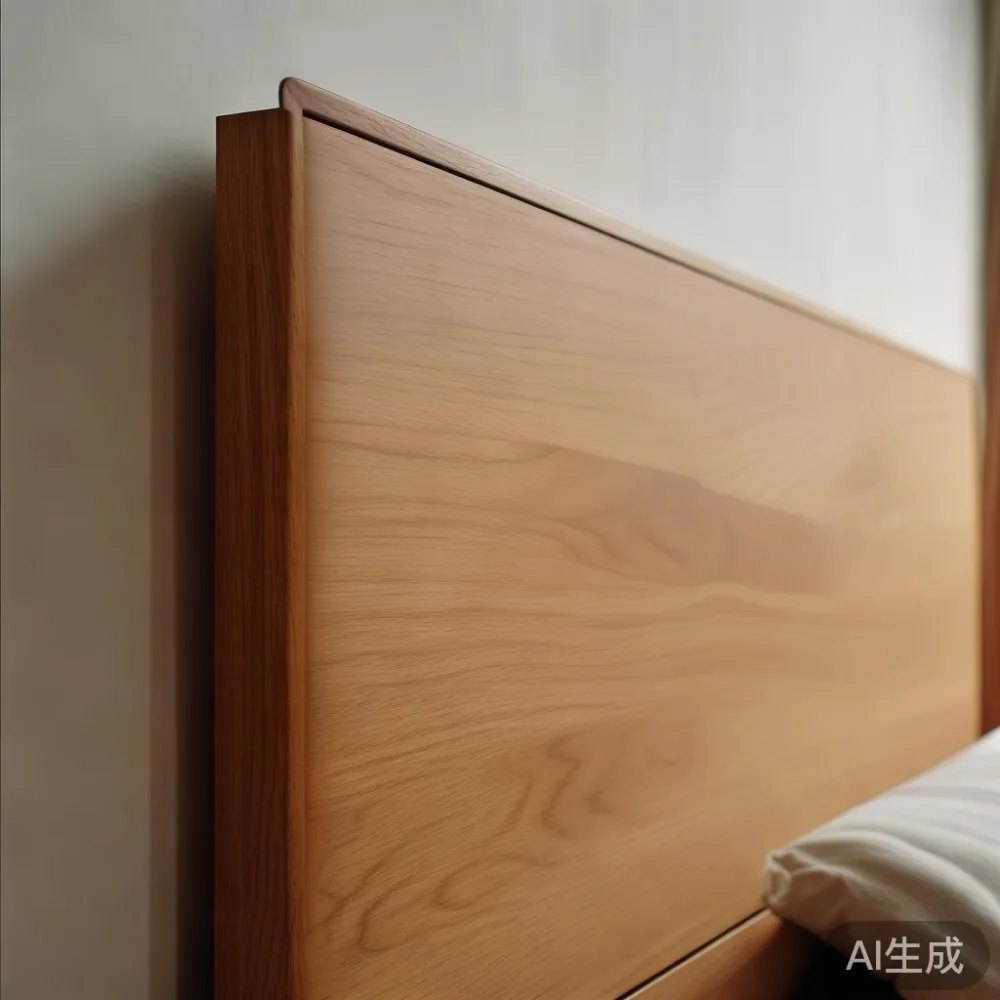
Warm minimal is one of those interior directions that sounds effortless in a magazine spread and slightly harder on the lift landing of a Singapore block, especially when the service lift is 1.6 m wide and the corridor turns at 90 degrees. The good news is that solid wood furniture, used in measured amounts, does almost all of the heavy lifting. The trick is knowing which pieces carry the warmth and which pieces should stay quiet. This guide is written for HDB and condo owners in the East — Tampines, Bedok, Punggol, Pasir Ris — working with rooms between 9 and 14 square metres, ceilings around 2.4 to 2.7 m, and a renovation budget that already feels stretched after air-con works and vinyl flooring.
What exactly does warm minimal mean for a Singapore home?
Warm minimal is a softened version of the Scandinavian and Japanese minimalist traditions. The bones stay clean — flat planes, low visual noise, neutral walls — but the materials bring the heat. Think off-white walls (Dulux 30YY 73/028 or Jotun Lin), oak or walnut tones, brushed brass hardware, boucle or linen upholstery, and one or two pieces that introduce texture without busyness. Lighting leans warm at 2700K to 3000K. There is no neon, no high-gloss lacquer, no oversized statement art.
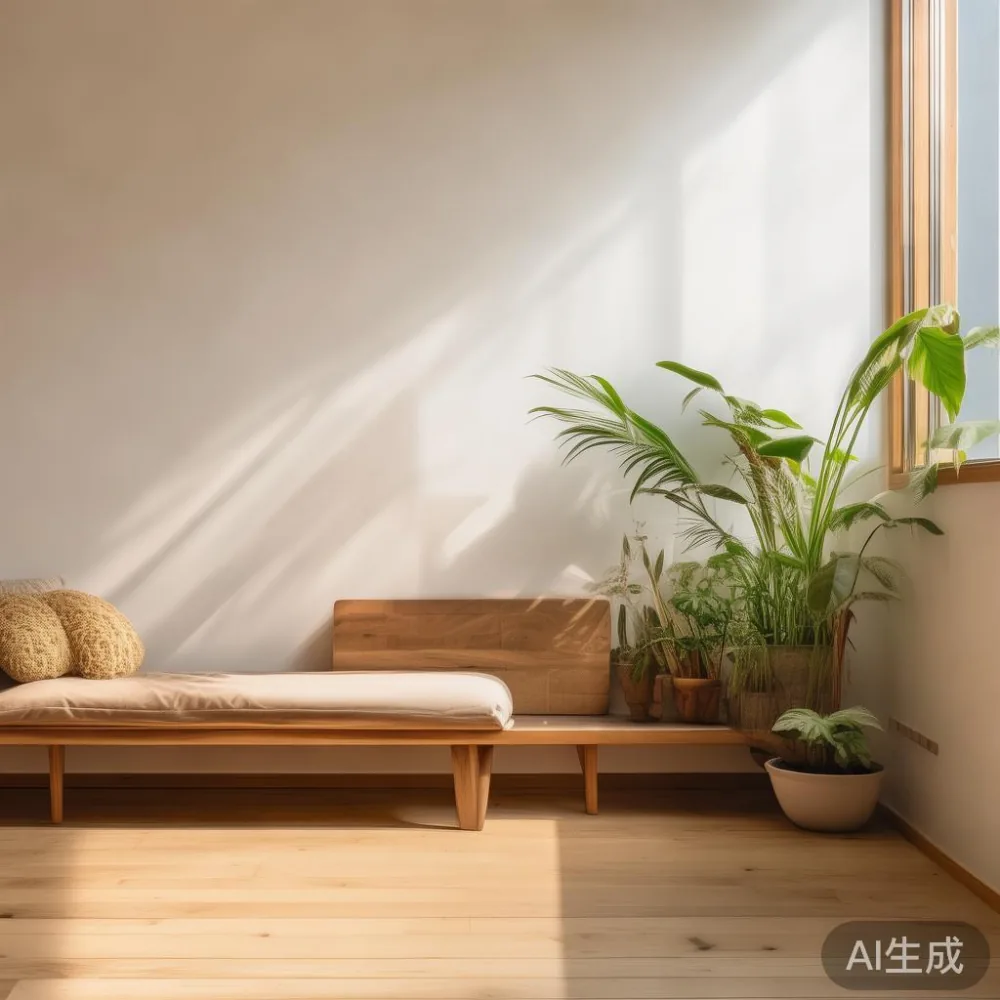
In a 12 sqm master bedroom in a Punggol condo, warm minimal reads as one solid wood bed frame with a tall, soft upholstered headboard in stone-washed linen, two slim nightstands in the same timber, a single mid-century inspired ceiling fan, and sheer linen curtains that pool 5 cm on the floor. That is the entire room. No console, no bench, no extra armchair. The warmth comes from the timber grain, the linen weave, and the 3000K downlight — not from accessories. If you can cover most of the room with five pieces or fewer, you are probably on the right track.
Why a solid wood bed frame and headboard do most of the work
Most Singapore bedrooms can only carry one large, warm piece of furniture before the room starts to feel crowded. In 90% of warm-minimal projects I see, that piece is the bed frame with its headboard. Everything else — wardrobe doors, ceiling, walls — should be quieter than the headboard, not louder.
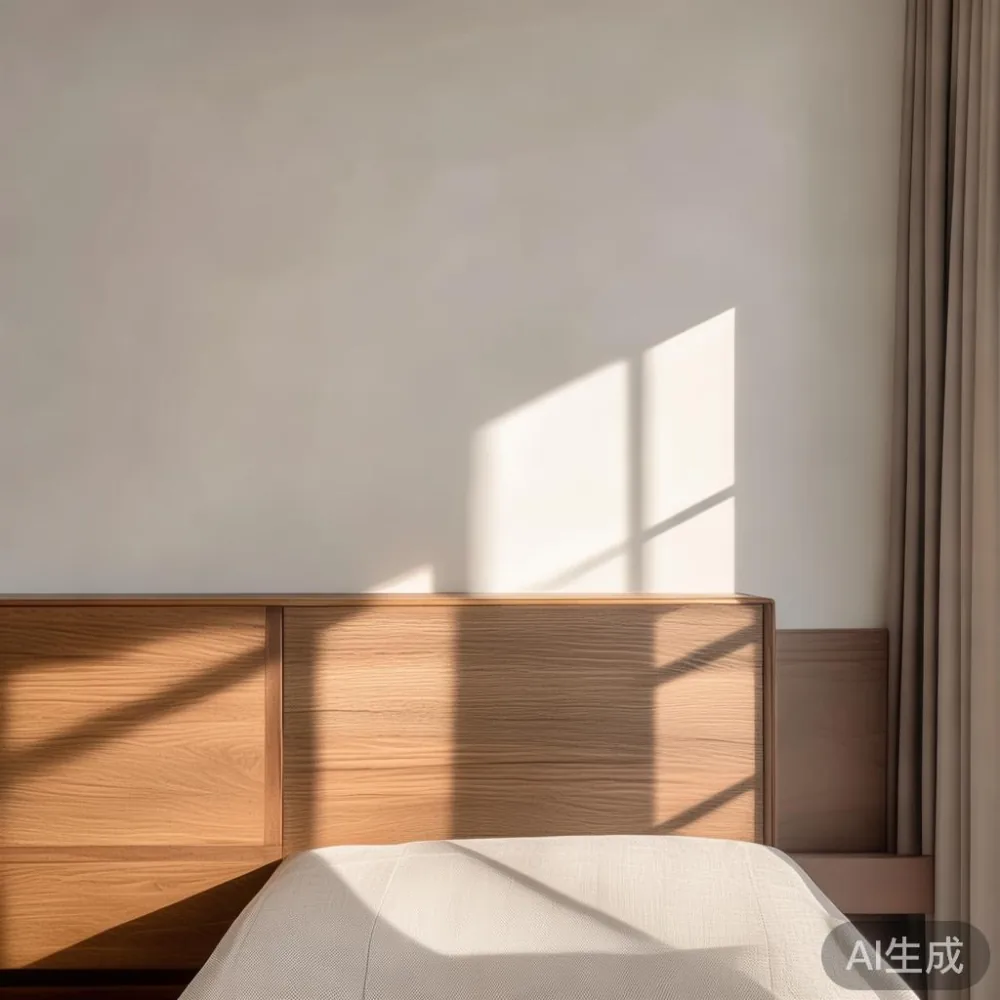
A solid wood bed frame does three things at once that laminate and veneer cannot. First, the timber grain is irregular and authentic, so the bed reads as a natural object rather than a manufactured surface. Second, solid wood ages honestly: a small dent from a moving box in 2026 will look like part of the story in 2034, which is the opposite of how a laminated board edge looks after the same impact. Third, a kiln-dried oak or ash frame can take refinishing. MIDHILL, a Foshan maker I visited last year on a sourcing trip, offers lifetime refinishing on its solid wood pieces — you can send the headboard back, get it sanded and re-oiled, and it returns looking ten years younger. That is rare in this category.
For a standard Singapore queen bedroom (the mattress is usually 152 cm x 188 cm, slightly shorter than a US queen), plan for a bed frame footprint of about 168 cm x 218 cm, plus 8 to 12 cm clearance on each side for the nightstand. Leave at least 65 cm of walking space on the open side of the bed, otherwise the room starts to feel like a hotel corridor rather than a retreat. The headboard itself should rise 95 to 110 cm above the mattress top — tall enough to lean against with two pillows, short enough not to press into a 2.4 m ceiling.
How to match a wardrobe, nightstand and dining table to the same warm-minimal scheme
The bed frame sets the timber tone, and the rest of the room should follow it within a narrow band. If your bed is white-oiled oak, choose pieces in the same oak family rather than mixing in a dark walnut. If your bed is smoked oak, you can introduce one walnut accent, but only one — typically on a small surface like a marble table or a brass-trimmed lamp base.
Practical matching checklist for a 3- or 4-room HDB:
1. Wardrobe: floor-to-ceiling, flat-panel doors in the same timber as the bed frame, no visible handles (use push-latch or recessed finger pulls), 240 cm height to meet the ceiling in most HDBs. Internal layout: 80 cm hanging zone, 60 cm shelving, two drawers at the bottom for linens.
2. Nightstand: 45 cm wide x 38 cm deep x 50 cm tall, with one drawer and an open shelf. Keep the same timber. Avoid glass or mirrored tops — they fight the warm tone.
3. Dining table for the living/dining zone: 140 cm x 80 cm seats four comfortably, 160 cm x 80 cm seats six. Solid wood top on a slim black or brass metal base is the post-modern light luxury answer; an all-timber pedestal is the Scandinavian answer. Either works in warm minimal as long as the timber tone matches the bed frame within two shades on a Pantone-style fan deck.
4. Sofa: a solid wood sofa frame in oak with washable linen-cotton covers in oat, stone, or clay. Skip the chaise if your living room is under 14 sqm. The visible timber armrest is what keeps the sofa in dialogue with the rest of the scheme.
5. Marble table: a small round marble table, 50 cm diameter, in cream or veined grey, used as a side table or entryway surface. One marble accent is enough; two starts to feel cold.
How do I choose a missing parts for a study?
Choose a missing parts for a study by first measuring the exact gap it has to fill, then matching the original timber species, joint type, and finish so the repair disappears into the piece rather than announcing itself.
That one-sentence answer is the only reliable rule. In a warm-minimal study — usually a converted corner of the HDB common room, sometimes a 1.8 m x 2.2 m alcove off the living area — a missing shelf peg, a lost drawer pull, or a stripped cam lock can break the calm of the whole scheme if the replacement is the wrong tone. Take a photo of the existing hardware next to a coin for scale, count how many you need, and ask the maker for a sample chip before committing to a full set. MIDHILL sends out timber swatches within three working days from Foshan, which is genuinely useful when you are trying to match an existing piece bought three years ago.
If the missing part is structural — a bed slat, a wardrobe hinge plate, a dining table stretcher — do not improvise with hardware-store alternatives. Solid wood furniture from a maker with a 10-year structural warranty will have replacement parts cut to the original CAD file, which means the new slat fits the existing slot without shimming. That is the difference between a study that looks calm and a study that quietly nags at you every time you walk in.
French light luxury versus American light luxury: which reads warmer?
Light luxury — the idea of restrained opulence using fewer, better materials — splits into two regional dialects that matter when you are picking a dining table or a marble table accent. French light luxury leans on curved silhouettes, tapered cabriole or fluted legs, boucle or velvet upholstery, and brass or bronze hardware in aged finishes. The palette is cream, taupe, dusty rose, soft cognac. American light luxury is straighter: clean rectangular planes, low-profile sofas, mixed metals (brushed nickel with blackened steel), and a slightly cooler palette of stone, taupe, and putty.
For Singapore warm minimal, French light luxury edges ahead because the curves and boucle soften the hard surfaces of vinyl flooring and built-in cabinetry, and the cognac accents pair naturally with oak. American light luxury works too, but only if you keep the metal finishes brushed rather than polished, and only if the sofa is at least 2.2 m wide — a smaller sofa in that style looks like office waiting-room furniture rather than a residential piece. If you are ordering a European dining chair from Malaysia suppliers for your dining zone, specify a curved-back upholstered seat in oat linen; it will tie the room back to the French light luxury language and away from any institutional feel.
Delivery, lift access, and the part nobody talks about
Solid wood furniture is heavy. A queen-size oak bed frame weighs 55 to 70 kg depending on the joinery; a 160 cm dining table can reach 45 kg; a 3-door wardrobe runs 90 to 120 kg. None of this matters until you try to bring it up a service lift in a Punggol block where the lift internal dimensions are 1.4 m deep x 1.1 m wide x 2.3 m high, with the door opening only 0.9 m wide.
Before you order, measure the lift car, the lift door, and the corridor turn. A bed frame over 215 cm in any single dimension will not fit through a 0.9 m door lying flat. It has to be tilted, which means two delivery men and one of them climbing inside the lift to guide it. Plan for a delivery window of 90 minutes, not 30. Most Singapore logistics charge SGD 60 to SGD 120 per trip for furniture above 25 kg; free shipping kicks in above USD 350 (about SGD 480) on most Foshan-to-Singapore routes, which usually covers one or two pieces in a single shipment.
Customs and GST: import GST in Singapore is 9% on the landed value, declared at the door. Keep your invoice. If the maker offers DDP (delivered duty paid) shipping, the 9% is baked into the quoted price and you sign for the piece without any further payment; if not, the courier will collect GST plus a SGD 11 COC fee on top of the delivery charge. Allow 18 to 28 working days from Foshan to a Tampines address by sea freight, 7 to 10 days by air at roughly double the freight cost.
A real Tampines project: what the invoice looked like
The couple from the Saturday morning walk-through placed an order six weeks later. Their warm-minimal master bedroom came in at SGD 4,860 landed, broken down roughly as: solid wood bed frame with upholstered headboard (SGD 1,680), two matching nightstands (SGD 720), 3-door floor-to-ceiling wardrobe (SGD 1,950), and a small marble side table for the reading corner (SGD 510). Shipping from Foshan to Singapore was free above the threshold; 9% GST was collected by the courier on delivery. The bed frame arrived in four flat-pack cartons, each under 30 kg so they cleared the lift without tilting. MIDHILL sent the assembly instructions as a 14-minute video, and the couple assembled it themselves on a Sunday afternoon with an electric drill and a friend.
They chose white-oiled oak for the bed, nightstands and wardrobe, oat linen for the headboard, and a cream-veined marble for the side table. One French light luxury curve — a tapered brass floor lamp — sits between the bed and the window. Total piece count in the room: six. The husband said it was the first time in his adult life he had fewer than fifteen things on a bedroom surface.
Common mistakes when matching furniture to a warm-minimal interior
The four mistakes I see most often in Singapore projects: mixing three or more timber tones in one room, choosing a high-gloss lacquered wardrobe that reflects the air-con unit, buying a marble table in pure white instead of cream or veined grey, and over-accessorising the headboard wall with floating shelves. One timber tone (with one supporting accent), one matte finish, one warm-veined marble, and a clean wall behind the headboard will outperform any combination of more pieces.
If you remember nothing else, remember this: the headboard is the loudest piece in a warm-minimal bedroom, the dining table is the loudest piece in the dining zone, and the sofa is the loudest piece in the living zone. Match each loud piece to its own timber family, keep everything else quiet, and the room will read warm without ever feeling busy. That is the whole brief, distilled into one paragraph and about thirty pieces of solid wood across the flat.