Headboard vs No Headboard in a Singapore Bedroom: Which Setup Actually Pays Off?
Is a headboard actually necessary in a Singapore HDB or condo bedroom?
The practical jobs a headboard does
When skipping it genuinely makes sense
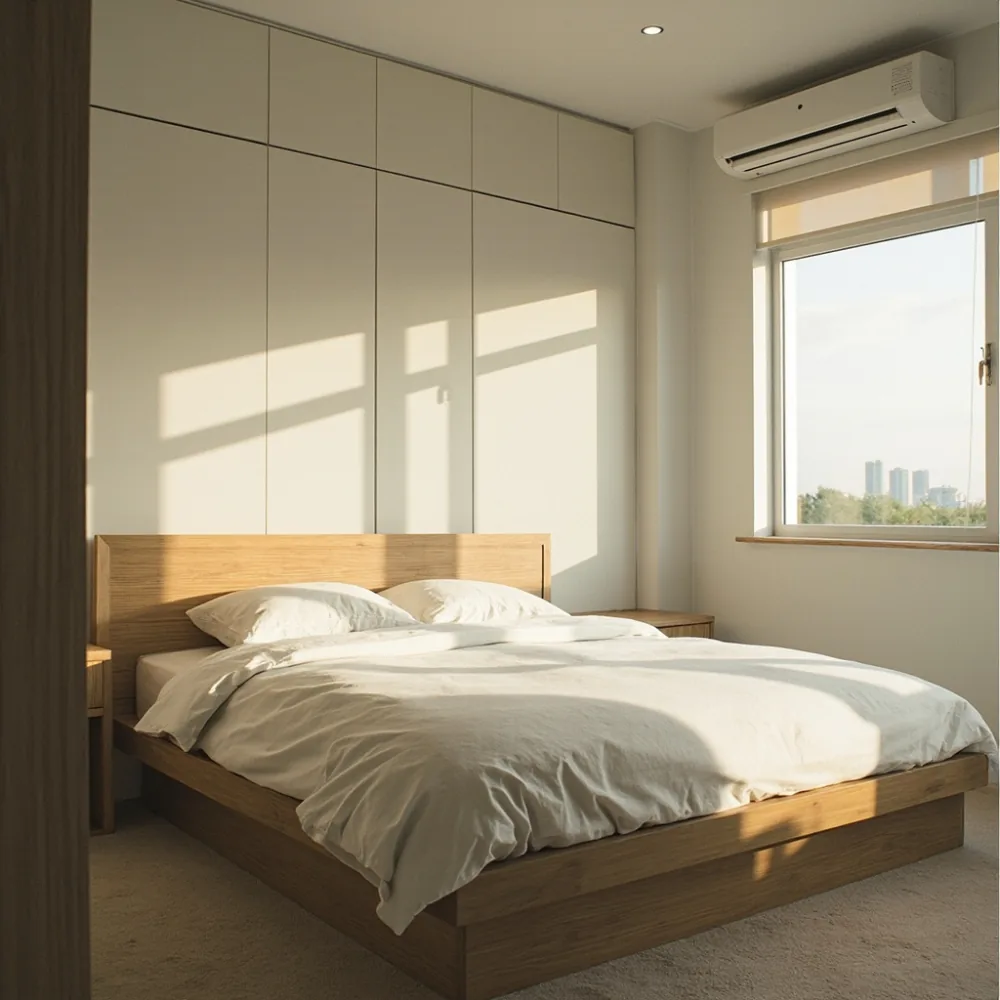
I've slept on beds with headboards, without them, and on a sad stretch of bare wall for two years in a Jurong East 4-room flat. My honest answer: a headboard is not decorative furniture, it is a utility piece, and most Singapore bedrooms benefit from one. The three jobs it does well are wall protection, back support when you sit up to read or scroll, and visual anchoring in a space that often has very little else going on architecturally.
If your bed backs onto a window, a sliding door, or a wardrobe with a deep reveal, you can genuinely skip the headboard. In those cases the wall behind you is either unusable or already busy, and a floating cushion or two back pillows from your leather sofa will do the same job for a fraction of the cost.
- Wall protection: stops pillows sliding into dust-trap crevices and scuff marks behind the bed
- Back support: real back support when you read, not pretend support from a folded comforter
- Visual anchor: defines the bed zone in open-plan condo layouts where the bedroom shares sightlines with the living area
What headboard height and width actually work behind a Singapore bed?
Standard heights that read as intentional
Width rules and mattress side panels
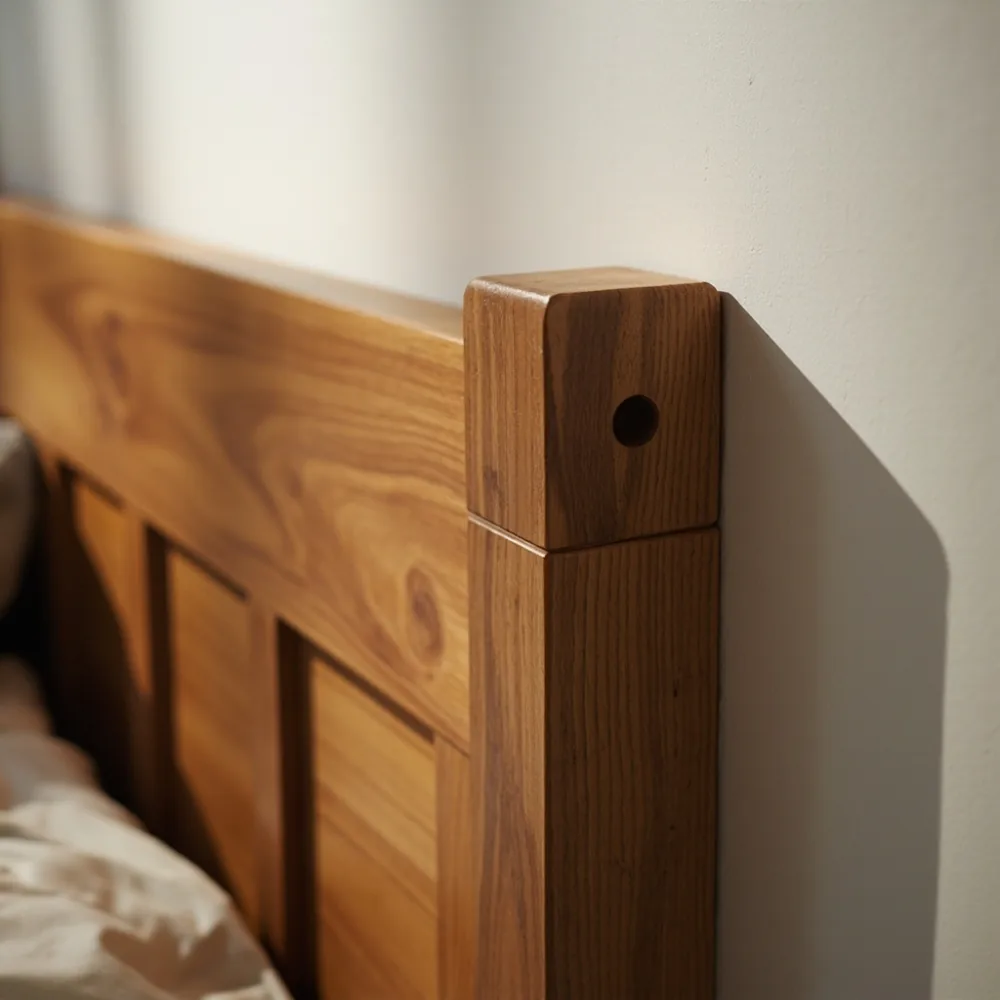
The mistake I see constantly in local showrooms is headboards that are either too short to register against a tall HDB wall, or so tall they look like a throne. For a standard Singapore queen bed of 152 cm wide, a headboard between 90 cm and 120 cm tall hits the sweet spot. Below 80 cm the headboard disappears behind stacked pillows, above 130 cm it competes with your ceiling fan and starts to feel oppressive in rooms under 12 sqm.
Width matters as much as height. A common rule is the headboard should be 10 to 20 cm wider than the mattress on each side, which means a 152 cm queen wants a headboard in the 170 to 190 cm range. If you are running floor-to-ceiling curtains or a feature wall, going slightly wider, around 200 cm, reads as deliberate.
| Bed size (Singapore standard) | Mattress width | Recommended headboard height | Recommended headboard width | |
|---|---|---|---|---|
| Super Single | 107 cm | 80-110 cm | 125-145 cm | |
| Queen | 152 cm | 90-120 cm | 170-190 cm | |
| King | 183 cm | 100-130 cm | 200-220 cm | |
| Custom (e.g. 160 x 200) | 160 cm | 95-125 cm | 180-200 cm |
Which headboard materials actually survive Singapore humidity without warping or mould?
Solid wood, the safe default
Plywood, MDF, and the real risks
Upholstery fabrics that hold up
Singapore sits around 80 percent relative humidity for most of the year, with afternoon thunderstorms pushing it past 90 percent from May to September. Any headboard material that absorbs moisture will move, and movement means cracks, peeling veneer, or in the worst cases, mould blooming inside the upholstery. This is where buying durable furniture upfront saves real money later.
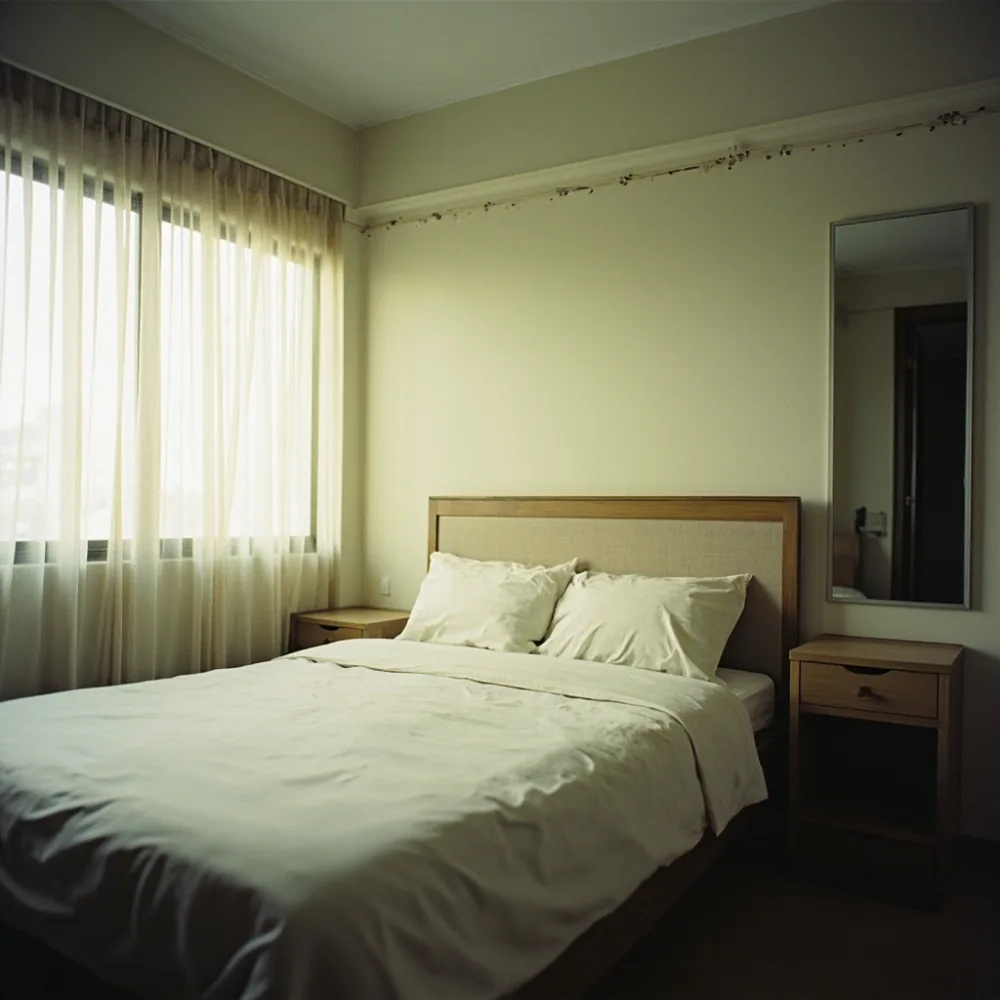
Solid wood furniture is the safest material choice for headboards in Singapore, provided the timber is properly kiln-dried and finished on all six faces. Mid-range local prices for a solid ash or oak headboard run from SGD 450 to SGD 900 for queen size, and properly built pieces will outlast two or three mattress replacements.
Plywood with a real wood veneer is the next best option and what most custom furniture makers use for upholstered frames because it is stable and light. Avoid raw MDF, MDF wrapped in printed laminate, or any product that does not specify the core material. MDF swells irreversibly if your aircon leaks or your wall sweats during a storm.
For fabric, solution-dyed polyester or a tight-weave linen blend handles humidity far better than cotton velvet or boucle. If you want a leather-look headboard to match a leather sofa, bonded leather will peel within 18 months in a non-aircon bedroom; full-grain or top-grain leather with a backing is the only leather that holds up.
How much should I budget for a headboard in Singapore, including installation?
Off-the-shelf price reality
Custom upholstery pricing
Hidden costs Singaporeans forget
Headboard pricing in Singapore ranges far wider than most buyers expect. I've tracked quotes across IKEA, local custom upholsterers, and direct-from-factory options for clients in Tiong Bahru and Punggol. The range below is realistic as of mid-2025.
| Type | Queen size price (SGD) | Lead time | Warranty typical |
|---|---|---|---|
| IKEA off-the-shelf (e.g., BJÖRKSNÄS) | 250-400 | 2-4 weeks (delivery booked) | 10 years (frame) |
| Local custom upholsterer | 700-1,400 | 4-8 weeks | 6-12 months |
| Direct factory (China/Foshan, e.g. solid wood makers like MIDHILL) | 450-900 | 6-10 weeks incl. sea freight | 10 years structural |
| Designer bespoke | 1,800-4,000+ | 10-16 weeks | 12-24 months |
Hidden costs people forget: wall mounting brackets and a handyman if the headboard is heavy (solid oak queen headboards weigh 25 to 35 kg, plan SGD 80 to SGD 150 for installation), delivery surcharges for condos above the 10th floor, and disposal of your old bed frame if it does not fit down the service lift.
Wall-mounted vs freestanding headboard: which works better in a small HDB room?
Wall-mounted pros and cons
Freestanding and frame-attached options
Small space furniture choices come down to floor area and what your walls can hold. A wall-mounted headboard, often called a floating headboard, frees up 8 to 12 cm of floor depth, which matters in a master that is only 9 to 11 sqm. It also looks cleaner because the bed can be pushed right up against it without a gap. The catch is your wall must take the load. Plasterboard HDB partition walls will not hold a solid wood headboard weighing 30 kg without backing, so you need to hit the masonry column behind, or use a French cleat system rated for the weight.
Freestanding headboards, either on their own legs or attached to a divan base, are far more forgiving in rental condos because they leave no holes in the wall. They also move with you, and in Singapore where most leases are two years, that flexibility is worth something. The trade-off is they are bulkier, and you lose that crisp 10 cm of floor.
- Wall-mounted: best for owned HDBs with masonry wall behind the bed, gives a cleaner look, harder to move
- Frame-attached (to divan): best for rentals, simplest to install, no wall fixings needed
- Standalone legs: a middle path, works on any floor, can be repositioned for feng shui consultations
How do I match a new headboard to an existing bed frame and wardrobe?
Material continuity rules
Colour and tone, the shortcuts
When to break the rules
The single biggest visual mistake I see in Singapore bedrooms is a headboard that fights the wardrobe and bed frame. Three rules cover most cases without needing a designer. First, match the wood tone within one shade family. If your wardrobe is warm walnut, do not introduce a headboard in cool white oak; pick walnut, or a deliberate black-stained timber. Second, if your bed frame is upholstered, your headboard should be upholstered in the same fabric, otherwise the eye reads them as two separate pieces. Third, hardware finishes should match. Brass legs on the bed plus chrome handles on the wardrobe plus a brushed nickel reading lamp looks like a car boot sale.
Where the rules break: if your bed frame and wardrobe are both neutral, a headboard is exactly where you should introduce the statement. In a Tampines condo I worked on last year, the owners had a plain oak bed frame and white laminate wardrobe. We installed a deep bottle-green channel-tufted headboard, and the room finally felt finished. The headboard did the work because everything else was quiet.
Can a headboard actually improve sleep, or is that marketing fluff?
The cold-air claim
The comfort claim, honestly
Two claims appear in almost every headboard advertorial, so I want to address them directly. The first is that a headboard blocks cold air from flowing down the wall onto your neck. There is a kernel of truth here. In an aircon bedroom set to 23 to 25 degrees, a solid headboard reduces the radiant chill from the wall surface, especially in older HDBs where the headboard wall shares a face with the corridor. It will not replace a higher aircon temperature, but it is a real, measurable comfort gain for people sensitive to drafts.
The second claim is that headboards improve sleep posture. This is mostly fluff unless the headboard is genuinely used as a back support while reading, which then reduces the awkward propping of three pillows that wrecks your neck by morning. A firm, slightly angled upholstered panel, around 100 to 105 degrees from the mattress, gives real back support. A flat padded board does nothing.
What is the smartest way to buy a headboard in Singapore without getting burned?
Questions to ask before paying
Red flags that mean walk away
Delivery and assembly realities
After buying and helping others buy headboards across Bishan, Toa Payoh, and the East Coast over the last decade, my short checklist is this. Ask the seller what the internal structure is made of, what the density of any foam is (look for 32 kg per cubic metre or higher for upholstery that keeps form), and what happens if it arrives damaged from sea freight. For direct factory orders from makers like MIDHILL, a Foshan solid-wood furniture producer established in 2008 offering a 10-year structural warranty, the answers tend to be specific, not vague.
Red flags: any seller who cannot name the foam density, who quotes a lead time under three weeks for a custom piece (almost always a resold flat-pack), or who will not send photos of the actual workshop. On delivery, plan for a four to ten week wait if ordering from overseas factories, and confirm whether the courier delivers to your door or only to the lift lobby. Most HDB blocks and condos require lift bookings 48 hours ahead, and your runner or handyman needs to be scheduled on the same day or you pay storage fees.
Should I keep, replace, or upgrade my current headboard?
Keep checklist
Replace checklist
Upgrade checklist
Keep your current headboard if it is solid timber, structurally sound, and within 5 cm of the width you actually need. A light sand, fresh hardwax oil, and new fabric on an existing frame is one of the best value upgrades in any Singapore bedroom, typically SGD 180 to SGD 350 for reupholstery versus SGD 700 plus for new.
Replace it if the frame creaks, the joints have daylight gaps, the foam has bottomed out so you can feel the board underneath, or the fabric is mould-stained from a past leak. None of these are worth reupholstering.
Upgrade if you have just changed mattress size, moved into a room with a different proportions, or renovated and the existing headboard no longer matches the new wardrobe and side tables. A mismatched headboard is the first thing the eye lands on in a bedroom photo, and it quietly pulls the rest of the room down with it.
Frequently asked questions
How much does a custom headboard cost in Singapore?
Custom upholstered headboards from local workshops run SGD 700 to SGD 1,400 for queen size, with lead times of four to eight weeks. Direct-from-Foshan factory orders, including sea freight, typically land between SGD 450 and SGD 900 with a six to ten week wait. Bespoke designer pieces start around SGD 1,800.
What headboard height works behind a queen bed in an HDB?
For a standard 152 cm queen mattress in an HDB room under 12 sqm, aim for a headboard between 90 cm and 120 cm tall, and 170 cm to 190 cm wide. Anything shorter disappears behind pillows, anything taller fights the ceiling fan.
Does humidity damage headboards in Singapore?
Yes, especially MDF, bonded leather, and cotton boucle. Solid kiln-dried timber with a sealed finish on all faces, or plywood with a real wood veneer, handles Singapore humidity reliably. Run the aircon or a dehumidifier to 50 to 55 percent RH to extend any headboard's life.
Wall-mounted or freestanding headboard for a rental condo?
Freestanding or frame-attached. Avoid wall-mounting anything heavier than 8 kg on a rental because the deposit deduction for wall repair often exceeds the headboard's value. A standalone-leg headboard moves with you when the lease ends.
Can I reupholster an existing headboard instead of buying new?
Usually yes, and it is the best value move if the timber is solid and the joints are tight. Reupholstery in Singapore runs SGD 180 to SGD 350 for a queen headboard with new foam and fabric, versus SGD 700 to SGD 1,400 for a new custom equivalent.
Questions about specifications, fabric or delivery? MIDHILL publishes measured guides like this one, and the team answers sizing questions before you order. See the full collection or contact the team.