Buying a Headboard Online in Singapore: Delivery, Lifts, and Assembly Truths
I still remember the afternoon a customer in Punggol wrote to us, slightly panicked, asking whether her 218 cm solid wood headboard would even fit into the service lift of her new HDB block. Photos of the lift lobby arrived within minutes: 95 cm wide doors, a 1.4 m deep car, ceiling at 2.3 m. We measured twice, routed the headboard through the cargo lift the next morning, and her bed frame was assembled before lunch. That single exchange is the reason I want to walk through every delivery and assembly reality of buying a headboard, bed frame, or wardrobe online in Singapore — because the photo on the website never tells you about corridor turns or the gap between your corridor wall and your bedroom door.
For shoppers browsing from Tampines to Bedok, the digital catalogue is full of beautiful pieces in post-modern light luxury styles, French provincial silhouettes, or the warm minimalism of luxury Mid-century modern furniture. The hard part begins after checkout: dimensions, weight, lift access, assembly time, and what happens when a 9% GST bill lands on top of the price you were already stretching for. Below is what ten years of shipping solid wood furniture out of Foshan has taught us about that last mile.
What the photo on the website never tells you about a solid wood headboard
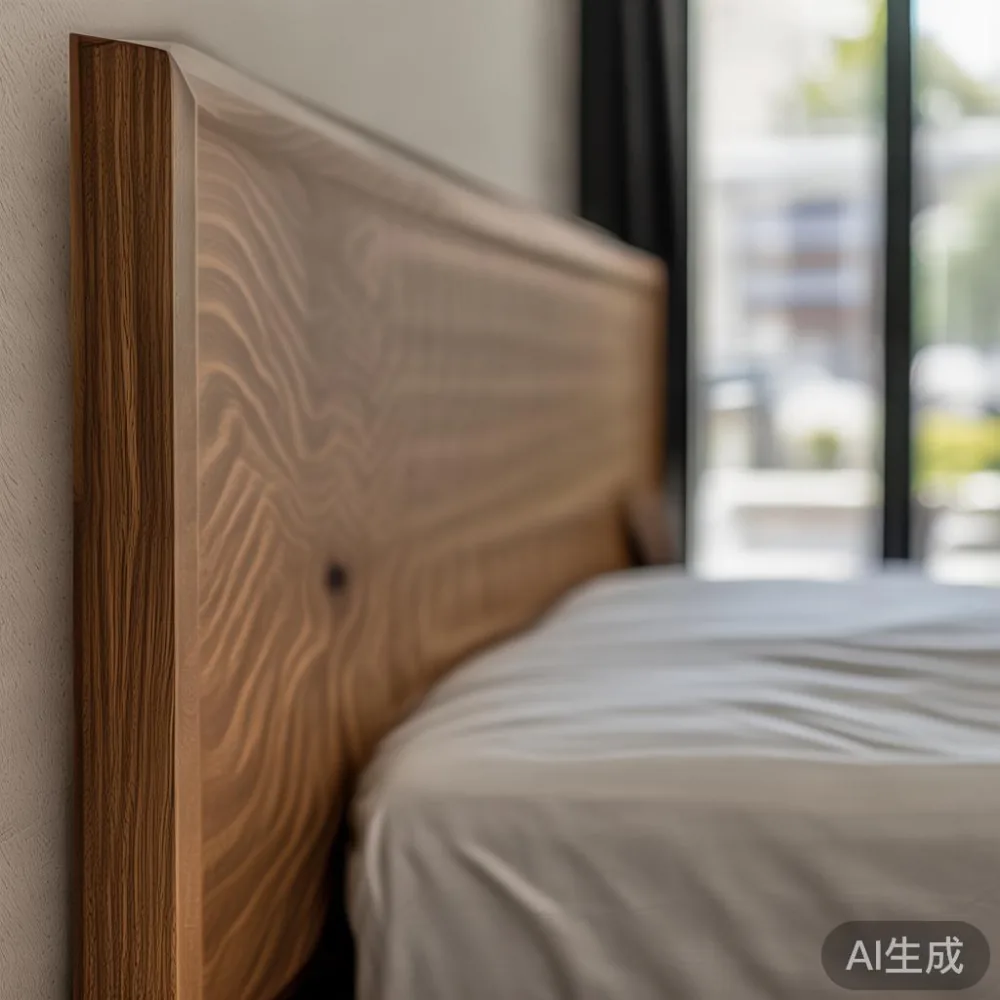
A solid wood headboard looks slim and elegant on a product page, but the actual piece arriving at your door is a different conversation. Our lightest upholstered headboard weighs 22 kg; a full American oak version with a 138 cm span tips the scales around 48 kg. Two people can handle it comfortably. A 200 cm wide headboard attached to a full bed frame with side rails, slats, and a centre support beam can weigh 65 to 80 kg, and that is the realistic number you should plan around.
If your unit is on a high floor in an older walk-up block — there are still a handful around Geylang and Balestier without lifts — the courier team will need to know in advance. We cap manual carry at two flights of stairs under our standard service, and anything above attracts a S$45 surcharge per floor. For HDBs and most private condos, lifts are the practical limit, not floor count. Most HDB passenger lifts measure 1.1 m wide by 1.4 m deep with a 2.3 m ceiling, comfortably swallowing a king-size bed frame placed diagonally if the headboard has been removed and packaged flat.
One detail buyers often miss: the corridor outside the lift. Newer BTOs in Punggol and Tengah tend to have generous 1.5 m corridors that handle a long side of a headboard with room to spare. Some 1990s blocks in Bedok taper to 1.1 m at the fire-rated door, and a 200 cm headboard will need to be stood on end and angled. A quick hallway measurement before ordering saves a re-delivery fee of S$60 to S$90.
How long does delivery actually take from Foshan to a Tampines HDB?
Lead time is where expectations and reality diverge most. Stocked SKUs ship in 7 to 12 working days; custom fabric, customised marble table inlays, or non-standard headboard heights push production to 25 to 35 days. Sea transit from Foshan furniture factories to Singapore's PSA terminal averages 8 to 10 days in normal season, longer during Chinese New Year when factories close for two to three weeks around late January or early February.
Local last-mile delivery, once the container is cleared and the GST (9% as of 2024) is paid at the port, usually takes another 3 to 5 working days for appointment scheduling, with a smaller window of 3 hours the courier confirms the day before. Island-wide delivery is included on orders above S$350, which covers most bed frame and headboard purchases. Below that threshold, a S$25 transport fee applies. Customers in Tuas and Changi have occasionally waited an extra day because fleet coverage is thinner on the western and eastern extremes; we group those runs to keep delivery honest.
For readers weighing the cost difference between a S$1,290 headboard from a local showroom and a S$980 direct-shipped solid wood headboard, the all-in math matters. Add 9% GST on the imported piece (S$88), consider S$0 shipping, and you are at S$1,068 — about S$222 cheaper than the local equivalent with a similar warranty. That is a real saving, and it is the reason direct shipping has grown every year since 2018.
Will the assembly team carry tools, or do I need to prepare my own?
Two questions I hear almost daily. The first: do the pieces arrive flat-packed? Most headboards ship in two cartons — the main panel and the two wing supports — wrapped in foam, edge-guarded, and strapped to a plywood pallet. Bed frame orders typically arrive in three to four boxes: headboard carton, footboard and side rails, slat roll, and hardware bag. A six-door wardrobe arrives in four to five cartons depending on the configuration.
The second question: who builds it? Our standard service includes doorstep delivery only. Professional assembly is an add-on. For a basic headboard-to-frame installation, the fee is S$35 and takes 35 to 50 minutes with one technician. A queen-size bed frame with hydraulic storage lift takes 60 to 90 minutes and costs S$70. A full six-door wardrobe with internal drawers, soft-close hinges, and mirror panels takes 2.5 to 3.5 hours with two installers and runs S$180 to S$240.
The team brings everything: a 12V cordless drill, hex drivers, rubber mallet, level, stud finder, and a small range of wall anchors rated for hollow and concrete walls common in HDBs. They also remove packaging at no extra charge, which on a headboard order can mean four to six plastic bags and a plywood pallet that would otherwise sit in your corridor for days.
My visit to a customer's Punggol HDB: a real first-person account
Last month I joined one of our assembly teams on a Saturday morning job in Punggol. The customer had ordered a 198 cm upholstered headboard with a matching four-poster bed frame, plus a 180 cm dining table and a side nightstand. The HDB lift measured 1.2 m wide by 1.7 m deep, and we tilted the headboard 30 degrees to clear the ceiling sensor strip at 2.2 m.
The bedroom corridor was a 90-degree turn past the living area. Two installers walked the headboard panel vertically, with me supporting the base. The bed frame rails and footboard came up on the second trip. Total carry time from lift lobby to bedroom: about 12 minutes. The customer had moved her existing nightstand into the corner of the room to clear space, a small move that saved us 15 minutes of pivoting. Assembly took 75 minutes for the bed frame and 25 minutes to attach the headboard to pre-drilled cleats. The dining table, a 1.8 m solid wood piece with a marble table accent at one end, took another 40 minutes because the customer had requested the leaf-stowage face the window instead of the wall — a one-off orientation that added ten minutes of bolt re-torquing.
By 1 p.m. the room was complete. She paid the S$215 assembly fee in cash, gave the lead installer a five-star review on the spot, and asked whether we could source a matching wardrobe. We can, of course, but the more important takeaway from that morning was how smooth the process becomes when the customer shares accurate photos and measurements in advance.
Can a headboard be hoisted through a window if the lift is too small?
This comes up more often than you might expect, particularly in older boutique condos where service lifts are narrow and the corner turn into the unit is tight. The honest answer is rarely. Hoisting through a window requires a rope-access team, council permission for common-property work, weather that is not raining, and a headboard short enough to clear the window frame. The cost runs S$280 to S$450 and is rarely worth it for a piece that can be disassembled and moved flat.
For a 90-degree corner lift entry — common in some Bedok blocks — the move is to unbolt the headboard from the bed frame, walk the headboard panel vertically, and reassemble inside the bedroom. Any solid wood piece from a serious manufacturer is designed for exactly this: cleats, bolts, and dowels rather than glue, so the join can be reversed and remade without weakening the wood. If you want proof before ordering, ask the supplier for the disassembly PDF; ours is eight pages long and includes torque values for every bolt.
One more practical note: many condo managements in Singapore require delivery to be booked through their concierge system, often 48 hours in advance, and prohibit weekend moves during quiet hours. Our coordinator handles this on the customer's behalf once a unit number is provided, and weekend slots in popular blocks such as The Interlace or Reflections at Keppel Bay tend to book out 10 days ahead.
What does the warranty actually cover once the headboard is in your bedroom?
A 10-year structural warranty on solid wood furniture should mean what it says. In our case, it covers frame joints, slat failure, and cracking that results from a manufacturing defect — not from exposure to standing water, direct sunlight through an uncurtained window for six hours a day, or a toddler's enthusiastic climbing. Soft-close hinges on wardrobe doors carry a 5-year warranty, hydraulic gas lifts on storage beds carry a 3-year warranty, and fabric or leather upholstery on headboards carries a 2-year warranty against seam failure and foam collapse.
Lifetime refinishing is a service offered by selected Foshan makers, including our workshop, and it reads better than it sounds in practice. You can book a sanding and re-oiling of a solid wood dining table top, a refresh of a faded solid wood sofa frame, or a colour change to a headboard panel roughly every 8 to 12 years. The service is charged at cost of materials plus transport, usually S$180 to S$320 for a single piece, and customers use it more than they expect — especially for pieces facing strong afternoon sun in units with full-height west-facing windows.
Returns are accepted within 14 days for stocked items in unused condition. Custom pieces — a headboard in a customer-supplied fabric, a wardrobe with a non-standard 240 cm height, a dining table with a specific marble table veining pattern — are non-returnable but covered by the same warranty and the same repair turnaround, which averages 7 to 14 days from inspection to technician visit. Knowing these numbers up front turns a leap of faith into a calculated purchase.
Is it cheaper to assemble a headboard myself?
For a confident DIY-er with a cordless drill, a rubber mallet, and a second pair of hands, self-assembly is the cheapest path. A typical headboard-to-frame hookup takes 20 to 40 minutes and the only consumable is the bag of bolts and dowels in the box. The catch is warranty: if you damage a cleat during assembly and then request a warranty repair six months later for a structural wobble, the technician will spot the over-torqued bolt immediately. Our policy is to honour the warranty regardless, but it is a real risk worth knowing.
A second scenario is the customer who assembles a solid wood sofa, a bed frame, and a wardrobe in the same weekend. This is when fatigue, dropped panels, and stripped threads happen. My suggestion is to book the team for the wardrobe and dining table, and self-assemble the simpler pieces — a nightstand, a small console, or a single headboard — to split the bill sensibly.
As a furniture specialist, I would rather see a customer spend S$70 on a professional installation of a piece they will use for fifteen years than save S$70 and end up with a creaking bed frame. The economics of furniture are long-horizon: a S$1,400 headboard spread across fifteen years costs about S$0.26 per day. Cheap assembly is rarely the right place to economise.
How do you keep the headboard looking like the photo for years?
Three habits. First, anchor tall wardrobes and tall headboards to the wall. Singapore wall studs are unevenly spaced and hollow-section framing is the norm in newer condos. The kit in the box contains two bracket types — one for hollow drywall, one for concrete — and a stud finder eliminates the guessing. Second, keep solid wood out of direct afternoon sun. UV fades oiled finishes slowly but surely over five to seven years; a sheer curtain reduces that exposure by roughly 80%. Third, refresh the oil finish every 18 to 24 months in a typical air-conditioned Singapore room. A 500 ml tin of hard wax oil costs about S$28 and protects the wood for the long term.
For households considering the Japandi aesthetic — that clean blend of Japanese restraint and Scandinavian warmth — the conversation about whether a Japandi wardrobe is worth the price premium comes up often. My honest read: yes, if you value a quiet visual presence and soft-close hardware that lasts. A S$2,400 Japandi three-door wardrobe with oak veneer and adjustable interiors costs about 30% more than a melamine-faced alternative, but the hinges are rated for 100,000 cycles rather than 30,000, and the colour stays truer as the years pass.
For lighter rooms, the difference between a Japanese sofa and a Japandi sofa in silhouette is small, and the choice often comes down to fabric weight and cushion density rather than frame construction. If you are furnishing a five-room HDB with multiple pieces, get them from one maker — a matching solid wood sofa, a coordinating nightstand, and a headboard in the same stain reads as a deliberate interior rather than a catalogue grab-bag. That kind of cohesion is what buyers from European light luxury for hotel projects ask us about repeatedly, and the same logic applies at home.
Where does French provincial fit into a modern Singapore apartment?
French provincial used to mean heavy. Today's French light luxury has trimmed the silhouettes: a curvaceous headboard in a neutral boucle, a solid wood sofa with a low back and tapered legs, and a marble table with a thin profile rather than a thick block. Each piece nods to provincial detailing without crowding a 90 sqm condominium. The trade-off is cost — authentic carved feet and hand-applied finishes push prices 25% to 40% above a plain post-modern light luxury piece — and lead time, often four to six weeks rather than two.
If you are wondering how to style French provincial sofa in apartment without it feeling themed, the practical answer is restraint in everything else: plain linen curtains, a single statement light, and one or two decorative objects rather than a curated shelf full of provincial accents. Mixing in a modern headboard with a curved French sofa is a credible combination for open-plan layouts in Punggol and the city fringe.
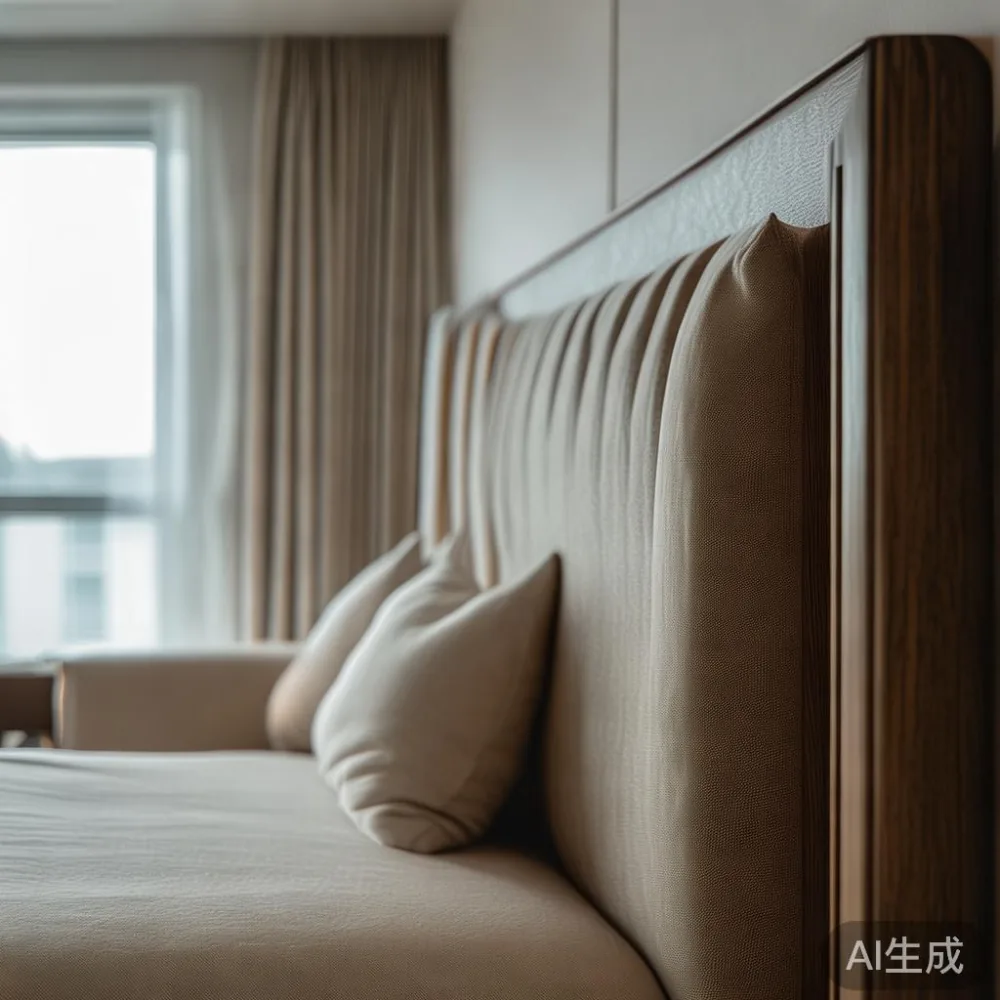
The same idea applies to European light luxury bed styling in your bedroom. If you are researching how to style European light luxury bed in room for maximum effect, think height, light, and texture: a 130 cm tall upholstered headboard, two slim wall sconces or a pair of bedside lamps on matching nightstands, and a single textured throw folded at the foot. The room will read as composed, and the bed will look far more expensive than it is.
What should I check before clicking order?
Five numbers to confirm before any online headboard purchase, anywhere in Singapore:
1. Headboard width matches your mattress width to within 5 cm. A 180 cm headboard on a 200 cm mattress looks under-sized; a 200 cm headboard on a 180 cm mattress overhangs the bedside area.
2. Headboard height fits between any wall-mounted air-con unit, window frame, or built-in shelf. Standard 110 cm to 130 cm headboards sit cleanly below most HDB window sills at 90 cm, but custom 150 cm options need a quick measurement check.
3. Lift depth and ceiling height, especially in older service lifts. Your photo or a building management email confirming dimensions protects both sides.
4. Corridors on the route from lift to bedroom. A 90-degree turn is the usual pinch point, and the supplier can tell you whether the cartons can be rotated through.
5. Total order value versus the free-shipping threshold above S$350. Adding a nightstand to reach the threshold usually saves you the S$25 fee and is rarely a regret.
If you have those five numbers ready, the rest of the buying journey — production in Foshan, sea freight, GST payment, last-mile delivery, and on-site assembly — flows without surprises. And if a supplier cannot or will not discuss those details before you pay, that itself is the clearest signal to keep looking.