Tropical Climate Lacquer Care: A Practical Guide for Singapore Apartments
I tested an open-pore lacquer sample in a Tampines HDB for six weeks, and the results changed how I recommend aftercare for every lacquered headboard I specify. Singapore sits on the equator, and the daily cycle of 80–95% relative humidity, afternoon thunderstorms, and constant air-conditioning creates a specific kind of stress on a French light luxury finish. A bedroom headboard lives roughly 60–80 cm from a sleeper's breath, picks up skin oils nightly, and rarely gets wiped during the weekly clean. This guide covers what actually happens to lacquer in a 4-room HDB or a Punggol condo, and how to keep a solid wood bed frame looking close to factory-fresh for the ten-year window a serious manufacturer will back it for.
Why Singapore's humidity behaves differently from what most care guides describe
Most English-language lacquer care sheets are written for Vancouver, London, or Melbourne, where annual humidity averages 60–75%. Singapore's mean annual relative humidity is 84%, and the wet season (November through February on the northeast monsoon) keeps bedroom readings above 80% for hours after a shower runs in the adjacent bathroom. Lacquer, whether a post-modern light luxury high-gloss finish or a more restrained matte, is hygroscopic. The film absorbs moisture on humid nights and releases it when the air-conditioner drops the room to the typical 22–24°C set point. That 40-point daily swing across seasons, and the smaller 20–30 point swing across a single night, is what eventually produces the cloudiness people blame on "cheap furniture." It is rarely cheap furniture. It is almost always lacquer that was never conditioned for a tropical envelope.
Two physical realities matter for any lacquered headboard or matching nightstand in a local flat. First, the lift in most HDB blocks (door opening roughly 80 cm wide, cabin depth around 140 cm) cannot accept a pre-built king-size headboard taller than about 110 cm. Lacquered panels almost always ship flat-packed to clear those dimensions, so the joinery sits closer to where humidity can wick into end-grain. Second, the corridor from a Tampines lift lobby to the unit door is sometimes only 1.2 m wide and 2.4 m high, so large lacquered wardrobe doors and tall headboards arrive with the protective film still on. Keeping that film in place for the first 30 days after delivery is the single cheapest thing a homeowner can do.
What I saw in the Tampines flat, and what it taught me
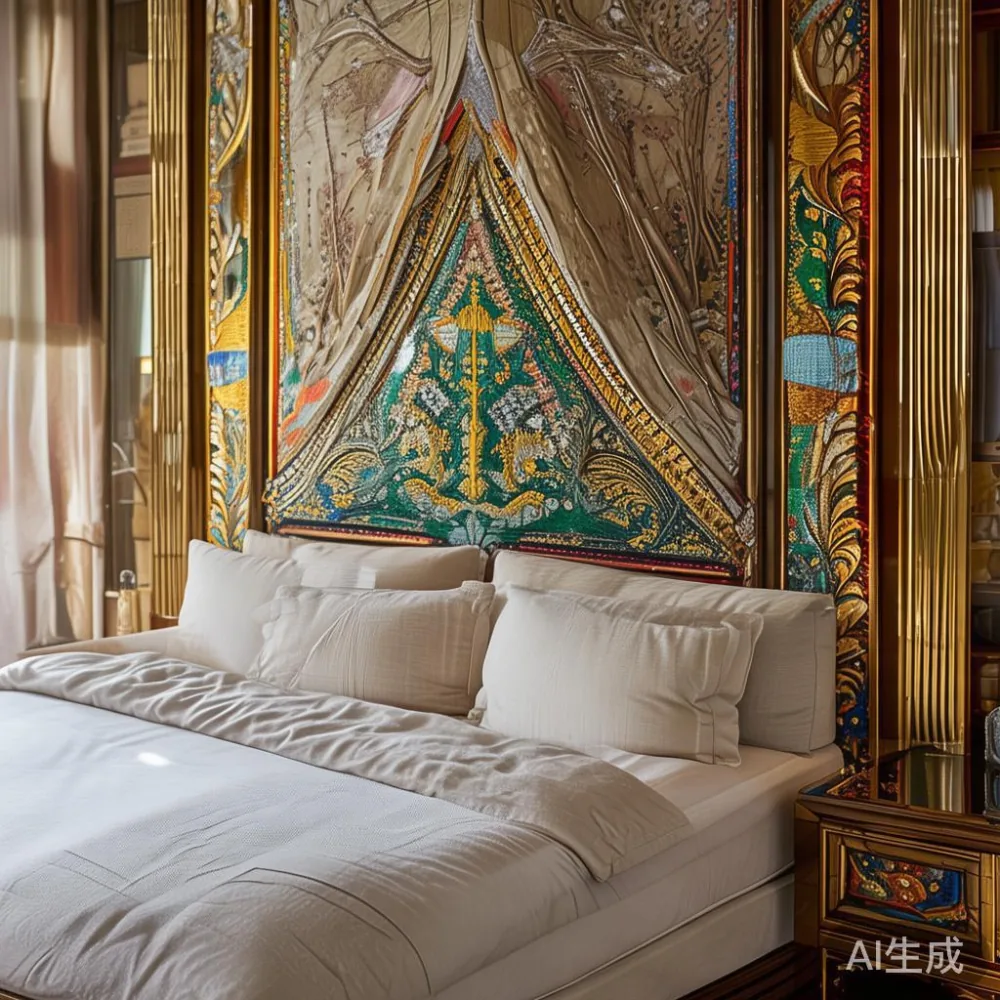
The flat in question was a 92 sqm HDB in Tampines GreenRidges, occupied by a couple with a small dog. They had purchased a post-modern light luxury bed frame with a high-gloss taupe headboard and a pair of matching bedside tables. After the fourth week, I noticed a faint haze near the top edge of the headboard, roughly 20 cm down from the ceiling. The lower 90% of the surface was clear. Their dehumidifier was set to 55% RH and ran from midnight to 6 a.m., but the closet behind the bed had no ventilation slot, so vapour from the attached bathroom pooled there every morning.
We made three changes. I had them cut a 12 x 30 cm passive vent into the wardrobe's side panel (S$45 install by a neighbourhood carpenter), shift the dehumidifier set point to 50%, and begin a twice-monthly wipe with a damp microfibre followed by a dry one. Eight weeks later the haze was gone. The takeaway was simple: in a tropical climate, lacquer care is roughly one-third product choice, one-third room ventilation, and one-third habit. Any guide that ignores the second and third is selling you a workbench in Punggol when you actually need a window.
How often should you actually dust a lacquered headboard?
In a non-air-conditioned Singapore bedroom, dust a lacquered headboard once a week with a clean microfibre cloth, lightly dampened. In a bedroom that runs the air-conditioner 6–10 hours a night, drop that to once every ten days, and add a dry pass immediately after the damp one to lift any moisture the film has absorbed. The reason is the coral island's dust load: PM2.5 readings in Singapore regularly sit at 12–25 µg/m³ during hazy periods, and that fine grit embeds itself into soft lacquers within days. Pressed firmly into a high-gloss film, those particles refract light and create the "always looks a little dusty" feeling owners complain about.
Two micro-habits make a disproportionate difference. First, never spray anything directly onto the headboard; always mist the cloth and wipe in straight lines along the grain of the underlying solid wood, not in circles. Second, rotate the headboard's exposure to the window every 60 days by 90°. UV from west-facing afternoon sun breaks down lacquer resin faster than humidity does, and a S$12 felt furniture slider makes that rotation possible without disturbing the cable runs behind the bed.
What cleaners are safe on lacquer, and which ones damage it within a single use?
Safe: a 1:200 dilution of pH-neutral dish soap (roughly 2 ml per 400 ml of distilled water), wiped on with a microfibre and immediately buffed dry. Also safe: any cleaner sold specifically for piano or guitar finishes, which are formulated for similar resin systems. Anything containing d-limonene, ammonia, bleach, or vinegar will etch a matte lacquer in one pass and dull a high-gloss finish in three to five passes. This is non-negotiable in a climate where the lacquer is already under moisture stress; the wrong cleaner turns a ten-year finish into a five-year one.
Two Singapore-specific warnings deserve attention. First, the important-oil diffusers that roughly 1 in 4 households now run for 8–12 hours a day will, over six months, leave a visible oil slick on a headboard 30 cm away. The remedy is to keep diffusers at least 1.2 m from any lacquered surface and to wipe the headboard twice a week during diffuser use. Second, mosquito coils and plug-in mats release paraffin and pyrethroid residues that settle on nearby vertical surfaces. A lacquered headboard near a coil stand will yellow noticeably within a year, even in a well-ventilated Bedok reservoir-area flat. Move the coil stand at least 1.5 m away, or switch to a USB-powered fan-style trap.
How do I fix light scratches on a lacquered headboard without calling a refinisher?
Light surface scratches (those you cannot feel with a fingernail) respond to a furniture-grade scratch polish applied with a microfibre in straight, overlapping passes. Budget around S$18–S$28 for a 200 ml tin of a reputable piano scratch remover, enough for 2–3 years of occasional use. Deeper scratches that catch the nail need a two-stage approach: a 1500-grit wet sand (wrapped around a S$4 foam sanding block, lubricated with water), followed by the polish. The final pass should always run vertically on a headboard to match the direction of the original spray application.
One caveat on the topic of how to choose European light luxury bed styles for a lacquered finish: European-styled pieces typically use a thicker, multi-coat NC or PE lacquer that sands more predictably than the thinner pre-catalyzed finishes common on lower-tier Asian imports. If the household includes children, the European construction also resists crayon and marker better because the film is fully cured, not air-dried. That higher film thickness, however, can trap moisture if the underlying solid wood was not kiln-dried to below 10% moisture content before finishing. A Foshan factory that has been exporting for more than fifteen years will have the kiln schedule and moisture-meter readings documented; ask to see them before placing any order above S$1,800.
When does a lacquered headboard need professional refinishing instead of home care?
Three signals tell a homeowner to stop the home routine and book a refinisher. First, whitening of the film that returns within 24 hours of wiping: this means moisture has penetrated past the surface coat. Second, a tacky feel that does not respond to a 48-hour dehumidifier run at 45% RH. Third, visible cracking along the end-grain of any moulding on the headboard, usually within 10 cm of the bed's side rails. Any of these means the film has failed mechanically, and a refinisher will need to strip back to bare wood, re-seal, and re-lacquer. In Singapore, a single-piece lacquered headboard can be refinished in situ for S$280–S$450 depending on size and access; the bed frame itself usually stays in the room.
One reason to consider refinishing on schedule rather than reactively relates to the question is Japandi bed worth it for a Singapore climate, because Japandi pieces tend to use minimal lacquer, instead favouring oil and wax. In a 4-room HDB running the air-conditioner 14 hours a day, a wax-finished Japanese-styled bed frame can be maintained with a S$22 tin of hard wax oil refreshed every 18 months. For households that prefer the lacquer look but want the Japandi silhouette, a light luxury accent chair with a similar warm-wood tone lets a homeowner enjoy both aesthetics while only one major piece carries the higher-maintenance finish.
What does a realistic yearly maintenance budget look like for a lacquered bedroom set?
For a typical HDB bedroom set, the realistic annual outlay breaks down roughly as follows. Two microfibre cloths at S$6 each, replaced every six months: S$24. One 200 ml scratch polish: S$22 per year on average. One 500 ml pH-neutral cleaner dilution concentrate: S$18, lasting most of the year. Distilled water for the damp cloth, about 4 L per month at S$0.40/L from a FairPrice dispenser: S$19 per year. Total: about S$83 a year, or roughly S$7 a month, to keep a S$2,400–S$3,800 lacquered bed frame, headboard, and pair of nightstands in showroom condition over a ten-year span. That is roughly 0.3% of the original purchase price per year, a sensible ratio for any solid wood bedroom set.
For households thinking ahead about how to style Japanese sofa in bedroom layouts, note that the same weekly micro-habit that protects a lacquered headboard will protect a low-profile tatami-frame daybed and a marble table in the same room. The lacquer is the most fragile vertical surface in the space, so once the routine is built around it, the rest of the room takes care of itself. The same principle guides selection of a Modern light luxury coffee table for the adjacent living room, or any for sale Modern light luxury furniture piece that carries a French light luxury high-gloss finish: once the household has a tested routine for one item, the same routine covers the whole collection.
What about delivery, installation, and the first 30 days in a Singapore flat?
Delivery inside Singapore for a flat-packed lacquered headboard typically runs 25–45 days from order, depending on whether the piece is in a local warehouse or shipped directly from a Foshan factory. Most sellers offer free delivery to ground-floor HDB lobbies above a S$350 order threshold, but HDB and condo lifts impose hard limits: load weight usually capped at 1,000 kg, with internal cabin dimensions around 1.4 x 1.7 x 2.2 m. A king-size headboard taller than 1.2 m will not fit upright; plan to carry it flat, or arrange staircase access in advance for a S$60–S$120 surcharge. Inside the unit, keep the protective film on for 30 days while the room's humidity stabilises around the new furniture, especially in a freshly painted bedroom where paint curing releases moisture for the first two weeks.
GST of 9% applies to all furniture delivered into Singapore, whether imported flat-packed from a Foshan factory or assembled locally. A pre-GST quote of S$2,400 from the manufacturer becomes S$2,616 at checkout. Worth confirming: whether the warranty is non-transferable, which is standard for a ten-year structural warranty, or transferable, which protects resale value in a market where the average HDB resident moves every nine years. A transferable warranty, when offered, signals that the factory expects the piece to be still serviceable in twenty years, an unusually honest claim in a category where ten years is already a long horizon.