Furniture Warranty Reading Tips for Your Headboard
I still think about the oak bed frame I bought in Tampines seven years ago. The shop assistant said the warranty was “ten years, no problem.” Six years in, a slat cracked. When I went to claim, the paperwork said five years on structural parts and one year on everything else. That day taught me to read the small print before I read the price tag. If you are shopping for a solid wood sofa, a bed frame with a tall headboard, or a dining table for a Punggol condo, the warranty document is where the real story lives.
MIDHILL, a Foshan manufacturer founded in 2008, builds solid wood pieces for households across Singapore, Malaysia, and the GCC. Their terms state a 10-year structural warranty, lifetime refinishing, free shipping above US$900, and 14-day returns. Numbers like these only help you, however, if you understand what is actually written on the page. Below is a practical walk-through of how to decode a furniture warranty, with Singapore-specific sizing, lift access, and after-sales scenarios in mind.
What exactly does the word “warranty” cover on a solid wood piece?
A warranty is a written promise from the maker or seller. On a solid wood sofa, bed frame, dining table, wardrobe, or nightstand, three categories usually appear: the frame, the finish, and the hardware. The frame is the hardwood body — the legs, rails, stretchers, and, on a bed, the headboard posts and footboard. The finish is the lacquer, oil, or wax that protects the wood. The hardware is the hinges, drawer slides, connectors, and screws.

If a warranty lumps everything under one blanket number like “10 years,” ask for a breakdown. A responsible supplier will separate the three. MIDHILL, for instance, separates its 10-year structural coverage from its lifetime refinishing service, which keeps a French light luxury aesthetic intact over decades rather than forcing a premature replacement.
Is Mid-century modern furniture furniture worth it?
Yes — when the maker uses kiln-dried hardwood, joinery such as mortise-and-tenon or dovetail, and a finish you can re-oil at home, Mid-century modern furniture is worth the spend because it is built to be repaired, not replaced. The aesthetic — tapered legs, low profiles, warm walnut and teak tones — is a comfortable match for post-modern light luxury interiors found in many new BTO flats in Punggol and Bedok, and the proportions are friendly to the 2.4 m × 2.7 m master rooms common in those estates. The risk is that some factories cut corners with veneers over particleboard and still print “Mid-century” on the box, so the warranty language has to do the heavy lifting your eyes cannot.

Which numbers should you circle in the document?
Five figures matter more than any marketing claim. 1) Length of coverage in years, broken out by component. 2) Who pays return shipping, and the SGD cap on that cost. 3) Repair-versus-replace ratio — does the maker repair first, or do they just send a new part? 4) Labour cost: are you charged S$80–S$150 for a technician visit, or is it included? 5) Transferability — if you sell your HDB flat, does the warranty follow the headboard to the next owner?
For Singapore households, point two deserves a second look. A three-seater solid wood sofa can weigh 55–70 kg, and a queen bed frame around 45 kg. Lifts in older Bedok blocks are often 1.0 m wide doors with an internal cabin of 1.1 m × 1.4 m. If a warranty requires you to ship a defective piece back to a Jurong warehouse, you are looking at S$120–S$220 for a single trip, plus the disassembly fee. A warranty that includes pick-up — or covers logistics both ways — saves real money.
What situations usually void a furniture warranty?
Most voiding clauses are reasonable; a few are not. Common triggers include exposure to direct sunlight or air-conditioning vents causing splitting, dragging instead of lifting, household moves without disassembly, and use of harsh chemical cleaners. Less reasonable clauses include “any modification voids coverage” — which can mean even swapping the felt pads on a nightstand. And some policies silently exclude commercial use, which matters if you run a co-working space out of your Punggol Executive HDB.
Always check for a Singapore-climate clause. Humidity here runs 70–85% for much of the year. A solid wood dining table can cup or bow 1–2 mm per 300 mm of width under those conditions. A maker who has shipped to 15+ countries — and understands equatorial humidity — will write their warranty with an allowance for natural movement. MIDHILL does exactly this, and pairs the policy with a lifetime refinishing service so that a surface scratch on a marble table or a dulled lacquer on an oak headboard can be sanded and re-oiled rather than litigated.
How long should a quality warranty last on solid wood?
A solid wood bed frame should carry at least a 10-year structural warranty, and ideally lifetime coverage on the frame itself given the warranty tier below. Hardware such as drawer slides and gas struts should be covered for 3–5 years. Finishes vary: lacquer 2–3 years, hardwax oil 1–2 years (because it is meant to be refreshed annually by the owner). Anything shorter — say, a one-year blanket policy on a 1.8 m × 2.0 m bed frame — is a red flag that the maker does not trust its own joinery.
Compare this to engineered wood (MDF, plywood, particleboard), which realistically carries 3–5 years before joints loosen under tropical humidity. That is why the price gap between a solid wood wardrobe at S$2,400 and an engineered alternative at S$1,100 narrows once you amortise the warranty over 15 years of use.
What does “structural” actually mean on a headboard?
On a bed, the headboard is a vertical panel — usually 110–135 cm tall for an American light luxury look, or 90–105 cm for a French light luxury profile — that takes daily pressure from sitting, leaning, and pillow weight. “Structural” means the joinery that holds that panel to the side rails and the legs that carry load down to the floor. It does not mean surface scratches, colour fade, or slight movement in the wood grain.
Ask the seller to define structural failure in writing. Acceptable language: “cracked leg, separated mortise joint, snapped rail.” Unacceptable language: “any defect visible to the naked eye at any time.” If you buy an L-shape chest of drawers for entryway storage with a mirror attached, for example, the warranty should specify that the mirror is glass and therefore covered separately under a 12-month breakage clause, while the hardwood carcass is covered for the full term.
Does free shipping change the warranty math?
Yes — quietly, but significantly. Free shipping above US$350 (around S$475) means a single queen bed frame at S$1,800 or a six-seater dining table at S$3,200 clears the threshold with no delivery fee. Two-man delivery into your Tampines flat, including carrying the cartons up one floor of stairs if the lift is occupied, is a S$120 line item at most retailers. Waive that and the warranty effectively becomes S$120 longer in coverage, because you are not paying out of pocket at the moment of claim.
Ask whether the white-glove team also assembles the bed frame and headboard on site. In HDB corridors 1.2 m wide, a flat-pack king frame can still be too long to pivot into a bedroom door. A crew that knows how to assemble in the room rather than in the corridor protects both the warranty (no forced disassembly by you later) and your freshly painted walls.
What should you photograph and keep after delivery?
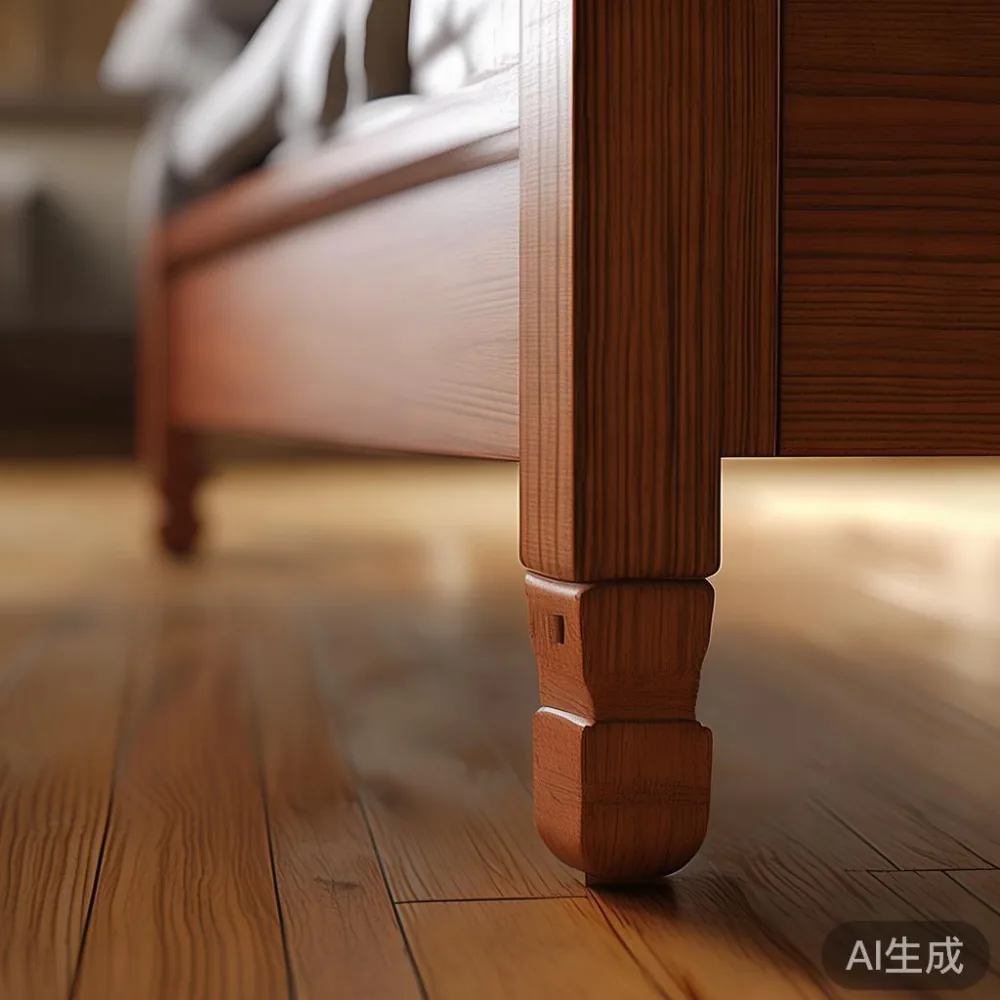
Three things, taken on the day of delivery: the carton label with the SKU and batch number, the headboard joinery close-up showing mortise-and-tenon or dowel construction, and the underside stamp or label that matches the warranty card. Save these in a single album on your phone, and email a copy to yourself. GST 9% receipts should be filed alongside — Singapore customs or the maker may request them if a replacement part is shipped from China.
I keep a small folder labelled “furniture” with the warranty card, the assembly diagram, and a photo of each piece in position. Last month I visited a colleague in Punggol who had a cracked stretcher on her solid wood sofa. Because she had the batch photo and the receipt, the claim was processed in six working days; the courier brought a replacement rail and a small tin of touch-up oil. Without those images, the same claim could have dragged past 30 days while the maker asked for more documentation.
Which red flags suggest the warranty is too soft?
Watch for these phrases: “at our discretion,” “subject to inspection,” “original packaging required,” “non-transferable,” “wear and tear excluded.” Each one is a tool to deny a claim. A solid warranty replaces them with measurable standards: defects defined, packaging waived if assembly was by the maker’s team, transfer allowed within 90 days of moving, and natural wood movement acknowledged rather than hidden under “wear and tear.”
Also count the exclusions. If the exclusions list runs longer than the inclusions, walk away. A fair document on a solid wood wardrobe will exclude only impact damage, water damage, unauthorised modification, and Acts of God — typically four lines, not fourteen.
How does a 14-day return policy interact with the warranty?
The 14-day return window is your cooling-off test drive. Use it. Sit on the solid wood sofa for at least an hour, open and close every wardrobe drawer 20 times, lean back against the headboard reading a book, and wipe the marble table with a damp cloth to check for clouding. If anything feels off, return the piece while you still can. Once day 15 passes, you are inside the warranty period, and the maker controls the pace of repair.
For Singapore buyers, the 14 days should be counted from the day of delivery, not the day of order. During the November–January peak, delivery can stretch from 7 working days to 21 working days as Guangzhou and Foshan factories queue containers. Know that clock in your contract as well.
Final checklist before you sign the delivery order
Tick these in order: warranty length broken out by frame, finish, and fittings; SGD return-shipping terms; repair-first language; lifetime refinishing or equivalent maintenance service; transferability to a new owner; exclusions capped at four lines; free shipping threshold you can clear with a single piece; 14-day return window starting at delivery, not order.
Keep the checklist next to the warranty card. The 30 minutes you spend here will save you the 30 days you would otherwise spend chasing a claim on a cracked headboard rail, a peeling lacquer, or a sagging wardrobe shelf. Good paperwork is the quietest luxury in any home.