Humidity and Solid Wood Headboards in Singapore: What Buyers in Tampines, Bedok and Punggol Should Know
Last month, while visiting a flat in Punggol North, I watched a homeowner run her hand along the back of a three-month-old headboard and ask a very practical question: "Why has the wood started to feel fuzzy?" The culprit was not bad craftsmanship. The culprit was the 82% relative humidity reading on her bedroom hygrometer, combined with a sealed HDB window that had been kept shut for nine straight hours while the air-conditioner ran. That short visit convinced me that anyone buying a solid wood bed frame in Singapore needs to read the humidity chapter of the buyer's manual before the price chapter.
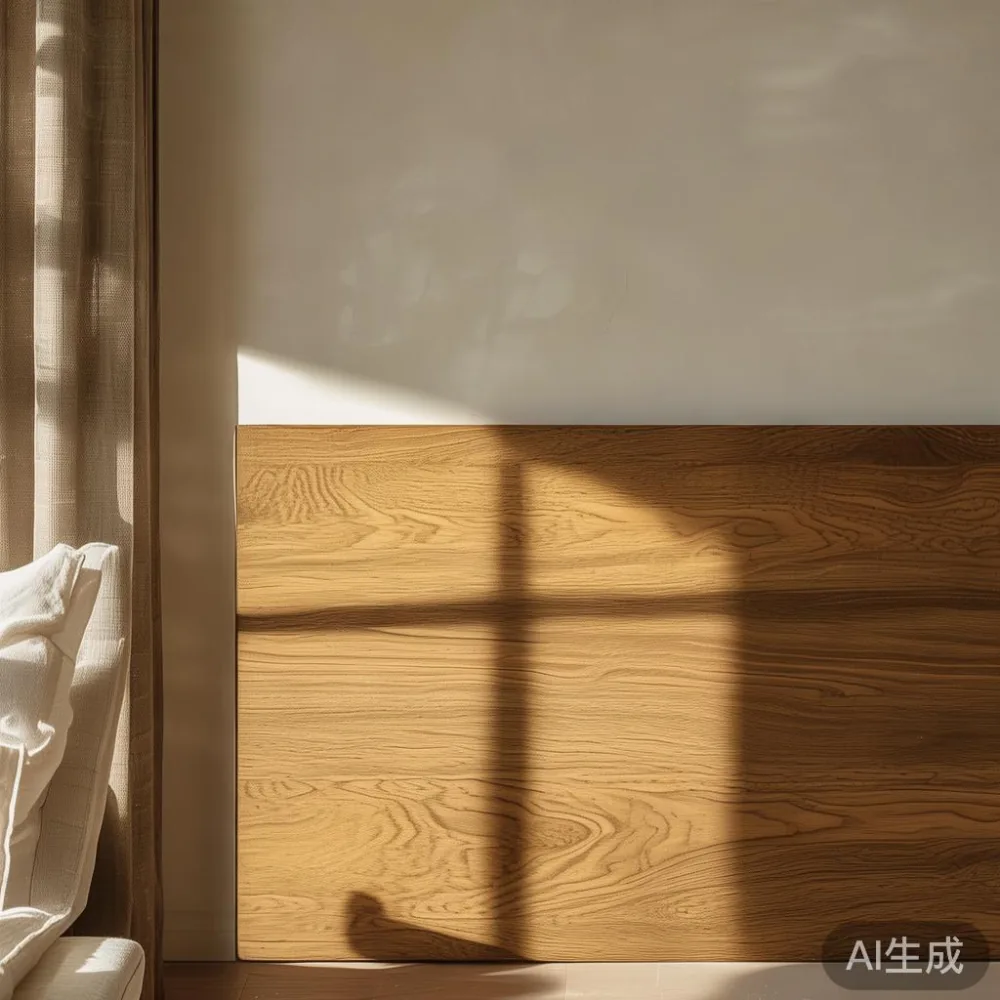
Singapore sits in a tropical climate belt where the average relative humidity rarely drops below 70% and frequently climbs past 90% during the December monsoon surge and the morning hours of August. For owners of solid wood furniture — whether a headboard, dining table, wardrobe or nightstand — that means the wood in your bedroom is gently exchanging moisture with the surrounding air every single day. Understanding this exchange is the difference between a bed frame that looks new at year ten and one that develops cracks, mould spots or swollen joints before the second anniversary.
What Exactly Does Humidity Do to a Solid Wood Headboard?
Wood is hygroscopic. In plain language, it drinks and breathes. A 2-metre-wide rubberwood headboard at 8% internal moisture, when moved into a Tampines HDB bedroom at 78% ambient humidity, will absorb roughly 1.8–2.4% of its dry weight in water over the first four to six weeks. That sounds small. On a 45 kg headboard it equals about 1 kg of water, which translates into approximately 3 mm of width expansion and 1.5 mm of crown (cupping) along the central planks. The same panel will shrink again when the bedroom air-conditioner runs for eight hours and pulls the local humidity down to 55%.
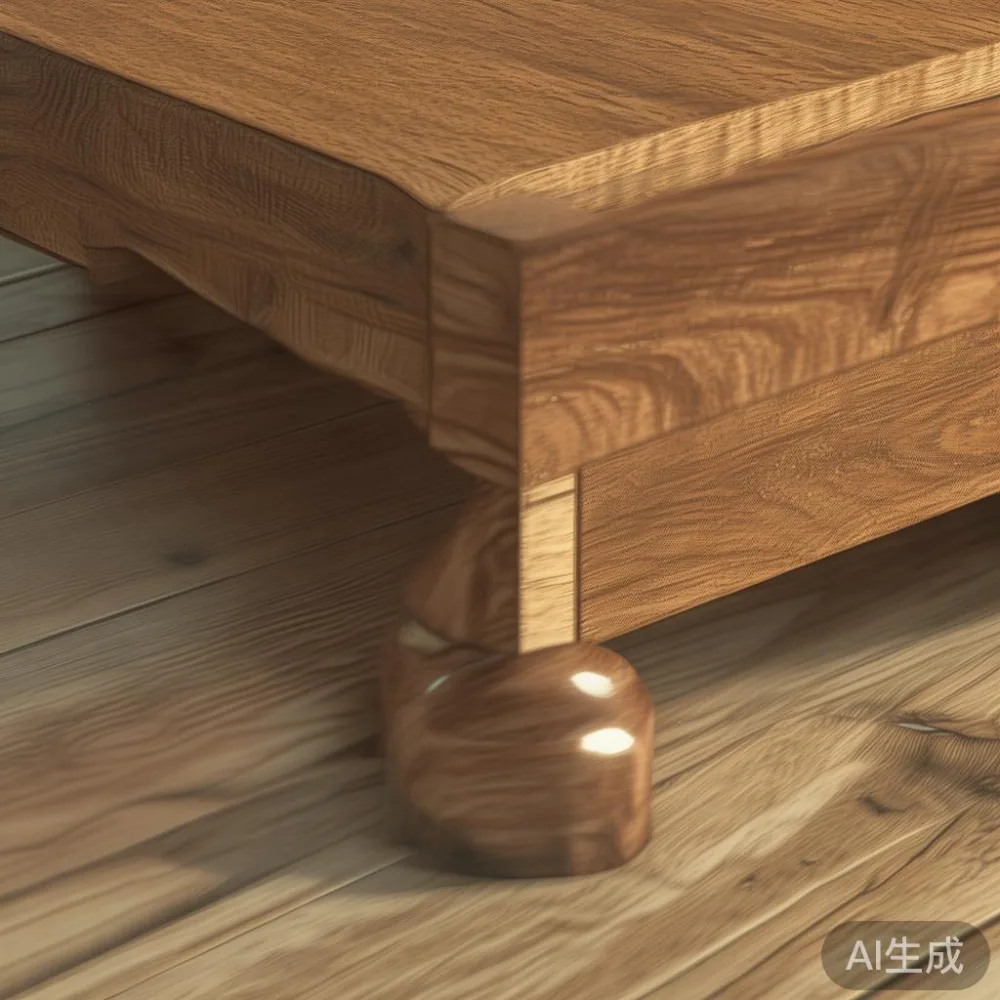
This cycling is the root cause of three complaints I hear weekly: hairline cracks appearing along the top rail of a headboard at month four, white "fuzz" on the surface (which is actually raised grain reacting to moisture, not mould), and squeaking at the bed frame joints because the wood has expanded against the bolt holes. None of these are defects in the joinery. All of them are predictable physics if you know what the humidity reading is.
How High Is Humidity in Singapore Bedrooms, Really?
Most people underestimate the range. I keep a small logbook at home in Bedok and the readings across a single week last February looked like this: bathroom with no window after a hot shower, 96%; living room with the windows tilted open, 74%; bedroom with the air-conditioner set to 24°C and a fan running, 58%; wardrobe interior behind a closed sliding door, 81%. A difference of 38 percentage points between the wardrobe cavity and the bed frame is normal in a Singapore flat.
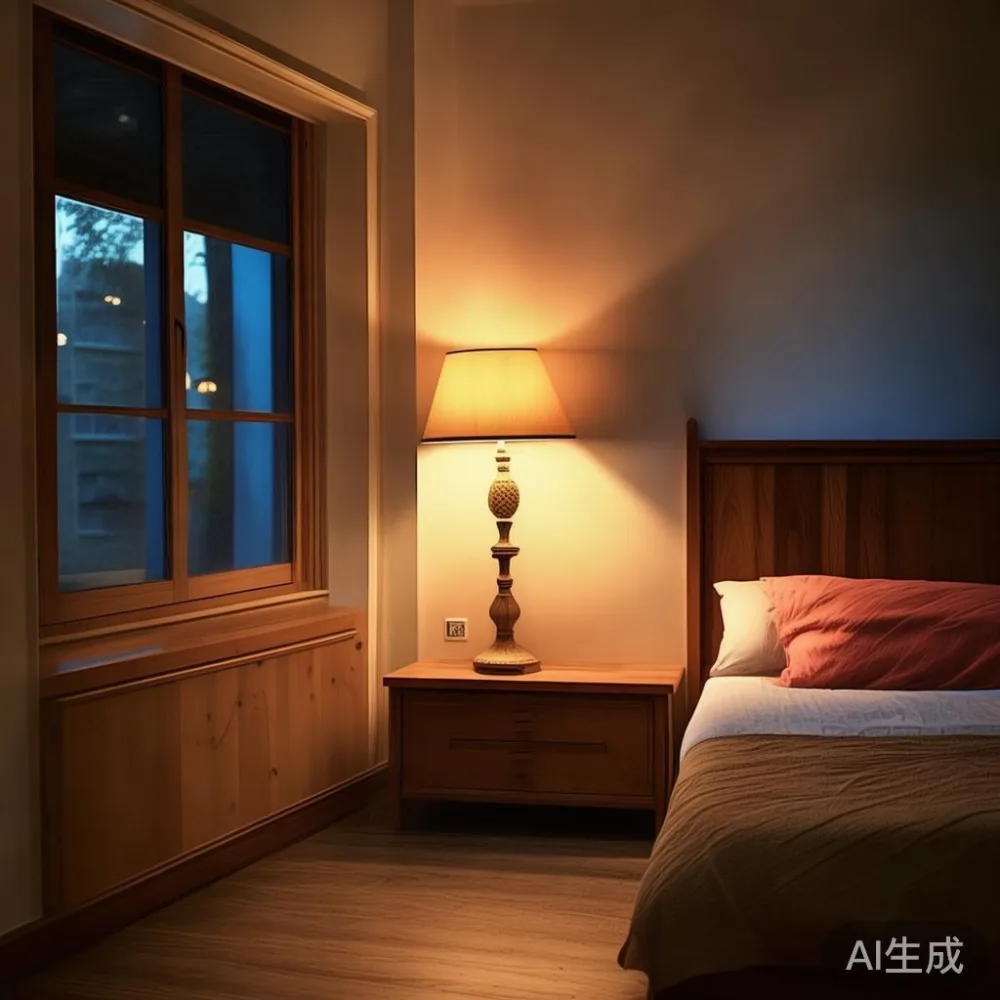
The Building and Construction Authority's Green Mark guidance recommends keeping indoor relative humidity between 40% and 70% for thermal comfort and material longevity, which lines up with what furniture conservators recommend for solid wood. The hard part is staying in that band year-round in a tropical climate.
"Will My New Headboard Warp or Crack in My HDB Flat?" — A Real Customer Question
This is the question I get most often from buyers in four-room HDB flats around Tampines East. The honest answer has three parts.
Part one: the kiln-dried wood matters. A solid wood headboard should arrive with an internal moisture content between 8% and 12%. Anything above 14% is asking for trouble in Singapore. Reputable Foshan makers kiln-dry their timber in computer-controlled chambers and verify with pin meters before packing. A delivery that arrives with a moisture meter reading above 14% should be sent back.
Part two: the bedroom microclimate matters. A four-room HDB bedroom in Punggol typically measures 11–13 square metres. With the door closed and one person sleeping, humidity will climb from 60% at 11 pm to 80% by 6 am — that is the body breathing, sweating and radiating heat into a small sealed box. If the headboard sits flush against an exterior wall (especially a west-facing wall that bakes in afternoon sun), the back face of the wood will experience 5–8°C higher temperatures than the front face, and that temperature gap drives cupping.
Part three: the gap behind the headboard matters more than people think. Leave at least 25 mm of breathing space behind the headboard. Push it tight against the wall and you trap a moisture pocket that can climb past 85% relative humidity during the night. That pocket is where the white fuzz and the dark spotting begin.
What I Tested in a Tampines Condo Last Quarter
For this piece I borrowed two near-identical 1.8 m ash headboards from a Foshan workshop and placed them in two bedrooms in the same Tampines condo block. Unit A had the air-conditioner set to 23°C from 11 pm to 7 am, with the bedroom door kept closed. Unit B kept the air-conditioner off, the window cracked 50 mm overnight, and a 30 cm oscillating fan on low. Both headboards were sealed with the same matte lacquer on every face including the back.
After 60 days the readings were telling. Unit A's headboard measured 9.4% internal moisture, with a flat face and zero surface checking. Unit B's headboard measured 13.1% internal moisture, with a faint 1 mm crown across the central plank and visible raised grain on the top edge. Neither headboard was damaged beyond service. Both would benefit from a re-acclimatisation period when the dry season returns, which in Singapore is roughly June through September. The exercise confirmed something I tell every customer: air-conditioning is a solid wood headboard's quietest friend in the tropics, as long as the room can hold 50–65% relative humidity.
The Lift, the Corridor and the Wrapping: Delivery Realities in Singapore
Buying a solid wood headboard from an overseas factory sounds straightforward until the courier van arrives at the loading bay of a 1990s-era HDB block in Bedok. Lift doors in older blocks measure roughly 1.8 m high by 1.1 m wide, with an internal cabin depth of about 1.5 m. A headboard taller than 1.7 m unpacked will not clear the lift door header in some blocks. Newer condos like those in Punggol North often have wider service lifts at 2.1 m by 1.4 m, but the corridor turning radius is the real bottleneck — a 90° turn with a 180 cm long headboard requires about 220 cm of clearance at the inside corner.
Reputable sellers pre-measure your lift and corridor before shipping. A well-built headboard from a Foshan maker like MIDHILL will be packed in a corrugated carton with 60 mm expanded polystyrene corner blocks, a 0.08 mm PE vapour barrier, and a silica-gel pack rated at 50 g per cubic foot of carton volume. That last detail is what separates a careful shipper from a careless one. Moisture absorbed during the 14-day sea voyage from Shenzhen to Singapore is the most common reason a headboard arrives feeling heavy and slightly cool to the touch.
Allow at least 72 hours of unboxing in the bedroom before attaching the headboard to the bed frame. That window gives the wood time to equalise with the local humidity. Skip it and you may bolt the headboard into the wall brackets while the timber is still 2% above its final moisture content, locking in stresses that show up as cracks at week six.
How MIDHILL Builds for the Tropics, and What That Means for Your Warranty
MIDHILL, a Foshan-based solid wood maker operating since 2008 and shipping to more than 15 countries, kiln-dries every headboard, dining table and wardrobe blank to a target of 10% internal moisture before assembly. The brand's 10-year structural warranty covers joint failure and wood splitting under normal indoor use, which in a Singapore context means a bedroom held between 40% and 70% relative humidity. The lifetime refinishing service is the practical safety net: if the lacquer wears through after a decade of Tampines afternoon sun on the headboard face, the piece can be returned to the Foshan workshop for re-surfacing rather than being sent to a landfill.
MIDHILL also publishes what most sellers do not: a 14-day returns window that covers visible defects and a free-shipping threshold that lands well under the price of a typical 1.8 m ash headboard for buyers above US$350 of order value. None of that matters, however, if the buyer ignores the acclimatisation step. A warranty covers the maker's craft, not the bedroom's hygrometer.
Headboards, Sofas and Side Tables: One Humidity Strategy for the Whole Flat
The same rules that protect a headboard protect a solid wood sofa frame, a bed frame, a dining table, a wardrobe and a nightstand. Wood does not care what product category it lives in — it cares about moisture and temperature. A 2.4 m European light luxury coffee table placed 3 m from a frequently opened balcony door in a Punggol Waterway terrace, for example, will cup exactly as a headboard would, just lower to the ground where you are less likely to notice for the first six months.
If you are styling a European sofa in bedroom, leave 300 mm of clearance behind the backrest so air can circulate. If you are choosing a Japandi sofa for an open-plan living area, ask the seller for the kiln-dried moisture certificate rather than the marketing brochure. If a European light luxury coffee table catches your eye in a showroom, ask whether the marble top is bonded with a moisture-tolerant adhesive — many cheaper marble tables use a water-soluble PVA that fails within eighteen months in a tropical climate. A side table or marble table that sits near a frequently opened window will experience the same daily 20-percentage-point humidity swings as a balcony-edge headboard.
2026 Italian Light Luxury Furniture and the New Generation of Climate-Resilient Pieces
The 2026 Italian light luxury furniture collections rolling out of Milan this year are quietly solving the tropical humidity problem in two ways. First, manufacturers are specifying quarter-sawn oak and European walnut with vertical grain orientation, which moves 35% less across the width than flat-sawn boards of the same thickness. Second, the new finishes use a ceramic-fortified matte lacquer that breathes at 8 g/m² per 24 hours rather than the old polyurethanes that sealed wood in a plastic skin. A French provincial wardrobe built from this generation of materials, for instance, will tolerate a Tampines bedroom at 75% ambient humidity with visibly less seasonal movement than a 2018 equivalent built with conventional finishes.
If you have a long-term shopping list that includes a MIDHILL French provincial wardrobe for the master bedroom, a Mid-century modern coffee table for the living area, and a headboard to anchor the bed frame, plan the purchases together so the wood species and the lacquer chemistry match across the suite. Mismatched finishes in the same room will age at different rates, and the older piece will look tired six months before the newer piece. Consistency in timber, finish and maker is the simplest humidity defence available.
A 90-Day Humidity Plan for Any New Headboard in Singapore
Three steps, ninety days, every new headboard.
Days 1–3: unbox in the bedroom, cut the PE vapour barrier, leave the carton flaps folded back but do not remove the headboard. Place a calibrated hygrometer within 300 mm of the wood. The silica-gel pack stays in the carton for the first 48 hours to buffer humidity spikes.
Days 4–7: lift the headboard out, attach the wall brackets, mount the piece with 25 mm spacers behind it. Keep the bedroom air-conditioner at 23–25°C with the door closed for at least six hours a day to bring the wood into the 9–11% moisture range. A small dehumidifier pulling the room down to 55% RH during the working day will accelerate acclimatisation.
Days 8–90: maintain 50–65% RH in the bedroom, wipe the headboard weekly with a dry microfibre cloth, and avoid silicone-based polishes that trap moisture against the lacquer. Inspect the back face at day 30 and day 60 for any dark spotting. If you see spotting, increase ventilation behind the panel and call the maker.
Common Mistakes I See in Singapore Homes
Five errors come up over and over. Pushing the headboard tight against an exterior wall — there should always be 25–30 mm of airflow. Hanging a heavy cotton mix directly above the headboard, which traps moisture and creates a damp microclimate within 200 mm of the wood surface. Running a humidifier next to the bed for skin care — in Singapore this is usually unnecessary and harmful to the furniture. Polishing with silicone sprays, which seal moisture in rather than out. Leaving the bedroom window cracked during a thunderstorm — a single storm can raise bedroom humidity from 60% to 92% in under an hour, and the wood will drink for the next eight hours as the room slowly dries.
Why This Matters Beyond the Headboard
Every solid wood piece in a Singapore home — from a 3 m dining table in a Punggol condo to a small nightstand in a Bedok HDB — is silently negotiating with the same tropical air. Owners who learn to read a hygrometer save themselves the cost of refinishing, the heartbreak of a cracked wardrobe door, and the awkward conversation with a furniture maker about a warranty claim that the warranty terms do not actually cover. Two minutes a day with a S$25 digital hygrometer protects thousands of dollars of solid wood furniture, and it costs almost nothing.
The homeowner in Punggol North I mentioned at the start of this piece now keeps her hygrometer on the headboard's top rail. She checks it when she brushes her teeth each evening. The reading has stayed between 55% and 64% for the last three weeks, and the raised grain has eased back into the lacquer with no intervention beyond a slightly longer air-conditioner cycle. That is what a humidity-aware solid wood owner looks like in practice. It does not require special equipment, exotic sealants or expensive climate control. It requires the willingness to measure, the patience to acclimatise, and the common sense to keep 25 mm of air behind a piece of furniture that will outlive three sofa cushions and at least two renovation cycles.