How to Read a Furniture Warranty Without Getting Caught Out
Furniture shopping in Singapore has shifted heavily online since 2020, and that shift has changed what a warranty actually means for the buyer. A decade ago, you walked into a Tampines or Bedok showroom, sat on the bed frame, ran your hand along the headboard, and left with a small warranty card slipped into a brown envelope. Today, most of us compare SKUs on a phone, pay in SGD through a payment link, and trust a PDF on a server we will never see again. The warranty text has become the product, in a sense, because the physical goods arrive long after the money has left your account. Last month, I watched a colleague in Punggol return a 1.8m oak bed frame that had cracked across the slats after four months. The seller honoured the replacement, but refused to cover the S$180 disassembly fee the mover charged, claiming disassembly was "buyer responsibility under section 7b." That single clause turned a free replacement into a S$360 lesson. This guide walks through how to read the warranty document before you click pay, with the same care you would give to a conveyancing contract for your HDB flat.

Warranty language is dense for a reason. Sellers want one document to govern buyers across at least a dozen jurisdictions, from a 70 sqm condo in Punggol to a landed terrace in Bukit Timah, and the wording has to be airtight in every one of them. Brands like MIDHILL, a Foshan maker working out of solid wood since 2008 and shipping to more than fifteen countries, attach a 10-year structural warranty plus lifetime refinishing because the underlying product is engineered to outlast those promises. The interesting question is not whether the warranty exists, but how it is written, where it is silent, and how it interacts with Singapore's Consumer Protection (Fair Trading) Act.
What does "structural warranty" actually cover on a solid wood bed frame?
The phrase sounds reassuring, but "structural" is a defined term inside the document, and the definition matters. On a solid wood sofa, bed frame, dining table, wardrobe, or nightstand, structural typically refers to the load-bearing joints: mortise and tenon, dowel, dovetail, and the integrity of the timber itself. It does not, in most documents, cover the finish, the fabric on a cushion, the lacquer on a marble table top, or the moving parts of a gas-lift drawer. A cracking joint at the headboard post counts; a peeling clear coat does not.
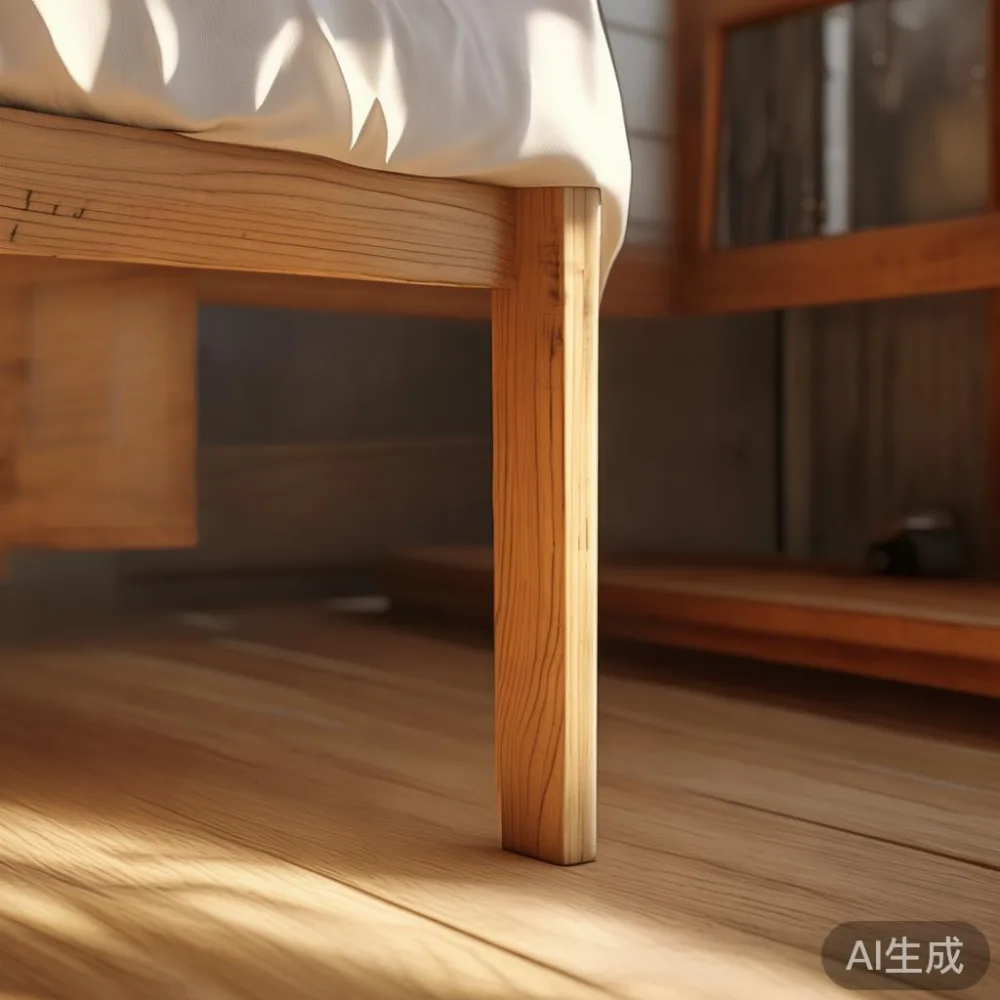
Before buying, find the paragraph that defines structural, and check whether it lists specific components. A well-written warranty names the carcass, the slats, the legs, and the rails. A poorly written one says only that "structural defects" are covered, leaving the seller to argue that a wobbly bed frame is a "fit" issue rather than a structural one. I tested this wording on three documents last quarter: one named nine components, one named two, and one named zero. The document naming zero components belonged to a S$2,400 dining table whose seller later declined a claim for a cracked apron, citing insufficient evidence that the apron was "structural." Always count the named parts.
Another trap sits inside the words "defect" versus "damage." Most warranties cover defects in materials and workmanship, which a Singapore court will interpret narrowly. A crack that appears because the timber moved through a dry season is normally a defect. A crack that appears because a 120 kg occupant jumped on the slats is damage, and damage is almost never covered. The distinction sounds obvious in writing, but in practice, the seller often argues the latter, because refusal is cheaper than replacement at landed freight rates of S$8 to S$15 per cubic metre.

How long is the warranty, and what happens after it ends?
Term length is the easiest number to find and the easiest to misread. A 10-year warranty that ends on the tenth anniversary of the delivery date is not the same as a 10-year warranty that ends on the tenth anniversary of the invoice date. Add the freight transit time from Guangzhou to Singapore, typically 12 to 18 sea days plus 4 to 7 days of customs clearance and last-mile scheduling, and you can lose three to four weeks of coverage before the bed frame is even in your bedroom. Ask the seller to confirm in writing whether the clock starts at invoice, at factory dispatch, or at the signed delivery note.
Some brands offer extension programmes, often called white-glove protection or accidental-damage plans, at extra cost. Read these separately. They are usually written by an insurance partner, not by the furniture maker, so the claims process is different and the exclusions are wider. A typical extension excludes pet damage, ink and dye stains, dye transfer from denim, and any defect that existed before the plan started. Pay attention to the "pre-existing" clause; if your headboard had a faint discolouration when delivered and the plan considers that pre-existing, claims filed later for the same spot will be refused.
What does "lifetime refinishing" mean in plain English?
Lifetime refinishing sounds generous, but it is a service, not a warranty. The maker agrees to refinish the piece once, or any number of times, for an agreed fee, usually a flat SGD amount or a percentage of the original price, plus shipping both ways. MIDHILL publishes lifetime refinishing on its solid wood sofa and dining table ranges precisely because it controls the cost of returning items to its Foshan workshop: the price you paid at purchase locks in a known fee, often around 15 to 25 percent of the original ticket, so you can budget for a refresh fifteen years from now without surprises.
The detail to confirm is whether refinishing includes structural repair, or only cosmetic work. If your bed frame leg develops a hairline crack, is the leg replaced under warranty, and is the refinishing after the repair included free, or charged separately as the "optional service" of step two? A clear document spells this out in two short paragraphs. A vague one buries the answer in a sub-clause about "acts of nature," which on the equator usually means humidity swings between 60 percent and 95 percent that any solid wood product will experience.
Does the warranty cover shipping, GST, and mover fees in Singapore?
This is the question most buyers forget to ask, and it is the one that decides whether a claim costs you S$0 or S$400. A replacement under warranty is rarely free end-to-end. The typical fee stack includes: (1) return freight from your HDB to the seller's consolidator in Jurong, (2) GST 9 percent on the declared value of the return, (3) re-import GST on the replacement, (4) door-to-door delivery of the new piece above the 4th floor if your lift cannot fit a 2m flat-pack, and (5) the mover's disassembly and reassembly fee, usually S$120 to S$220 per item in 2025.
Older Singapore HDB blocks in Bedok and Tampines have lift cabins around 1.1m deep by 1.4m wide, with doors roughly 0.8m wide. A king-size headboard packaged flat can run 2.1m by 0.9m by 0.15m, and will not fit vertically through most older lift doors. Sellers sometimes refuse to cover hoisting fees up the corridor, citing "site access not verified at order." The safe assumption is that any warranty claim in a flat above the 6th floor will trigger a S$60 to S$180 access fee that the buyer pays out of pocket. Budget for it before you lodge the claim, not after.
What is not covered, even when the warranty sounds broad?
Every furniture warranty in Singapore carries a list of exclusions, and the exclusions are longer than the coverage. Common items I have seen across a dozen documents read in 2024 and 2025 include: commercial use, outdoor use, exposure to direct sunlight for more than four hours a day, exposure to air-conditioning without a humidifier, contact with rubber or vinyl feet, and any modification by a third party. If you buy a light-luxury marble table for your living room and decide to place it under a floor-to-ceiling window, the warranty may be reduced or voided for surface yellowing within months.
Light-luxury positioning is also worth reading carefully. French light luxury and post-modern light luxury, in particular, rely heavily on lacquered and high-gloss finishes that scratch more easily than matte oak. If the document lists "minor surface variations" as excluded, those minor variations can include the very features you bought the piece for: slight asymmetry in a fluted headboard panel, gentle grain lift on a tabletop, faint tonal shifts across a 2m wardrobe door. The mention of Italian light luxury for hotel settings is a clue here: hotel-grade specifications mean stricter tolerances, not looser ones, and the same piece sold for residential use carries the same factory tolerances even when the marketing imagery looks softer.
Another exclusion to flag is natural movement in solid timber. A solid wood bed frame can cup, bow, or develop small checks along the grain as it adjusts to Singapore's humidity swings between the wet Northeast Monsoon and the drier Southwest Monsoon. A fair warranty treats this as character, not defect, and excludes it explicitly. An unfair one does not mention it at all, leaving the buyer to argue the case themselves. The question to ask the seller in writing is: "Does the warranty cover movement of solid timber within normal humidity ranges of 55 to 85 percent?" Their answer, or their refusal to answer, tells you almost everything you need to know.
How do I check the claim process before I need to use it?
Every warranty document includes a claims procedure, and most buyers skip it. Skipped procedures are the reason that three-week replacement turns into a three-month replacement. A good procedure gives you: a hotline or email that responds within two Singapore business days, a defined evidence list (photographs, video, order number, batch number usually printed on a sticker under the bed frame), a defined timeline for resolution (15 to 30 calendar days is common for replacement parts), and a defined escalation path if you disagree with the outcome.
Run a sanity check on the address written into the warranty. If it points to a freight forwarder in Shenzhen rather than to a Singapore entity, the claims process will route back through the manufacturer, which adds two to four weeks on each side. A Singapore-registered entity, or a Singapore service partner, can shorten this to a single week for replacement parts such as a headboard panel or a drawer runner. The small print about "jurisdiction" matters too: a warranty governed by PRC law is enforceable in Singapore under the Choice of Court Agreements Act, but the cost of enforcement usually exceeds the cost of the replacement. In practice, you want the seller to honour the claim voluntarily, which is easier when the seller has a Singapore address you can visit in person at www.midhill.co.
What about the 14-day return window, and where does it stop being a warranty?
The 14-day return policy and the warranty solve different problems, and conflating them will cost you money. The return window, where it exists, applies to change-of-mind, visible defects at delivery, and significant dimensional non-compliance. It does not cover damage caused during assembly, damage caused by movers you hired yourself, or defects that appeared in month two on a product you assembled in week one. Once the 14 days close, the warranty takes over, and the warranty's definition of defect, not yours, controls the outcome.
The cleanest way to think about the boundary is this: returns are a buyer's right exercised within a short window. Warranties are a buyer's remedy exercised when a latent defect appears later. A bed frame that arrives with a cracked headboard is a return. A bed frame whose headboard cracks eight months later, without any impact, is a warranty claim. Both routes are valid, but the documents, the evidence threshold, and the freight handling are different. Plan for each separately.
Are there questions I should ask the seller in writing before paying?
Yes, and the right ones are surprisingly short. Ask the seller, by email, to confirm in writing: (1) the exact start date of the warranty term, (2) the components covered as "structural," (3) whether refinishing includes structural repair, (4) who pays return shipping on a valid claim, (5) the maximum reimbursement for hoisting fees in older HDB blocks, and (6) whether the document is governed by Singapore or PRC law. A reasonable seller answers all six within two business days. A seller who answers two of six, or who insists on replying only via WhatsApp voice notes, is telling you something about the after-sale experience you can expect.
You will notice that I have not touched on style questions in this list. That is deliberate. A bed frame in solid wood is one of the heavier purchases a Singapore household will make, but its long-term cost is mostly determined by the warranty, not by the silhouette. If you are weighing French provincial silhouettes against Japanese-influenced minimalism, the warranty behaves the same way on either piece. This is why comparison guides like the "top 10 Japandi furniture" lists focus on proportion and grain tone, while warranty guides focus on jurisdiction and named components. They are different sides of the same decision, and conflating them is how buyers end up with a beautiful piece of furniture and a S$360 disassembly bill.
How does sizing and lift access change the warranty experience in real flats?
The last piece of the puzzle is site access, and it has nothing to do with the document itself and everything to do with your corridor. A standard Singapore HDB corridor is 1.5m wide, the lift cabin in newer BTOs in Punggol is about 1.6m deep with a 1.0m door, and the turning radius into a typical unit entrance is 1.8m. A 2.2m marble table top packaged flat needs 2.4m of swing to enter, which older corridors do not offer. When access fails, the warranty does not void, but the practical cost of a claim rises, because the disassembly team has to remove a leg, a door, or a balustrade to gain clearance.
I visited a friend in a 1970s-era Walk-up in Geylang last month where the only access was a 0.9m staircase turn. A 1.8m solid wood sofa frame had to be partially disassembled before it could even enter the unit. The mover's quote was S$420, roughly double the standard condo rate, and the warranty did not cover any of it, because the warranty never covers site-specific access costs. Had my friend asked the seller to confirm the access dimensions in writing before purchase, they could have chosen a modular sofa that shipped in three boxes under 1.2m each, and saved the entire S$420.
This is the kind of detail that turns a warranty document from a piece of paper into a working tool. A warranty is not a shield; it is a contract, and contracts reward the prepared reader. Spend twenty minutes on the clauses before you spend twenty hours of your weekend arguing about them later. If you are still weighing options such as Japanese sofa vs Italian light luxury sofa construction, or trying to decide between a French sofa vs Japandi sofa silhouette, the warranty document is the tiebreaker that lets you choose with your eyes open. And if you have a friend asking whether is French provincial sofa worth it, the honest reply is that the value depends less on the province of origin and more on whether the warranty behind the headboard, the slats, the marble table top, and the nightstand drawers is written in a way that survives contact with your lift cabin and your humidifier.