How to Style a Small HDB or Condo Around One Statement Headboard (Without Making It Feel Crowded)
I spent last month walking through three show flats in Tampines with my colleague Rina, who had just taken the keys to a 592 sq ft two-bedder in Bedok Reservoir. Every room came with the same built-in wardrobe, the same laminate flooring, and the same problem: a master bedroom barely 3.2 m by 3.0 m, with a corridor-style entrance that ate up another 1.1 m of usable wall. The developer's brochure promised "light luxury living". The reality was a bed shoved against the window and a folded-up stool serving as a nightstand. We left the show flat with a single mission: keep the room calm, keep the circulation paths open, and let one element carry the personality. For every HDB and small condo in Singapore, that element is almost always the headboard.
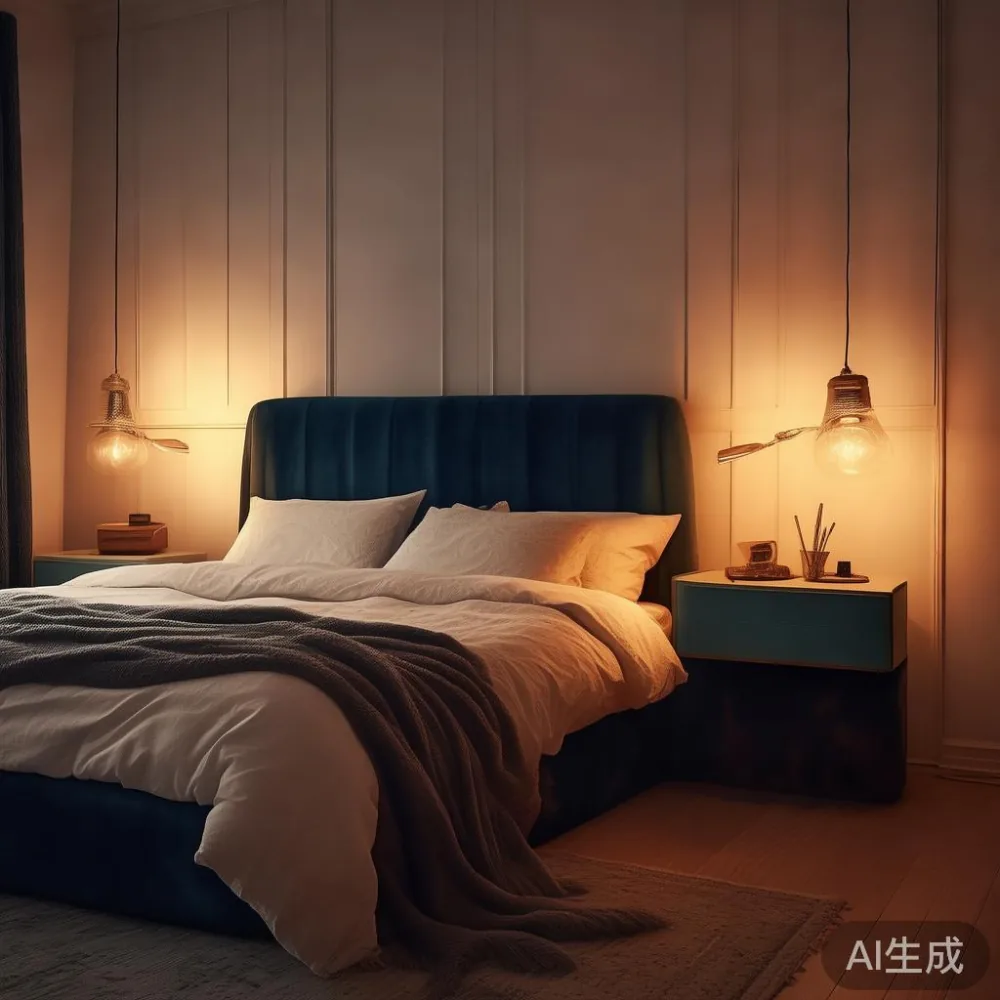
Why the headboard is the one piece worth committing to
A headboard is the largest vertical surface your eye lands on the moment you walk into a bedroom, and in a flat where the bed faces the door, it is also the first thing your guest sees from the corridor. Spend the design budget there, and everything else can quietly step back. Spend it on a marble console or a sculptural lamp, and the room still reads as a default developer unit. This is the same logic interior designers apply to hotel rooms: one strong anchor, three quiet supports, nothing competing for attention.
For a 3.0 m wall in a Tampines four-room flat, a headboard between 160 cm and 180 cm wide covers roughly 55% of the wall. Go above 200 cm and the side walls start to feel squeezed, especially if you leave the standard 20 cm gap on each side for a slim nightstand. Go below 150 cm and the queen mattress (typically 152 cm x 188 cm) begins to overshadow it. The height should land between 110 cm and 130 cm from the floor; anything taller begins to push against the ceiling cornice, which in most HDBs sits at only 2.7 m.
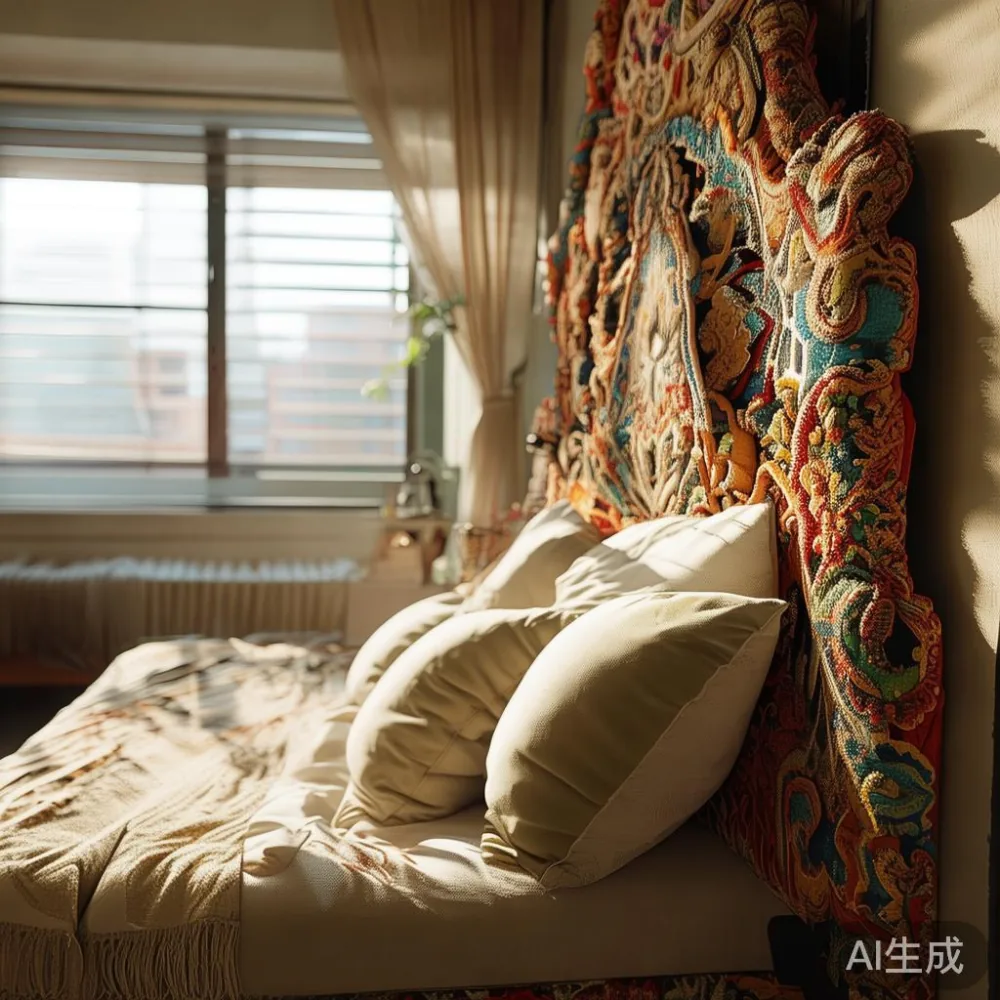
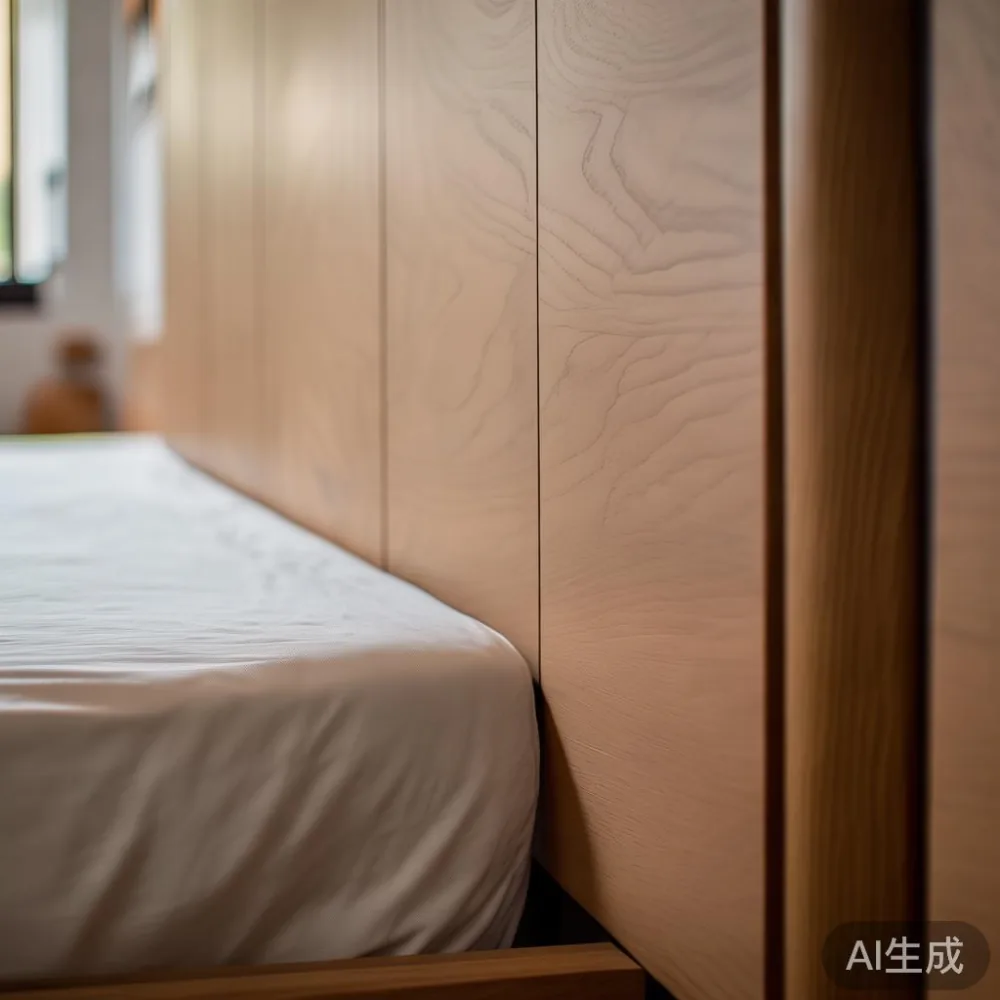
If you are starting from scratch, this is also where the choice of material quietly decides the rest of the room. A solid wood frame around the headboard gives you the option to carry the same timber tone into a slim wardrobe, a small bench, or a single tall shelf, without the space looking busy. A fabric-upholstered headboard pulls you toward a softer palette and pairs naturally with a low-profile bed frame on tapered legs.
What is light luxury, and does it actually work in 60 square metres?
The term sounds like marketing, but the idea is practical. Light luxury is a restrained version of high-end European design: a few considered materials, soft curves, brushed brass or champagne hardware, and very little ornamentation. It avoids the heavy lacquered look of traditional Chinese classical pieces and the high-gloss postmodern style that dominated Singapore condos a decade ago. American light luxury leans toward cleaner lines and lighter oak; French light luxury brings in more curve detail and a warmer cream palette; post-modern light luxury reintroduces geometric shape without going maximalist. In a small flat, the "light" part matters more than the "luxury" part, because the goal is airiness, not display.
A quick reality check on budget. A complete light-luxury refresh of a one-bedroom condo in Punggol, covering a queen bed frame, two nightstands, a 4-door wardrobe, and a small dining table for four, typically lands between S$6,800 and S$11,500 in 2025, before GST. Add a fabric headboard panel and the number rises by S$450 to S$900 depending on the textile. That is a meaningful spend, so the pieces you choose have to earn their footprint.
How do you plan a small bedroom around one statement headboard?
Start with the door swing. In 80% of HDB master bedrooms the door swings inward, which steals roughly 0.9 m of usable wall opposite the hinge. If your bed sits on that wall, you lose floor space every time someone enters. The fix is to push the bed onto the wall with no door interference, then centre the headboard on the remaining unbroken wall. In Rina's Bedok flat, this gave us a 2.9 m clear run, just enough for a 168 cm-wide upholstered panel and two 35 cm nightstands with a 7 cm breathing gap on each side.
Next, lock down the bed frame height. A platform frame at 28 cm looks grounded but blocks under-bed storage. A slatted frame on 18 cm legs (common on a solid wood bed frame from MIDHILL furniture) gives you 22 cm of clearance for flat storage boxes and keeps the visual weight low. Lift-up hydraulic frames add storage but raise the seat height to 45 cm, which then forces your nightstand up to 60 cm or higher, and a tall nightstand in a small room quickly feels like a wall.
Then layer the lighting. HDB ceilings rarely allow recessed downlights directly above the bed because of the concrete slab routing, so a pair of 25 cm wall sconces at 160 cm height, or a single linear pendant dropped to 180 cm, handles the bedside task. Add a 4.8 m strip of warm 2700K LED behind the headboard if you want the soft-glow effect that defines the light-luxury look, and you have replaced three floor lamps with a single circuit.
What furniture should you actually keep, and what should go?
For a small bedroom, the rule is: anything wider than 50 cm that does not touch a wall is suspect. A six-drawer dresser deeper than 45 cm will eat the corridor. A 60 cm wide TV console opposite the bed will dominate the view. A free-standing mirror taller than 120 cm will reflect the bed back at you and make the room feel shorter. Keep one tall element if you need storage; skip two.
Here is a checklist that works in most 9-12 sqm HDB bedrooms:
1. Bed frame on legs, 28-42 cm seat height, queen size at most for a 3.0 m wall.
2. Headboard 160-180 cm wide, 110-130 cm tall, with 20 cm gap to each side wall.
3. One nightstand per side, 35-45 cm wide, 45-55 cm tall, same timber as the bed.
4. One wardrobe, sliding doors preferred, depth 55-60 cm, height to ceiling cornice.
5. One stool or bench under 110 cm wide, only if the foot of the bed has 70 cm clearance.
6. Zero floor lamps. Use wall or pendant light instead.
If you want a seating moment, replace the bench with a slim 90 cm-wide lounge chair in a breathable fabric. Rina tried this with a 1.2 m boucle chair in the corner opposite the bed, and the room still felt open because the chair legs were 22 cm off the floor and the back was only 78 cm tall.
Where can you reuse the same design language in the living and dining areas?
The trick is repetition without duplication. Once the bedroom headboard is locked, you carry two ideas into the rest of the flat: the timber tone, and the soft curve detail. In the living room, this might look like a solid wood sofa on tapered oak legs, a round marble coffee table at 80 cm diameter (small enough for a 2.2 m rug to still sit 25 cm out from each sofa edge), and a single open shelf in the same veneer as the bed.
A Modern light luxury coffee table tends to combine a travertine or sintered stone top with a slim brushed-brass base, which echoes the hardware on a light-luxury wardrobe without visually competing with it. Keep the table height at 38-42 cm so it sits 3-5 cm below the seat of your sofa. Anything higher starts to feel like a desk.
For the dining zone in an open-plan Sengkang or Punggol layout, a 120 cm to 140 cm dining table seats four comfortably with 60 cm per person, and you can usually pull it 80 cm out from the wall when extra guests arrive. Style it Modern for dining room by keeping the silhouette slim: a 4 cm thick tabletop, 6 cm tapered legs, and a single pendant 70 cm above the surface. If you want more drama without bulk, lean Post-modern for dining room with a geometric base in matte black and a paler oak top, which reads strong but stays under 80 cm in any direction.
The wardrobe decision affects the hallway as much as the bedroom. Sliding doors save 0.5 sqm of swing clearance versus hinged doors, which in a 1.1 m corridor is the difference between brushing the handle as you walk past and walking through normally. If you want to know how to style light luxury wardrobe in room without it dominating the wall, choose a recessed handle, a panel that matches the headboard timber, and keep the height within 5 cm of the ceiling line.
How do you handle guests, rentals, and the spare room?
If you have a second bedroom used as a guest room or a hybrid work space, the same logic applies at a smaller scale. A single bed at 90 cm x 200 cm with a 120 cm-wide headboard, one slim nightstand, and a 35 cm-deep wall-mounted desk is usually enough. For European light luxury for guest room styling, choose a pale oak or ash finish, a curved-back chair, and a single framed print above the desk. Resist the urge to add a wardrobe in a 7 sqm room; a 60 cm-wide tallboy and three wall hooks handle short-stay guest needs.
Renters face one extra constraint: most HDB landlords prohibit drilling into the main bedroom wall, which rules out the LED strip behind the headboard. A free-standing headboard with a wide base, between 4 cm and 6 cm deep, sits flush against the wall without fixings and still delivers the vertical anchor. Weigh it above 22 kg so it does not slide when the bed is made. Solid wood construction easily clears that number.
What about delivery, access, and Singapore-specific logistics?
This is the part most online guides skip, and it is where small flats in Singapore quietly fail. A standard HDB corridor is 1.2 m wide, and the lift door on most blocks from the 1990s onward is 0.9 m wide with a depth of 1.4 m. A flat-pack queen bed frame in two boxes of 168 cm x 38 cm x 18 cm fits comfortably. A solid wood headboard at 170 cm x 125 cm x 14 cm in a single carton also fits, but only if the courier tilts it vertically inside the lift. Confirm the box dimensions before you order, and ask whether the delivery team will bring it up the stairs if the lift is being serviced, which happens roughly once a year in most blocks.
MIDHILL ships from Foshan with free delivery above US$350 (roughly S$475), and a standard Singapore consignment arrives in 18 to 28 working days via Port Klang trans-shipment. The 14-day return window applies once the piece is in your flat, not from the shipping date, so plan to inspect within five days of arrival. The 10-year structural warranty covers frame joint failure and timber cracking above 5 mm, which in Singapore's 27-31°C indoor range and 70-80% humidity is the realistic failure mode for untreated rubberwood or pine. The lifetime refinishing service is useful at year six or seven, when UV exposure through an east-facing window begins to amber the timber.
Ask the courier to unwrap the headboard in the bedroom, not the corridor. Corridors in blocks like Bedok 642 or Punggol Cove are usually wider (1.5 m), but older blocks in Tampines can drop to 1.05 m near the lift lobby, and an unwrapped 170 cm panel will not pivot around the corner.
Will an Italian-style sofa actually change how the room feels?
Short answer: yes, but only if the rest of the room lets it. A deeper sofa (95-105 cm seat depth versus the usual 85-90 cm) and a lower 40 cm seat height gives the room a more relaxed, lounge-like posture that pairs naturally with a marble coffee table and a low headboard in the adjacent bedroom. The honest question many buyers ask is: is Italian light luxury sofa worth it for a small Singapore flat, where the living room might be only 14 sqm? In my own view, the answer depends on whether you sit on it every day or only when guests visit. If daily, the difference in foam density, webbing suspension, and frame joinery is felt within a month. If weekly, a well-made Southeast Asian alternative at 40-50% of the price is the rational choice.
For most small Singapore layouts, a 2.2 m three-seater is the practical maximum. Anything longer crowds the 90 cm walkway to the balcony door, which HDB regulations require to remain unobstructed for fire safety. A 2.0 m version, paired with a 75 cm-wide armchair, often feels more balanced in a 3.2 m living wall.
Common mistakes that make a small flat feel crowded
The biggest culprit is over-curating. A small bedroom with a headboard, two nightstands, a wardrobe, a bench, a mirror, a floor lamp, and a wall of frames will feel smaller than the same room with a headboard, one nightstand, a wardrobe, and one pendant. The eye reads quantity, not value. The second is buying pieces 5-10% too large "for comfort". A 180 cm headboard on a 152 cm mattress creates 14 cm overhang on each side, which then forces the nightstands further out and steals walking space. Third, mixing three timber tones in one room. One dominant tone (oak, ash, or walnut), one accent tone (the brushed brass hardware), and one neutral (the wall paint) is enough. Fourth, choosing a wardrobe that stops 30 cm below the ceiling cornice and creates a dusty ledge that collects clutter, making the room feel visually shorter. Fifth, ignoring the corridor. A console table in the bedroom corridor is rarely worth the 60 cm of walking space it consumes.
What does a calm, light-luxury small flat look like when it all comes together?
Walk into Rina's finished Bedok flat today, and the bedroom reads in three layers: the timber headboard at 168 cm wide with a soft fabric panel in oat beige, the queen bed on 18 cm oak legs, and a single ceramic pendant at 170 cm drop. The nightstand on her side is 38 cm wide, slightly smaller than his, because she keeps fewer things on it. The wardrobe runs floor-to-ceiling in the same oak, sliding doors, recessed handle, no visible hardware. The living room has a 2.0 m three-seater solid wood sofa, an 80 cm round marble table, and one open shelf with three books and a plant. The dining area has a 130 cm table for four and two chairs in cream fabric. The whole flat, including appliances and lighting, came in around S$9,400 before GST, with the headboard and bed frame accounting for S$2,150 of that.
That is the point of styling a small apartment without making it feel crowded. You are not adding more; you are choosing fewer things, and choosing them with enough care that each one carries weight. The headboard, the bed frame, the sofa, the wardrobe, the nightstand, the marble table: each one has a job, each one repeats a material, and each one earns its 40 cm of floor space. In a flat where every centimetre is measured, that is the only kind of design that actually works.