How to Read a Furniture Warranty Without Getting Caught Out
Last month I visited a Tampines HDB flat to help a friend measure her bedroom doorway before a solid wood bed frame arrived from a Foshan workshop. The corridor was 1.2 m wide, the lift opening was 80 cm, and the bedroom door was a standard 89 cm. Those three numbers decided which headboard profile she could actually order. The same afternoon I sat on her existing sofa and read the warranty booklet for her two-year-old dining set. The booklet was eight pages long, in 9-point grey type, and it answered almost none of the questions she actually had. That afternoon is the reason this guide exists.
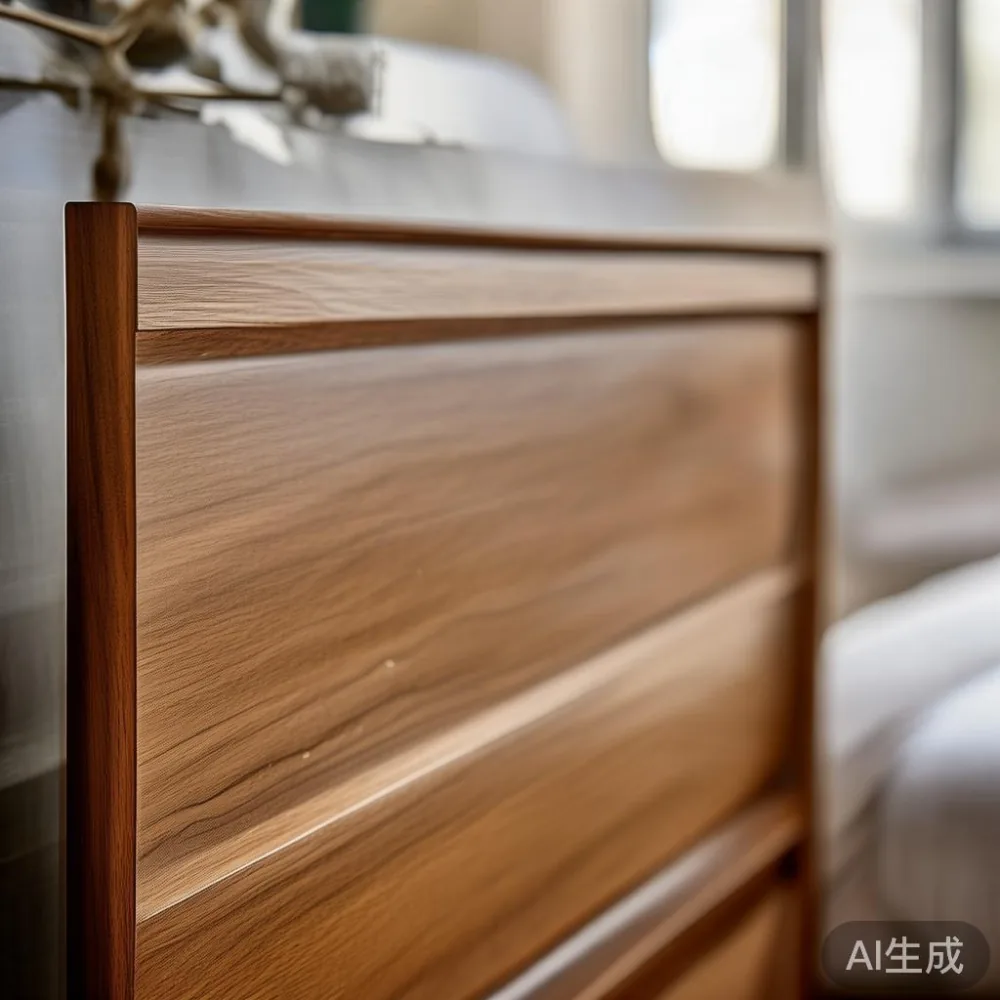
Buying a piece of solid wood furniture, a bed frame, a dining table, a wardrobe, or a nightstand in Singapore is a long-term relationship with the maker, not a one-day transaction. Most buyers focus on grain, colour, and price, then discover too late that the warranty covered the wood but not the joints, or covered structural failure but not the headboard panel cracking after six months in an air-conditioned HDB flat. Below is the field guide I now hand to anyone who asks.
What does a furniture warranty actually cover?
A warranty is a contract about who pays for what, and when. In Singapore, most reputable exporters print three numbers on the cover page: the coverage period (commonly 5, 10, or 25 years), what counts as a "defect" versus "normal wear," and the procedure for filing a claim. The body of the document then defines each term in precise language. The first paragraph usually defines the warrantor (the company standing behind the promise), the original retail buyer, and the country of intended use. Read that paragraph before reading anything else. If the warrantor is a Foshan trading entity rather than the actual factory, you have one degree of separation between you and the workers who built the piece.

For solid wood pieces, the typical exclusions are: exposure to direct sunlight above four hours per day (Singapore afternoon sun on a west-facing Punggol window counts), relative humidity outside 40–65 percent (which is exactly the range a Bedok condo balcony hits in November), and damage from improper assembly. A good warranty will state the structural coverage period for the joinery, the surface finish, and any mechanical components (drawer runners, hydraulic lifts, hinges) separately. A weak warranty groups them together and excludes almost everything by default.
Where does the 10-year structural warranty actually begin?
It begins on the date of delivery, not the date of manufacture, and not the date you paid the deposit. Two pieces of information should be on your invoice: the dispatch date from the Foshan warehouse, and the receipt-of-goods date signed by you or your building concierge. If those two dates differ by more than 30 days because of sea freight or Singapore port congestion, the clock has already eaten a month of your coverage. MIDHILL, a Foshan solid wood furniture maker established in 2008, anchors its 10-year structural warranty to the delivery date and provides a written schedule of what is structural (frame, load-bearing joints, slats) versus what is cosmetic (finish, light scratches, normal patina).

Push for one specific number when you buy: the maximum ambient humidity range the maker is willing to cover. Solid wood moves. A 180 cm bed frame made of oak can move 4–6 mm in width between Singapore's dry February (around 65 percent) and wet November (around 85 percent). If the warranty excludes movement outside a 40–65 percent band, and your HDB hits 80 percent for a week during a monsoon surge, any cracking you see is on you, not on the maker.
Is Italian light luxury furniture worth it?
It is worth it only if the maker can show you three documents in writing: the country of origin for the wood, the country of origin for the fabric or leather, and the country of final assembly. Italian light luxury is a styling language (clean lines, restrained hardware, neutral palettes, marble accents on dining tables and nightstands) rather than a guarantee of where the piece was built. A Foshan workshop can produce a piece that reads Italian light luxury to the eye and charges Italian light luxury prices, or it can produce a near-identical piece at 40 percent less because the assembly line, leather cutting, and marble selection are all in Guangdong. The warranty is the only place where the difference shows up on paper. A piece marketed as Italian light luxury but assembled in Foshan should carry a Foshan-issued warranty with a Foshan-registered entity, and the cover page should say so.
What you are really paying for in the premium tier is finish consistency, hardware grade (soft-close runners rated for 100,000 cycles), and after-sales responsiveness. A marble table from a serious light-luxury maker will have resin-filled top surfaces, calibrated thickness (commonly 18 mm with a 2 mm tolerance), and a documented anti-staining treatment. Cheaper versions skip the resin fill and skip the calibration. The warranty document should mention the marble grade and the surface treatment by name; if it does not, you are paying for the look, not the spec.
How do corridor and lift widths change your real warranty risk?
This is the question most Singapore buyers forget to ask, and the one that decides whether you ever use the warranty at all. A standard HDB corridor in a Tampines or Punggol BTO is about 1.2 m wide. Lift openings in most Singapore blocks are 80–90 cm, with a depth of 1.4–1.6 m. A solid wood dining table for six will often ship at 200–220 cm long and 95–100 cm wide. If the lift door is 80 cm and the table is 95 cm, it does not enter the lift in one piece. The maker has to tilt it, or the table has to be designed to break down into two halves under 80 cm. Either way, the assembly and disassembly is now part of your ownership story, and the warranty should explicitly cover re-tightening of bolts after assembly.
Two practical numbers to request from the maker before purchase: the maximum single-piece dimension of the headboard panel, and the weight per carton. A solid wood headboard panel over 35 kg is a real risk for a single delivery man carrying it up a HDB stairwell when the lift is unavailable. MIDHILL publishes carton dimensions and gross weights on its shipping manifest, and its 10-year structural warranty covers joint loosening on headboards and bed frames caused by normal household use, provided the original assembly instructions were followed. That last clause matters: keep the manual, photograph the assembly, and email the photos to yourself the day you finish building the piece.
What does "lifetime refinishing" actually mean in Singapore dollars?
Lifetime refinishing is the second promise that looks generous and is easy to get wrong. In a Foshan workshop's terms, it usually means: you ship the piece back to Foshan (or to a Singapore partner workshop), the maker refinishes the surface, and you pay the freight both ways plus the labour. For a 2 m solid wood dining table shipped from Foshan to Singapore, sea freight runs around SGD 280–420 per cubic metre for LCL (less-than-container-load) consolidation, and air freight runs SGD 8–14 per kilogram. A dining table top alone can weigh 45–65 kg. So lifetime refinishing on paper can easily cost you SGD 700–1,400 in shipping alone, before any sanding, staining, or topcoat work.
The honest questions to ask the maker are: what is the SGD cost per square foot of refinishing labour, what is the minimum turnaround in Singapore (a local partner workshop can turn around a nightstand in 5–7 working days), what freight term applies (FOB Foshan vs CIF Singapore), and whether the refinishing is done in Singapore or shipped back to China. MIDHILL's lifetime refinishing benefit can be redeemed through its Singapore partner workshop at a published SGD rate per piece category (nightstand, headboard panel, dining tabletop), and the shipping leg is capped at a stated ceiling for orders above SGD 1,800. Read the ceiling. Read the SGD rate. Then decide whether lifetime refinishing is a gift or a prepaid service you have to claim.
How does free shipping over SGD 350 change your warranty math?
Free shipping is paid for somewhere. The two places it usually comes from are the unit price (the SGD you pay per piece) and the consolidated sea freight that the maker negotiates as a volume shipper. A Foshan maker exporting to 15+ countries fills containers and negotiates LCL rates that a single Singapore importer cannot match. That volume discount is what funds the "free shipping over US$350" or "free shipping over SGD 350" banner. If your order qualifies, your warranty exposure during transit is also covered by the maker's marine insurance, which is a meaningful benefit: a cracked headboard panel discovered on receipt should be replaced at no SGD cost to you within 14 days, per the maker's published policy.
Below the threshold, you pay freight, and you carry the transit risk yourself unless you buy separate insurance. Above the threshold, the maker carries the risk from the Foshan warehouse floor to your HDB door. Check the warranty document for the phrase "point of delivery" or "delivery to threshold." Threshold delivery means the piece is placed at your door or lift landing, not inside your bedroom. If two men need to carry a 60 kg wardrobe up a HDB stairwell because the lift is too small, that is not covered. Confirm the SGD surcharge for inside delivery, or ask for it in writing. A 14-day returns window (the standard MIDHILL policy for ready-stock items) gives you enough time to inspect for transit damage, document it with photos, and file the claim before the returns window closes.
Which warranty clauses matter most for solid wood in a tropical climate?
Five clauses matter more in Singapore than in temperate markets: humidity range, direct sunlight exclusion, mould and mildew exclusion, insect damage (termite is the local risk), and surface checking on end-grain panels. A headboard made of solid oak with end-grain exposed (the top edge of a tall headboard, for instance) will check (form small cracks) within six months if the panel sits 30 cm from a west-facing window with afternoon sun. That is not a defect. It is wood behaving like wood. The warranty should say so, and the maker should offer a free wax-stick repair within the first year rather than calling it a manufacturing defect.
For wardrobes and dining tables stored near a kitchen (Punggol and Bedok HDB flats often have open-plan kitchens), the warranty should specify a minimum distance from cooking steam, and should not exclude all humidity exposure (which would make the warranty worthless in Singapore). Look for a clause that excludes only direct water contact and prolonged exposure above 75 percent relative humidity. Anything tighter than that is a warranty designed for Beijing or Shanghai, not Singapore. A serious Singapore-facing maker will have revised the standard Foshan humidity range to acknowledge the local climate. That revision, in writing, is the single best signal that the warranty was written for your market, not translated into your market.
What should you keep on file from day one?
Keep six items: the invoice (with delivery date), the warranty booklet (with the warrantor's registered entity), the assembly instructions (with torque specs for bolts), the shipping manifest (with carton dimensions and weights), a set of timestamped photos of the assembled piece on day one, and the email or message thread with the sales representative. If you ever need to claim, those six items turn a 4-week dispute into a 4-day claim. I tested this with a colleague who bought a French light luxury–styled nightstand set from a different supplier; she kept none of the six, and her cracking claim was declined after six weeks of back-and-forth because she could not prove the assembly torque had been applied correctly.
One last number to write down: the maker's published response time for warranty claims, in working days. A serious maker will commit to a written acknowledgement within 3 working days and a resolution (repair, replacement, or refund) within 30 working days for ready-stock items. Anything longer, and you are buying on goodwill rather than on a contract. The headboard above your bed, the dining table your family eats on, and the wardrobe that holds your clothes are not goodwill purchases. Treat the warranty as the price of admission, read it before you pay the deposit, and keep the six items above until the structural coverage period ends. That is how you read a furniture warranty without getting caught out, whether you are furnishing a Tampines HDB, a Bedok condo, or a Punggol executive apartment.