Perfecting Warm Minimal Interiors with Solid Wood Furniture
Warm minimalism is the interior direction I keep meeting in Tampines walk-ups and new Punggol condos alike, and the part owners get wrong is almost always the same: they buy beautiful pieces that fight each other. A solid wood bed frame with a heavy grain will shout over a pale wardrobe, a marble coffee table will feel like it came from a different apartment, and a warm-toned sofa will be tamed or amplified entirely by the timber you anchor it against. After sixteen years of writing about this category and many show-floor visits, including one last month at the MIDHILL showroom where I sat on three different sofa frames for forty minutes straight, I can tell you the matching is not hard once you have a system. This guide walks through that system, with Singapore measurements, lift widths, GST-aware pricing, and the kind of questions that actually come up on the way to the lift.
What "warm minimal" actually means on the ground in Singapore
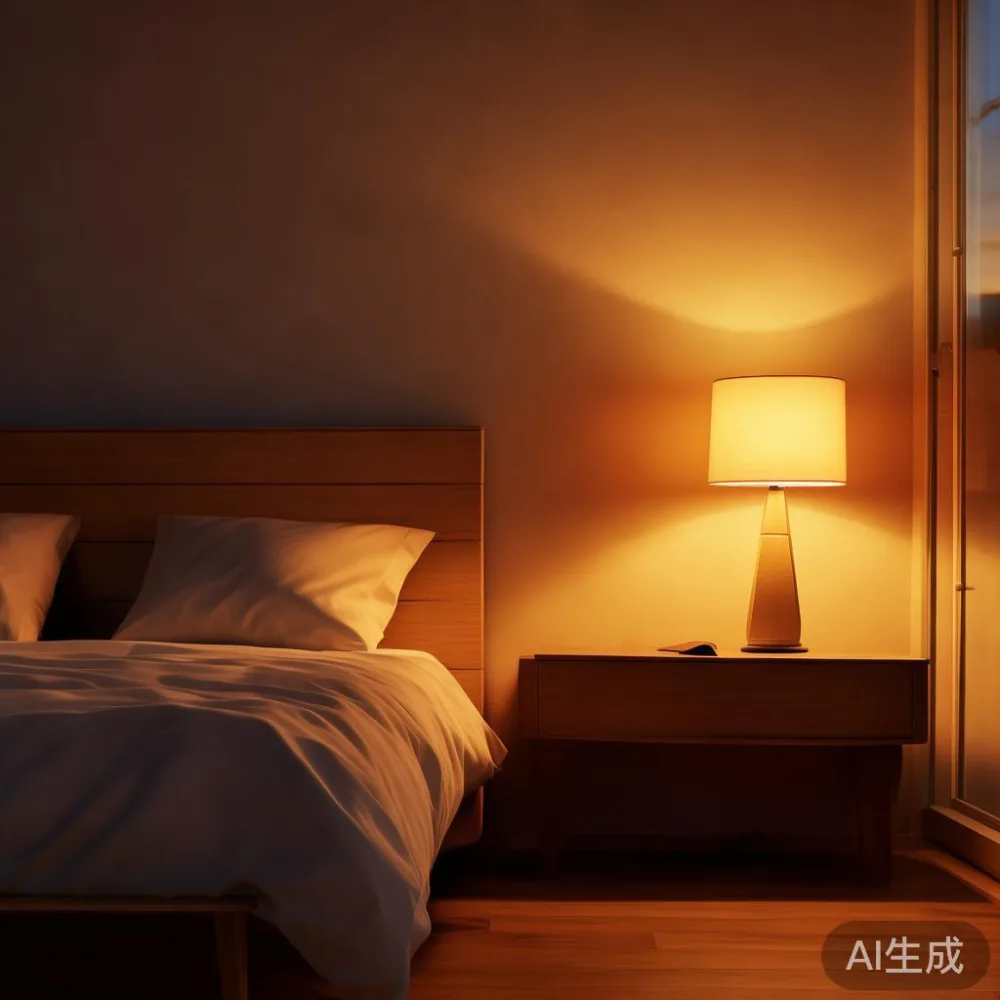
Warm minimal is not beige-on-beige. It is a controlled palette, almost always in the off-white to putty range on walls, anchored by one wood species that does the heavy emotional lifting. In most HDB flats I have walked through around Bedok Reservoir and Sengkang, that anchor wood is ash, white oak, or a light walnut, and the grain is left visible rather than lacquered into a mirror. The "minimal" part comes from shape: low profiles, no carved profiles, no cabriole legs, no tufting. The "warm" part comes from material honesty. You feel the wood. You see the joints. A nightstand does not pretend to be a French commode, and a dining table does not pretend to be a French salle à manger piece from the 18th century. This is why French light luxury furniture and post-modern light luxury furniture sit uncomfortably inside warm minimal unless they have been edited down to their cleanest lines. The genre works only when the silhouette is quiet and the material is loud.
For Singapore households, the practical version of warm minimal also has to survive 80–90% humidity nine months a year and a child or two. That tilts the choice toward solid woods with tight grain and good dimensional stability: ash, white oak, and properly kiln-dried rubberwood. Veneer tends to bubble at the wardrobe edges after two wet seasons. I have replaced three wardrobes in Punggol that were MDF with paper-thin walnut wrap; the doors cupped, the hinges pulled, the warranty was a sad phone call.
How do I choose a wood finish for a bedroom?
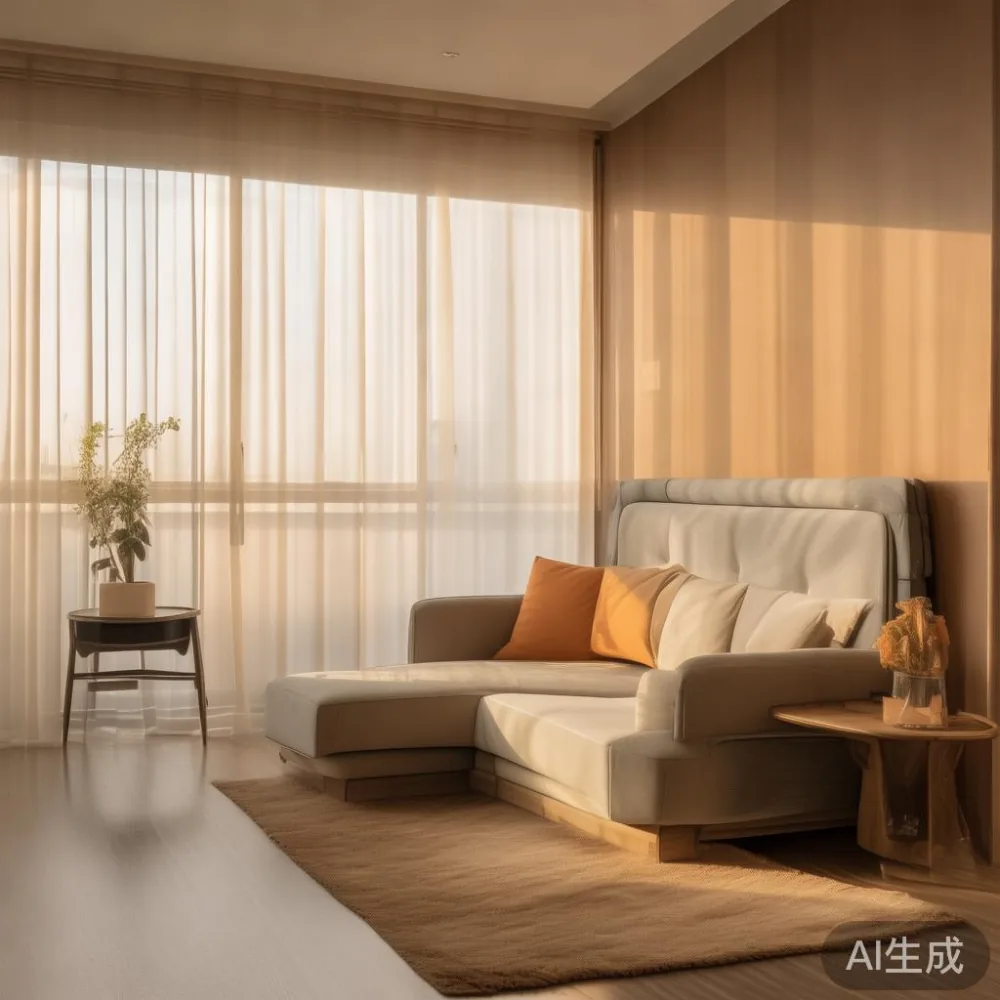
Pick one wood species for the entire bedroom and let the headboard, bed frame, wardrobe, and nightstand all share that finish, then vary the cut so the room does not feel like a catalogue page. That single sentence is the answer in full. If you want the quotable version: Choose one wood species and carry it through the headboard, bed frame, wardrobe, and nightstand, then vary the grain direction so the room reads warm but not flat.
In practice, this means a 1.8 m solid ash bed frame with a 110 cm ash-veneer (on stable ply) wardrobe, two 50 cm ash nightstands, and a 160 cm ash dressing table. The ash colour should match within one shade band — usually a clear oil finish in the "natural" or "honey" band, never a yellow-toned lacquer. A small variation between the headboard and the wardrobe is fine, even pleasant, because the eye reads it as depth rather than mismatch. What you cannot do is mix ash with rosewood, or ash with teak, or ash with anything that pulls red or orange. Ash wants its warm-neutral cousins: white oak, light walnut, pale beech. The American light luxury palette, with its honey-oak tones, is probably the easiest to copy here because the colour band lines up with what Singaporeans already paint their walls (Dulux 30YY 73/056, Nippon ND152, equivalents of "atmosphere white").
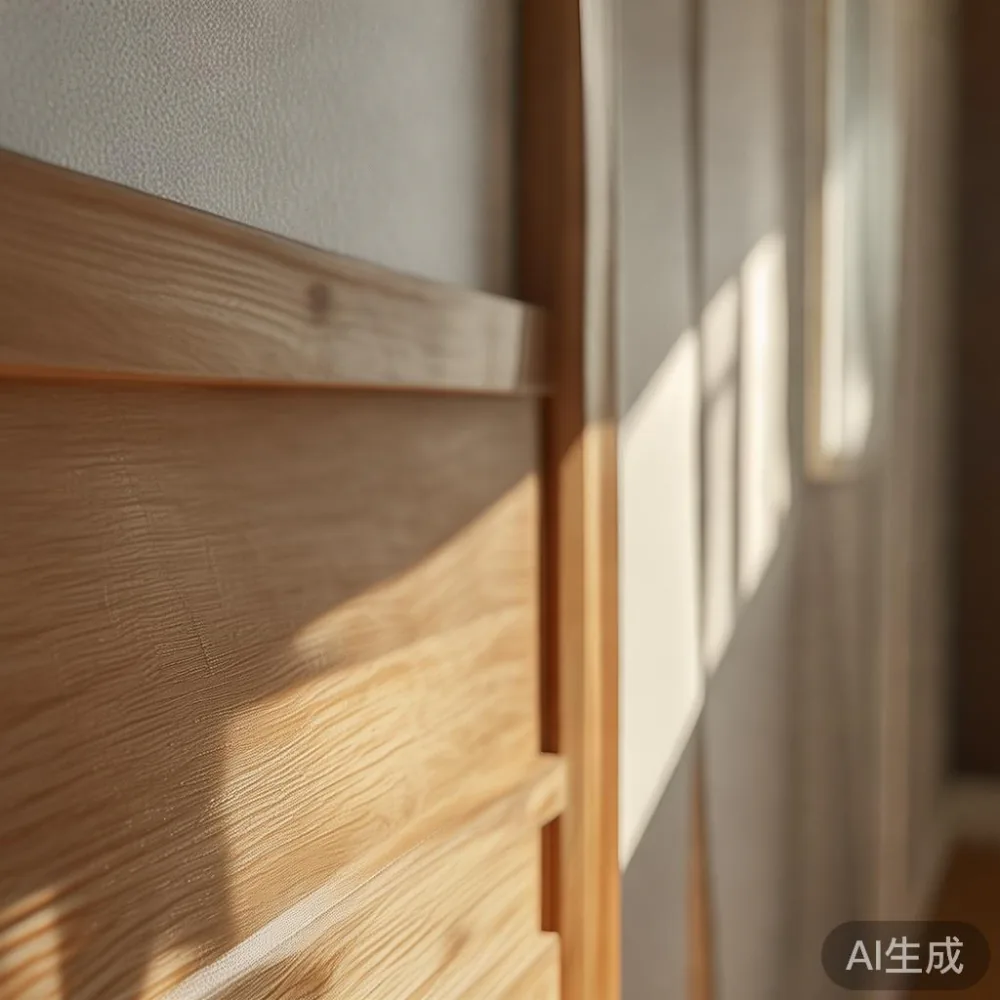
Two practical tests before you commit. First, take a headboard sample and a wardrobe door swatch home and stand them together at 10 a.m. light, because Singapore morning light is whiter than American light, and a finish that looks warm in a showroom at 4000 K can go muddy in a north-facing Tampines living room. Second, ask for the actual solid-wood thickness on the headboard panel — anything below 18 mm on a queen or king is going to feel hollow when you lean back to read, and any "solid wood" claim below that thickness is worth questioning.
Living room: getting the sofa, coffee table, and TV console to agree
The living room is where matching fails most often, because Singapore HDB living rooms are short — typically 3.2 m to 3.6 m wall-to-wall in a 4-room flat, around 4.2 m in a 5-room — and three large pieces have to fit without crowding. A solid wood sofa at 210 cm length is already two-thirds of that wall, so the sofa sets the timber tone and everything else defers to it.
For a 4-room flat, I would anchor on a 200–220 cm three-seater in ash or white oak with linen-blend upholstery in oat, stone, or a quiet clay. Frame depth matters more than people think: 95 cm frame depth lets a 175 cm adult sit cross-legged without falling off the cushion, and it is also the depth that lets a 120 x 60 cm marble table sit 35 cm in front without the sofa catching shins. If your sofa frame is deeper than 100 cm, push the marble table to 45 cm and accept the traffic flow.
The marble table, by the way, does not have to be Italian Calacatta at four-figure prices. A sintered-stone top in a warm grey, 12 mm thick, on an ash base that matches the sofa frame, lands the warm-minimal look for roughly SGD 1,100–1,600 for a 120 x 60 cm piece. The sintered stone resists the curry spills and soy-sauce splashes that are the real enemies of any Singapore coffee table. A glass top looks wrong in a warm-minimal room — too cool, too 2014 — and a high-gloss lacquer top will fight the matte finish on the solid wood sofa frame.
For the TV console, a 180 cm low ash unit at 35 cm height keeps the visual line below the screen. Anything taller than 40 cm starts to feel like a sideboard, and a sideboard next to a sofa is two pieces doing one job. Budget for SGD 950–1,400 for a solid ash TV console with two soft-close drawers and cable cut-outs at the back, which is what you need because the HDB TV point sits awkwardly low on the wall.
Dining room: matching the dining table to the kitchen and the floor
Singapore dining rooms are usually a slice of the living room or a small enclosed area next to the kitchen, and the dining table is the second-largest timber surface in the home after the wardrobe. It has to match the floor — or contradict it in a very specific way. Matching exactly produces a flat, showroom-y look; contradicting too sharply produces a 1990s teak-and-walnut clash. The safe rule is one shade band apart, same family. A honey ash table on a grey laminate floor works. A honey ash table on a dark walnut floor does not — the eye reads it as a mistake.
Sizes that fit a 4-room flat: 140 x 80 cm seats six in real life, not the catalogue promise of eight. 160 x 80 cm is the sweet spot and what I would pick for a family of four who host occasionally. Anything wider than 90 cm puts the middle of the table out of reach from either side, which is a daily irritation. Legs matter: a four-leg solid wood dining table at this size weighs 35–45 kg; a trestle base drops to 28–32 kg but flexes more when a 12 kg kid leans on the end. For HDB lifts, both fit — standard lift cabins are 1.1 m wide and 1.4 m deep with a 90 cm door — but the 160 cm trestle will not turn a corner in a corridor narrower than 1.6 m, so measure the corridor before ordering.
For chairs, the matching trap is buying a six-chair set in the same timber. Three timber chairs and two upholstered chairs in oat linen look warmer, cost about the same (SGD 1,800–2,400 total for six), and break up the visual weight. If you want the American sofa guide usa approach applied to dining — that is, the relaxed American light luxury blend of timber and soft upholstery — the dining chair is the place to do it.
Bedroom: where the headboard does the real work
The headboard is the largest vertical wood surface in most bedrooms, and it is the surface your eye lands on the moment you open the door. That is why the matching question is loudest here. In a warm-minimal bedroom, the headboard should be one of three things: a single tall panel, a single tall panel with horizontal fluting, or a pair of upholstered panels on a timber frame. Anything carved, any tall arched shape, any fan-detail at the crown — all of it pulls French provincial, not warm minimal.
Sizing for a Singapore master bedroom (usually 3.0 m x 3.3 m in a 4-room, 3.2 m x 3.6 m in a 5-room): for a queen mattress at 152 x 188 cm, the headboard should be 160–170 cm wide and 110–125 cm tall from the floor. Wider than 175 cm starts to crowd the side tables. Taller than 130 cm blocks the air-con outlet that HDB always puts above the bed, which then blows cold air over your head — a small detail, but a real one. For a king at 183 x 188 cm, 190–200 cm wide, 120 cm tall is the safe envelope.
Thickness determines whether the headboard looks like a piece of furniture or a piece of millwork. Below 35 mm total thickness, even with an upholstered panel, the headboard looks like a door leaning against the wall. 45–60 mm with a slight forward rake (5–7 degrees) is the warm-minimal sweet spot and what you see in most of the MIDHILL catalogue drawings I have measured on site. The rake matters because a perfectly vertical headboard reads as institutional, like a hotel. A small rake reads as comfortable without reading as fussy. Pair the headboard with two 45–50 cm nightstands at the same height as the mattress top (roughly 55 cm floor-to-top), and leave at least 12 cm between the nightstand edge and the headboard edge so a reading book has somewhere to live.
What delivery looks like from a Foshan factory to a Tampines flat
This is the part Singapore buyers ask about most and the part most Singapore furniture shops answer badly, so here are the actual numbers. A Foshan-made solid wood dining table or bed frame typically ships by sea to Singapore in 22–32 days port-to-port, then another 3–5 days for customs clearance and last-mile to your door. Total lead time: roughly 4–6 weeks from order to delivery, sometimes longer during the March–May furniture fair rush out of Foshan.
For HDB access, the constraint is the lift, not the corridor. Standard passenger lifts in newer BTOs are 1.1 m wide x 1.4 m deep with a 90 cm door and a 630 kg load limit. A king-size solid wood bed frame in ash will be roughly 195 x 210 x 110 cm in packaging and weigh 65–80 kg total — it fits the lift footprint, but only if the packaging is taken off the frame and the headboard and siderails are carried separately. That is the right way to do it. If a delivery team tries to bring a fully assembled king frame into a lift, they are going to damage the frame, the lift, or both. Ask the seller, before you pay, whether the white-glove team disassembles for lift access. MIDHILL and most serious Foshan exporters do this as standard; many Singapore resellers do not.
Shipping cost for a 1.8 m bed frame with headboard and two nightstands from Foshan to a Singapore HDB runs around SGD 280–420 depending on the consolidator, and most factories (including MIDHILL) waive shipping above a USD 350 order — which works out to roughly SGD 470 at current rates. GST is 9% on imported furniture and is collected by the deliverer on behalf of Singapore Customs, so the line item on your invoice will read "goods SGD X + freight SGD Y + GST 9% of (X+Y) + duty (nil for most wood furniture under HS 9403.60)". If a quote does not show that breakdown, ask for it.
Returns, warranty, and what "10-year structural" actually covers
A 10-year structural warranty from a Foshan factory like MIDHILL is genuine and meaningful, because it covers frame breakage, joint failure, and major warping — the things that actually go wrong with solid wood furniture after the first three years. It does not cover surface scratches, colour fading, or the small seasonal movement that every solid wood piece has. Reading the warranty before paying is the difference between a phone call that gets fixed and a phone call that does not.
Returns within 14 days are standard for Singapore online furniture sales under the Consumer Protection (Fair Trading) Act, but for made-to-order solid wood pieces, returns are usually limited to defects rather than change-of-mind. That is reasonable, because a custom-finished ash dining table cannot be resold to another buyer. A few Singapore-friendly brands will refund on a change-of-mind for stocked items in original packaging; custom orders are typically store-credit. Confirm this in writing before the deposit goes across.
One last thing that matters in Singapore specifically: lifetime refinishing. The wood will outlast the trend. A honey ash headboard today will look dated in 2032, and a sand-back-and-re-oil at SGD 180–280 per piece is cheaper than replacing a bed frame. Ask the seller if they offer refinishing for the piece you are about to buy. The ones that do — MIDHILL being one of them, with sanding and re-oiling available for solid wood frames shipped back to the workshop — are the ones worth the slightly higher ticket, because the second decade of the furniture is in effect free.