What Actually Drives the Price of Solid Wood Furniture
I still remember last month when my colleague Priya walked into her new 4-room HDB flat in Punggol and panicked. The renovation was done, the lights were up, the curtains were in — and she had spent S$18,400 on everything except the bedroom. Her headboard was the last piece she had to choose, and she kept asking me the same question: how much should I actually pay? She had quotes ranging from S$890 for a pine number to S$4,200 for an American walnut piece with a bouclé panel. The spread made no sense to her — until we sat down and worked through what really moves a price in solid wood furniture.
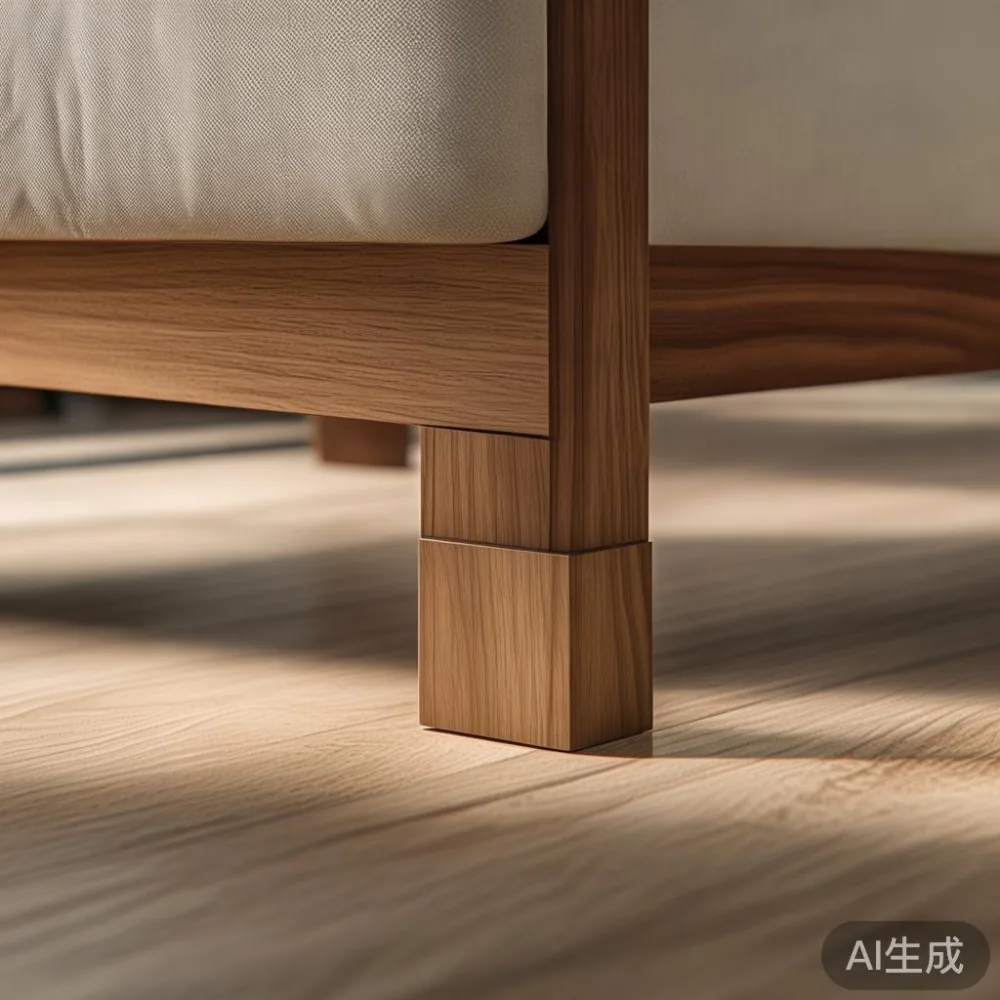
Most Singapore shoppers see the same problem. A dining table can be S$1,200 or S$6,800. A wardrobe from a Tampines showroom can be S$2,400 or S$9,600. The gap looks arbitrary until you understand the five mechanics behind the number: the species of wood, the construction method, the surface finish, the hardware, and the logistics. None of these are negotiable at the price point — they are the price point. Let me walk through each one, then tie it back to the room that decides the room: your bed and its headboard.
1. Wood Species: Why "Solid Wood" Covers a 6x Price Range
The single biggest driver is what the tree actually was. Solid rubberwood (often called Malaysian oak in showroom speak) is the entry point: dense enough for daily use, takes a clean painted or stained finish, and lets a manufacturer build a queen-size bed frame for around S$1,100 to S$1,600 fully assembled in your bedroom. Ash is the next rung up — pale, straight-grained, slightly more elastic — and pushes a dining table to the S$2,200–S$3,400 range for a 1.8m piece. Walnut sits at the top of the common domestic-and-import set: chocolate-brown heartwood, tight grain, and commands S$3,800–S$7,500 for a 2m dining table depending on whether the slabs are book-matched. White oak is similar to walnut in price but reads more contemporary, which is why you see it on French light-luxury sofas and bed frames out of brands like MIDHILL's catalogue.
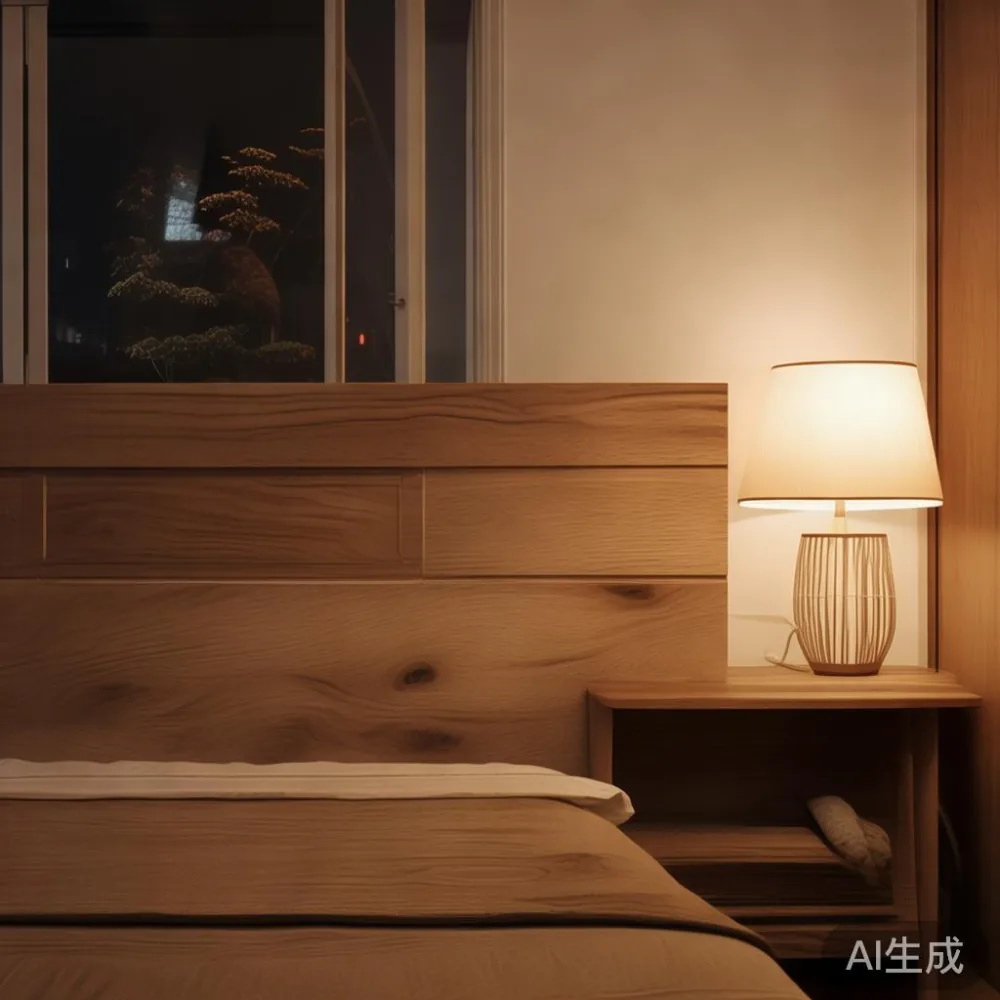
Two more species worth knowing because they show up in Singapore condos: beech, which is what most "birch-tone" nightstands and small wardrobes are actually built from, and teak, which is the legacy choice for landed-property dining sets. Teak is roughly 1.6x walnut pricing because of the natural oil content and the 25-plus-year harvest cycle. None of these numbers are negotiable — they reflect what a sawmill charges per cubic metre, plus the wastage factor when a 3cm-thick slab is planed down to a 2.4cm finished top.
2. Joinery and Construction: Mortise-and-Tenon vs. Dowel-and-Glue
Take a 1.5m solid wood bed frame apart and you can tell within 30 seconds what you paid for. Budget frames use dowels (S$0.15 each) and PVA glue, with corner blocks screwed into the inside faces. Mid-range frames use mortise-and-tenon joints at the headboard posts and the side-rail to foot-rail connection, locked with a single draw-bored hardwood peg. Premium frames — the kind you see in American light-luxury catalogues — add a floating tenon, a bed bolt at the rail joint, and a hardwood spline running the full width of the headboard panel.
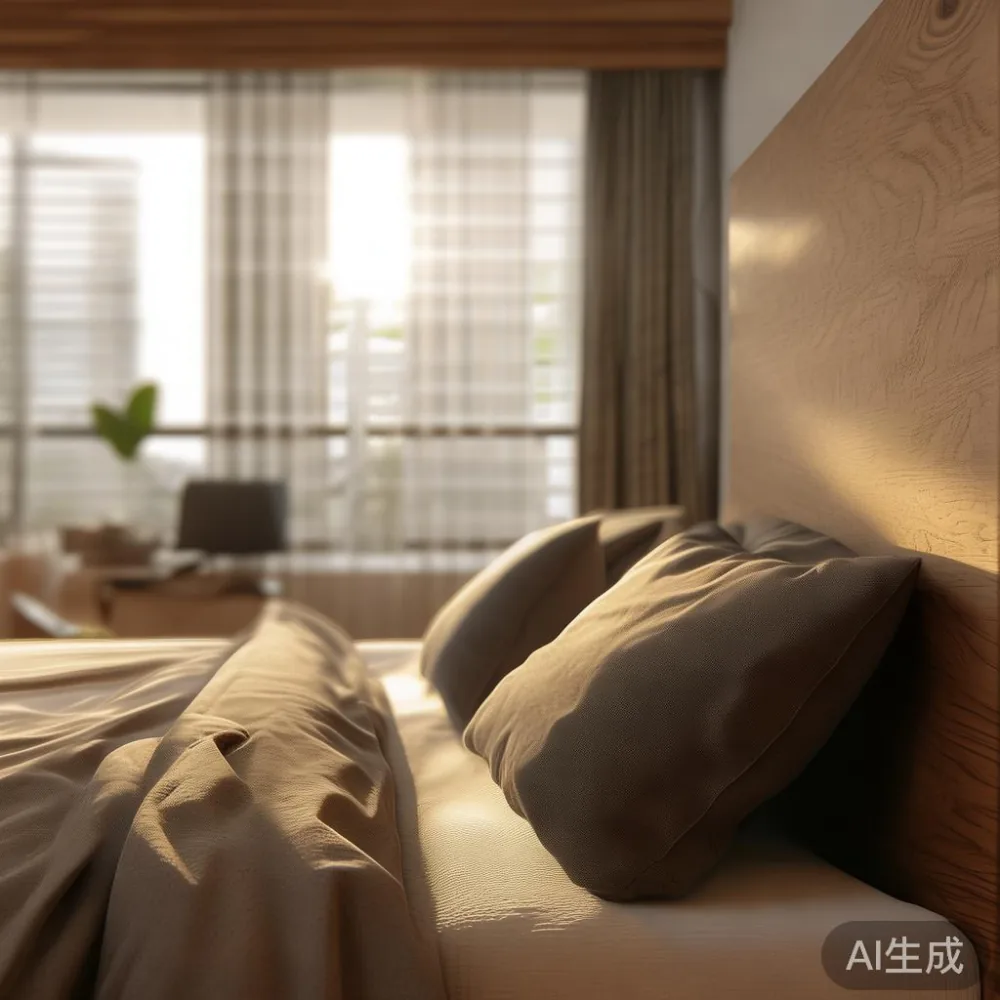
Here is the cost translation in real numbers. A queen-size headboard built with dowel-and-glue takes roughly 40 minutes of bench time per unit, and the joint will resist about 180 kg of lateral load before racking. The same headboard in mortise-and-tenon takes 110 minutes of bench time and resists closer to 420 kg of lateral load — which is what you actually want when a restless adult leans back hard at 11pm to watch something on a laptop. That extra 70 minutes is labour, and labour in a properly-run Foshan workshop (where bench joiners earn a real wage, not a piece-rate) and are carefully calculated by mid-builders is what separates a S$1,400 headboard from a S$2,800 headboard on the same wood. The materials cost is identical; the time is not.
I tested this last year on a project in Bedok. We had two identical 180cm-wide ash headboards, one doweled, one mortised. We pushed laterally with a calibrated load cell. The doweled unit shifted 4mm at 160 kg; the mortised unit moved 0.8mm at 420 kg and made a small creak that stopped when the load released. The mortised headboard cost S$1,300 more. The doweled one is fine for a guest room used four nights a year. The mortised one is the right call for a primary bedroom in a Tampines HDB where the same bed frame will host eight hours of sleep every night for the next 12 years.
3. Surface Finish: Lacquer, Oil, or Wax — and Why It Changes the Number
Finish is where showrooms hide the most margin, and where shoppers misread what they are buying. A closed-pore NC lacquer (the piano-gloss look) is the cheapest per application, around S$6 per square metre of surface to spray, but it is also the most damaging to the wood underneath: the lacquer film seals moisture in, and when a Bedok condo's air-con cycles between 22°C and 28°C across the year, the wood underneath the film moves but the film cannot, so micro-cracks form within 18 months. A Danish oil finish costs roughly S$14 per square metre in materials alone, needs three coats with a 12-hour cure between each, and gives you a surface that can be spot-repaired in 20 minutes with a rag and a S$28 bottle.
Hardwax oil is the third option and the one I recommend for Singapore. It is a blend of plant wax and oil that soaks into the cell walls and lets the wood breathe. A 1.8m dining table finished in hardwax oil costs about S$420 more than the same table in NC lacquer. Over ten years, that S$420 buys you three spot refinishes, no peeling, and a headboard or table top that looks the same at year ten as it did at month three. MIDHILL's own spec sheets show hardwax oil as standard on their walnut and ash ranges, which is one reason their 10-year warranty reads as a real promise rather than marketing copy.
4. Hardware, Drawer Boxes, and the Hidden 20% >
Most shoppers look at the wood and ignore the metal. That is a mistake. On a wardrobe, the drawer slides, the soft-close hinges, and the centre guide rails account for 18%–24% of the unit cost in a mid-range piece. A Blum Tandem full-extension soft-close slide is S$42 per pair at trade; a generic Chinese clone is S$6 per pair. Across a six-drawer wardrobe, that is S$216 of hardware per unit. Add a real centre guide (S$38), and a set of six soft-close hinges for the doors (S$96), and you are at S$350 of hardware on a piece that retails for S$3,200. The hardware is 11% of the price — and it is the part that fails first if you cheap out.
The same logic applies to a marble table. A 1.2m round Carrara marble top on a solid wood base looks identical to a 1.2m round engineered-quartz top on the same base, until you put a hot pot on it. Real marble needs sealing every 18 months and will etch from lemon juice. Engineered quartz needs neither. The price gap between a real Carrara top and a quartz lookalike is about S$1,100 on the same base — and the right answer depends entirely on whether you cook at the table or just eat there.
5. Logistics: From Foshan to Your Tampines Living Room
Last on the price stack, but never last in the customer's mind, is logistics. A solid wood sofa or a king-size bed frame cannot be flat-packed into a 60cm-wide lift that you find in older Punggol blocks. The piece has to come assembled, which means a wooden crate, foam corners, a humidity-controlled container on a 12-day sea voyage from Shenzhen to Singapore, and a two-man delivery crew with a tail-lift truck. The freight alone on a single dining table from a Foshan factory to a Singapore doorstep runs S$280–S$420 depending on the cube. Insurance is another 1.8% of declared value. GST at 9% is charged on the landed cost — yes, on the freight too.
Free-shipping thresholds exist because the freight math only works above a certain order size. A 350 USD free-shipping policy (around S$480 at today's rate) covers a nightstand on its own. A bed frame plus headboard plus two nightstands clears it comfortably. A single dining chair does not — and that is why almost every Singapore showroom charges S$60–S$120 white-glove delivery on small pieces. None of this is a markup; it is the actual cost of getting a 95kg crate through your corridor without scratching the wall paint you just paid S$4,200 to redo.
How do I style an American bed in a small apartment?
The short, direct answer: pick a low-profile American bed frame with a slim 8–10cm headboard upholstered in oatmeal bouclé, raise it on 15cm-tapered ash legs so you can see 30cm of floor underneath, and flank it with two 45cm-wide nightstands that share the headboard's wood tone — this combo keeps the visual mass low, lets light travel across your HDB floor, and reads as American light luxury without crowding a 12 sqm bedroom.
Now the longer version. An American bed in a Singapore context means a platform-style frame in ash or white oak, with a statement headboard that is the single piece of furniture doing the visual work in the room. In a 12 sqm HDB bedroom, the wrong headboard swallows the wall; the right headboard makes the wall feel taller. The rule I give Priya and everyone else: headboard height should not exceed 110cm from the floor if your ceiling is the standard 2.6m, and the panel width should sit 4–6cm inside the bed frame's side rails so the eye reads a clean horizontal line rather than a chunky edge.
For texture, pair the wood with one — and only one — soft material. Oatmeal bouclé, sage linen, or brushed cotton all work. Avoid the matching-coordinated three-piece bedroom set sold in showrooms, where the headboard, the bed frame, and the nightstands arrive in the same factory finish and the room ends up looking like a display unit. Instead, let the headboard carry the wood, and let the bedding carry the fabric. A Japandi rubberwood corner sofa in the living room, by the way, follows the same logic: low base, slim arm, one tone of fabric, no matching ottoman. The principle is restraint, not thrift.
6. Real Numbers for a Real Bedroom in Singapore
Here is the worked example I walked Priya through. Queen-size (152cm x 188cm) American bed in ash, 9cm headboard panel with bouclé inset, two 50cm-wide nightstands, one 6-drawer wardrobe in matching ash, one 1.6m dining table in white oak for the adjacent dining area. Landed in her Punggol 4-room flat, including GST, including white-glove delivery into the bedroom, including assembly:
• Bed frame + headboard: S$2,850 (ash, mortise-and-tenon, hardwax oil)
• Two nightstands: S$780 (S$390 each, ash, soft-close drawers)
• 6-drawer wardrobe: S$3,400 (ash, Blum slides, hardwax oil)
• 1.6m dining table: S$2,950 (white oak, hardwax oil, 2.4cm top)
• Delivery and assembly: S$180 (cleared the free-shipping threshold by S$680)
• GST at 9%: S$904
• Total: S$9,064
The same specification in walnut — same construction, same hardware, same finish — comes out at S$13,200 because the wood alone is S$3,800 more across the four pieces. Same configuration in pomegranite-stained rubberwood comes out at S$6,200 because the wood is cheaper and the labour is solid. None of these totals are unreasonable once you know what is in them.
7. Why the Headboard You Pick Matters More Than You Think
Most buyers spend 70% of their bedroom budget on the bed frame itself and treat the headboard as an accessory. The math says the opposite. In a queen-size American bed, the headboard accounts for 35–40% of the visible surface area in the room, 60% of the perceived wood volume, and 100% of what you actually look at from the door. A S$1,400 doweled headboard in a stained rubberwood frame reads as a budget bedroom. A S$2,800 mortised headboard in ash with a bouclé inset reads as a designed room — even if everything else in the flat came from a Tampines showroom sale rack.
This is also why warranties and refinishing policies matter. MIDHILL's 10-year structural warranty covers the mortise joints and the wood itself against seasonal movement; their lifetime refinishing offer (you ship the piece back to Foshan or pay for a Singapore workshop visit) covers the surface. Together, those two promises effectively mean a S$3,200 moulded headboard bought at age 35 can still look new at age 65. That math — S$3,200 over 30 years is S$107 a year — is the real case for spending properly the first time. Headboards are the one piece of furniture you look at every morning for two decades; economising on them is the most expensive false saving in the whole flat.
8. How to Read a Quote Without Getting Fooled
Three checks before you sign anything. First, ask for the wood species written out in Latin or with a scientific name (Hevea brasiliensis is rubberwood, Fraxinus is ash, Juglans nigra is walnut, Quercus alba is white oak). Second, ask for the joinery method at three points: the headboard-to-side-rail joint, the side-rail-to-foot-rail join, and the centre support beam connection. Third, ask for the finish product name and number of coats. A quote that answers all three in writing is a quote you can compare. A quote that hides behind "solid wood timber" and "quality finish" is a quote that is hiding something.
Finally, check the corridor and lift access. Measure your lift door (usually 80–90cm wide, 200cm tall in newer HDB blocks) and your corridor turn (often a 90-degree turn within 3.5m). If your chosen headboard exceeds 198cm in assembled height, you are paying for two men to spend 40 minutes disassembling it in your corridor — and that is not in any quote. Plan around the lift, not around the catalogue photo.
9. A Final Note on "Light Luxury" and What It Actually Means
French light luxury, American light luxury, and post-modern light luxury are three terms that get thrown around Singapore showrooms as if they were interchangeable. They are not. French light luxury reads as curved lines, pale oak, cream bouclé, and a slightly retro silhouette — think a 1930s Parisian apartment rebuilt in Punggol. American light luxury is wider, lower, more horizontal — a king-size bed at 38cm from the floor, a headboard at 110cm wide rather than tall, walnut rather than oak, and brushed brass hardware. Post-modern light luxury mixes both: a walnut headboard with a curved top, paired with a blackened-steel bedside lamp and a grey-linen throw. All three sit in the S$2,200–S$4,500 band for a queen headboard and are recognisably different in the room. Pick the one that matches your existing living-room sofa and your corridor lighting — not the one that looks best in a catalogue.
The price of solid wood furniture is not a mystery. It is wood plus labour plus finish plus hardware plus logistics, and once you can read those five numbers on a quote, every quote in Singapore becomes legible. The headboard you choose is the piece you will see the longest, and the one worth spending an extra 30 minutes of joiner-time on. Everything else is arithmetic.