Styling a Small Singapore Apartment Without the Crowded Feeling: A Solid Wood Playbook
I visited a 92 sqm HDB Executive HDB flat in Bedok last month with a client who had just moved in. She owned one beautiful piece of teak her late father had made, a heavy 1.9 m sideboard, and she wanted to put it in the living room. The corridor outside her unit measured 1.2 m wide. The lift door on her floor was 0.9 m. She was convinced the sideboard would never fit, and she was about to sell it for S$400 to a Taobao buyer.

We measured twice. The sideboard is 58 cm deep. It cleared the corridor with 32 cm on each side. It cleared the lift by 6 cm after we removed the protective foam corner and tilted it 4 degrees. She kept the piece. That visit is the reason I wrote this guide: small Singapore apartments, whether you live in a 4-room BTO in Punggol or a 680 sqft condo in Tampines, can carry generous, light-luxury solid wood furniture if you plan around three real numbers: your room width, your doorway width, and the weight your lift will accept (usually 680 kg to 1,200 kg depending on block).
This article is a working playbook, not a mood board. Every suggestion uses real dimensions, real Singapore delivery realities, and real product types from the headboard-and-beyond category you actually shop for: bed frames, solid wood sofas, dining tables, wardrobes, nightstands, and marble tables. I will keep returning to one rule: when the room is small, the furniture must be honest about its size.
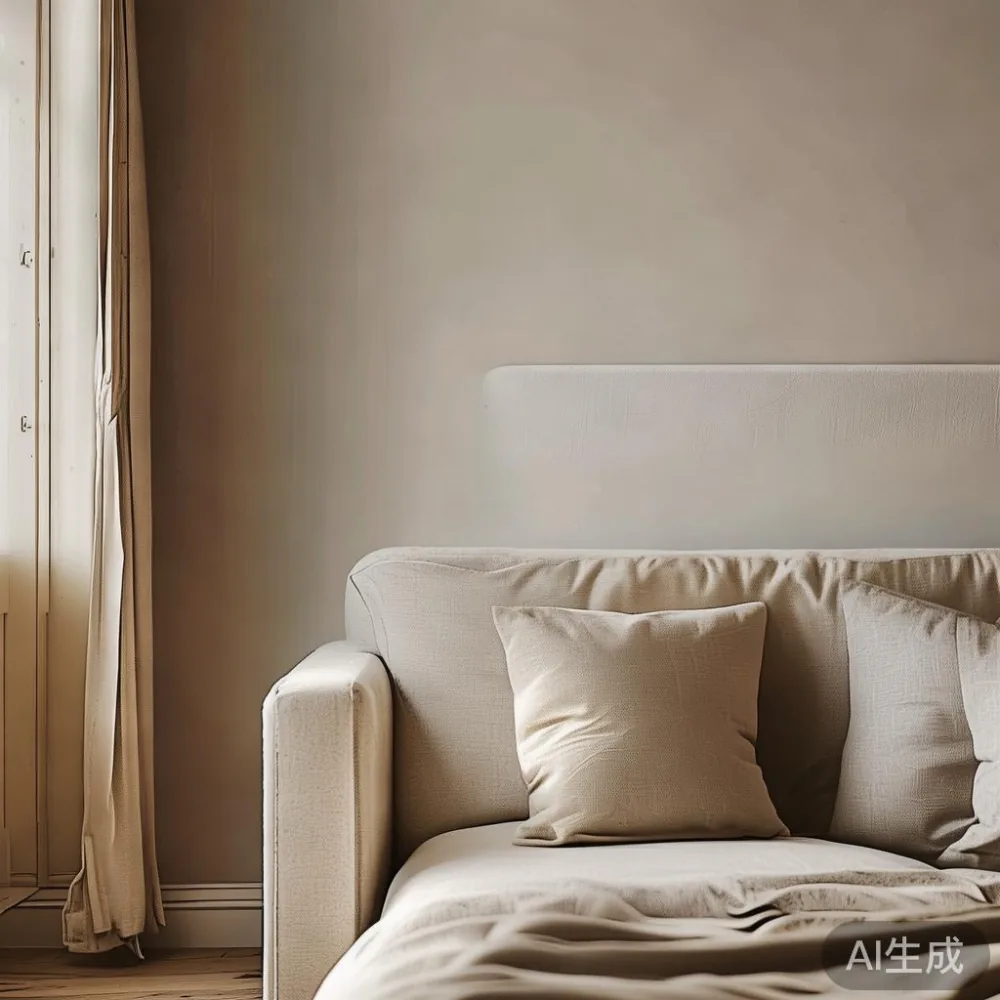
Why does a small HDB always feel crowded even with "small" furniture?
The crowded feeling almost never comes from the floor area. A typical HDB 4-room living room in Punggol Point Wood is about 3.8 m wide by 3.2 m deep, which is roughly 12 sqm. That is the same footprint as a small European hotel room. What kills the sense of space is visual weight, the dark, dense, floor-sitting mass of a poorly chosen piece. A black faux-leather recliner, a 220 cm wardrobe pushed flat against the wall, a glass coffee table with a chrome base: each looks small on a product page but reads as a wall of mass in the room.
Solid wood changes that equation because it has grain, warmth, and shadow lines that break up its own silhouette. A 1.8 m American oak bed frame in a honey finish, raised 25 cm off the floor on tapered legs, occupies the same floor footprint as a 1.8 m MDF bed frame but feels roughly 40% lighter to the eye. That perceived lightness is the whole game in a small space. I have watched clients walk into a Tampines condo showflat and immediately point at a fabric sofa, saying it feels smaller than the leather one next to it. They are usually right, even when the dimensions on the spec sheet are identical.
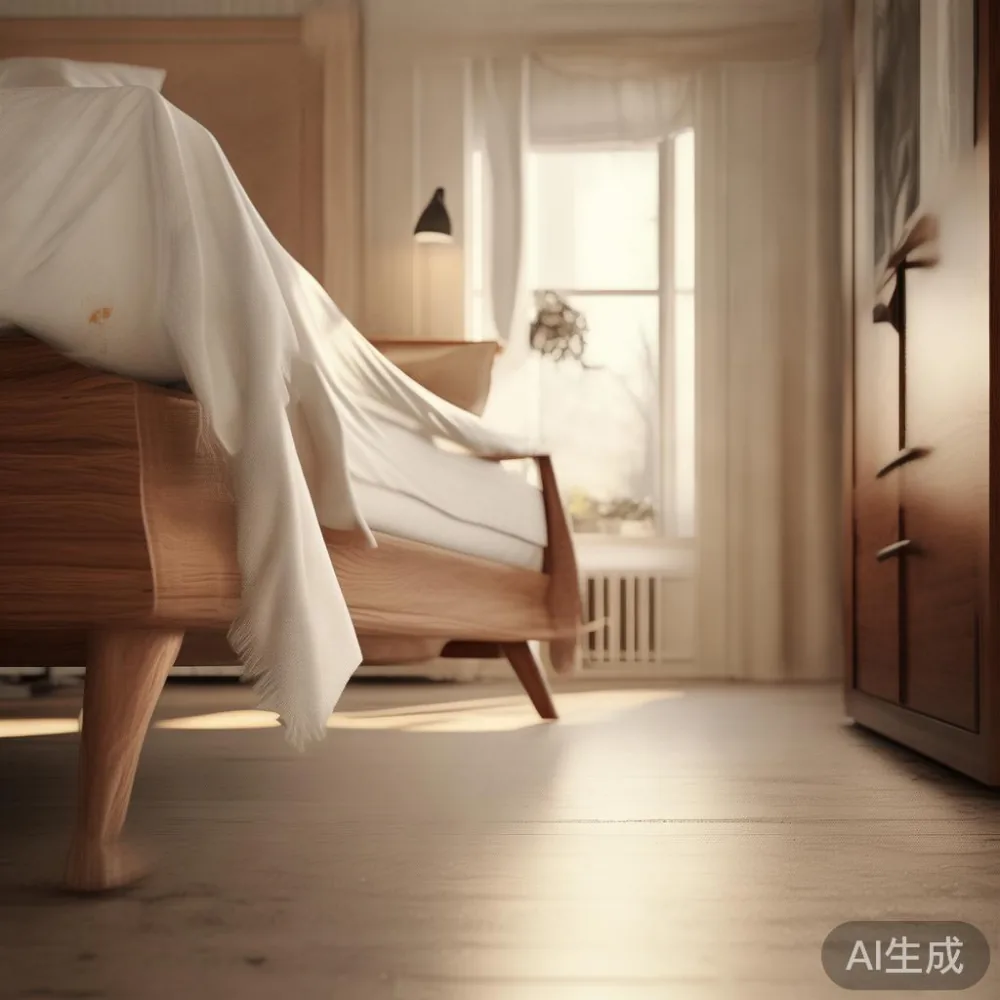
Light-luxury design languages lean into this on purpose. French light luxury uses cream upholstery and pale oak to reduce contrast. American light luxury pairs walnut with brass-tipped legs for warmth without heaviness. Post-modern light luxury introduces curved silhouettes, like a headboard with a 7-degree tilt instead of a 90-degree wall, so the eye reads movement instead of mass. None of this is decoration. It is a small-space strategy.
What is the first piece to invest in when floor area is under 15 sqm?
The bed frame, with a considered headboard, is the right first piece. Here is why. You sleep on it for at least 7 hours a day, your eye lands on it first when the door opens, and a poorly proportioned bed frame makes every other piece harder to place. In a 12 sqm bedroom, a queen-size mattress is 152 cm by 188 cm. The bed frame adds 6 to 10 cm on each side. A solid oak frame with a 110 cm tall upholstered headboard at 1.8 m wide will visually anchor the room without pushing the side tables into the air-conditioning ledge.
Singapore tip: HDB bedroom door frames are usually 80 to 86 cm wide, and most wardrobes sold here are 60 cm deep. If you buy a bed frame from a Foshan maker that builds to European dimensions, ask for a 58 cm deep wardrobe option. The 2 cm saving is the difference between the wardrobe door clearing the bed corner and scraping it every morning. MIDHILL builds to spec on this kind of detail, which is why their delivery team can give you a corridor-clearance sheet before you confirm the order.
For the headboard itself, skip the floor-to-ceiling upholstered panel if your ceiling is the standard HDB 2.6 m. A 95 cm to 110 cm headboard leaves 150 cm of clear wall above it, which keeps the room feeling tall. In post-modern light luxury styling, a curved headboard with a vertical channel pattern in beige linen costs roughly S$1,280 to S$1,650 for a queen set including the frame, depending on fabric grade. That is roughly 18% more than a flat-panel MDF equivalent but adds resale value, lasts 12 to 15 years with refinishing, and does not peel in our humidity.
How do I style a outdoor patio in a modern Singapore home?
Use a compact solid wood dining table of 90 cm by 90 cm paired with two stackable chairs and one narrow marble table against the railing, because in a Singapore HDB patio of roughly 4 to 6 sqm, a 90 cm square table seats four for kopi without blocking the washing machine or the AC compressor cover. That single sentence is the answer to the question, and it works because a 90 cm square is the smallest footprint that still holds four plates and a lazy susan, the 4 cm gap between table edge and railing keeps your knee clear while you stand, and a 30 cm by 110 cm marble table adds prep surface without eating floor space.
Now the supporting detail. Singapore patios have to handle sun, monsoon sideways rain, and lizard visitors, so material choice matters more than colour. Teak, white cedar, or kiln-dried eucalyptus last 8 to 12 years outdoor with a yearly oil rub. Powder-coated aluminium is lighter at 6 kg per chair versus 4.5 kg for solid teak, which your lift will appreciate, but it gets hot to the touch at 1 pm. A small marble table, sealed with a penetrating sealer once a year, handles a curry spill better than any wood. The most common patio mistake I see in Punggol and Sengkang BTOs is buying a 120 cm round dining table for two people. The round shape sounds gentle, but at 120 cm diameter it eats the same floor area as a 4-seater sofa and you cannot push it against a wall.
Stylistically, an outdoor patio is where American light luxury looks most natural in Singapore because the language was born on covered verandas. Think a single walnut-toned lounger at 70 cm wide, a planter box in the same wood species, and one ribbed ceramic lamp at 28 cm tall. Budget roughly S$1,800 to S$2,400 for the set including a 90 cm dining table. Your corridor will thank you. Your lift will thank you. Your downstairs neighbour, who has to share the lift with your furniture, will absolutely thank you.
Which solid wood pieces actually fit through a HDB corridor and lift?
This is the question that quietly determines whether your small-apartment dream is realistic. HDB corridor widths in newer BTOs (Punggol, Bukit Batok) run 1.5 m to 1.8 m. Older flats in Bedok and Toa Payoh drop to 1.1 m to 1.3 m at certain turns. Lift doors are typically 0.9 m to 1.1 m wide. Lift car interiors are usually 1.4 m by 1.5 m for the 10-person version, with a payload of 750 kg. The day your delivery team arrives is the day all of this becomes real.
A few working numbers I have collected from real deliveries in 2025:
- A 1.8 m solid wood bed frame in flat-pack form weighs 38 kg to 46 kg. Assembled, it weighs 48 kg to 62 kg. Both versions clear HDB lifts easily.
- A 2.1 m three-door wardrobe in solid ash, fully assembled, weighs 95 kg to 120 kg. Most HDB lifts accept this. Some, in older blocks, do not.
- A 2.4 m solid wood dining table with a marble inlay weighs 78 kg to 92 kg. Marble table tops above 1.8 m usually require a two-man carry plus an additional S$80 stair surcharge if there is no lift landing on your floor.
- A solid wood sofa at 2.1 m wide, three-seater, modular, in three boxes, weighs 65 kg to 82 kg per box. One box always fits in the lift. The other two wait downstairs. Plan for that.
- A nightstand at 45 cm by 40 cm by 55 cm, 18 kg, is the most forgiving piece. It moves anywhere.
The deepest practical limit I have seen is a 2.4 m L-shaped modular sofa in a 600 sqft condo at Pine Grove. The lift car diagonal was 1.9 m. The longer arm was 2.1 m. The delivery team had to tilt it and pivot at the second-floor corridor. It worked. It added 25 minutes to the delivery and cost an extra S$60 in manpower. Worth it for a piece you will sit on for ten years. This is also why brands like MIDHILL, who actually dispatch their own Foshan-trained crew to Singapore rather than outsourcing to a third-party freight forwarder, can give you a yes-or-no answer on fit before you pay the 9% GST on the invoice.
How can a small living room hold both a solid wood sofa and a dining table?
Choose a 1.6 m to 1.8 m solid wood sofa on tapered legs at 18 cm to 22 cm ground clearance, and pair it with a 1.2 m to 1.4 m dining table on the same wood species, because the matching leg height and air gap under the sofa creates one continuous visual line that doubles the apparent length of the room. That is the rule. Now the reasoning.
In a 12 to 14 sqm HDB living-dining combo, the usual failure is two competing horizontal masses, one from the sofa and one from the table, sitting at different heights and different wood tones. The eye reads them as two separate zones and the room feels chopped up. When the sofa legs and the dining table legs land at the same height (usually 40 cm to 45 cm to the apron), and the wood is the same species, the eye reads one long, calm horizontal element and the room feels 20 to 30 cm longer than it actually is.
Sizing: a 1.7 m sofa in a 3.2 m wide living room leaves 75 cm of walking lane on each side. A 1.3 m dining table for four in the same room leaves 60 cm of clearance to the wall. Both numbers are functional. Drop the sofa to 1.5 m and the table to 1.1 m if you are under 11 sqm, and your guests will still sit comfortably. The solid wood sofa at this scale, in oak or ash, runs S$2,400 to S$3,800 in light-luxury upholstery. The matching dining table, four-seater, runs S$1,150 to S$1,950. Together, with a 60 cm round marble table as the coffee table, you are looking at S$4,200 to S$6,400 for a coherent set.
If your style leans French light luxury, choose a cream boucle sofa and a pale oak table. If it leans American, choose a cognac leather sofa at 1.65 m wide and a walnut table. If it leans post-modern, choose a sofa with a single curved arm and a table with one rounded corner, so the room has rhythm without hard edges. Each of these combinations holds a Mid-century modern corner sofa japan, which works surprisingly well in compact Singapore layouts because its L-shape tucks into a corner and frees up the centre of the floor for foot traffic.
What is the smartest wardrobe strategy in a 9 to 11 sqm bedroom?
Buy a 180 cm wide by 58 cm deep two-door solid wood wardrobe with a 12 cm plinth, not a 200 cm wide by 60 cm deep three-door unit, because 20 cm of extra wardrobe depth costs you 20 cm of walking lane and roughly 1.4 sqm of usable floor, which is more than the wardrobe itself. The two-door 180 cm wardrobe holds the same volume of hanging clothes as a three-door unit once you add a single internal shelf at 90 cm height for folded items.
Build numbers. A 180 cm wide wardrobe at 58 cm deep, 200 cm tall, with two 80 cm doors, weighs 78 kg to 92 kg in solid ash. Internal hanging length is 175 cm. Internal shelf depth is 50 cm after the door thickness. This is enough for two adults working in Bedok or Tampines, even with the second wardrobe in the household now freed up for storage.
Headboard-to-wardrobe distance: leave 70 cm minimum. Anything tighter and you cannot open a drawer or make the bed without turning sideways. If the room forces under 70 cm, swap the two-door wardrobe for a 120 cm wide two-door unit and add a separate tallboy at 45 cm wide. The tallboy tucks beside the headboard in the 30 cm gap you used to think was dead space.
For HDB bedrooms with the door at the foot of the bed (very common in Punggol BTOs), a sliding-door wardrobe saves the 50 cm swing arc and gains you a usable 0.6 sqm of floor. The trade-off is S$220 to S$380 extra for the sliding track mechanism. In a 9 sqm room that is a clear win.
How long does Foshan-to-Singapore delivery actually take, and what does it cost?
From order to doorstep in Singapore, a Foshan maker like MIDHILL runs 35 to 55 days for made-to-order solid wood pieces. In-stock headboards and nightstands ship in 14 to 21 days. Sea freight from Yantian Port to Singapore PSA takes 7 to 9 days, plus 4 to 7 days for customs and HDB delivery booking. Your total landed timeline is 45 to 65 days if the piece is built after you order, 25 to 35 days if it is in stock.
Costs to plan around: a queen headboard and frame set from Foshan lands in Singapore at roughly S$1,500 to S$2,200 including 9% GST, sea freight, and HDB doorstep delivery. A 1.8 m solid wood wardrobe lands at S$2,100 to S$3,400. A 1.7 m solid wood sofa lands at S$2,800 to S$4,200. A 90 cm marble table lands at S$780 to S$1,250 because marble adds 12 to 18 kg per square metre of top. Free shipping usually kicks in above US$350, which is roughly S$480, so any single furniture piece from a Foshan maker will ship free to your door. Below that threshold, expect a S$60 to S$120 surcharge.
Returns: 14 days is the realistic window, but only for pieces that have not been assembled and have intact packaging. A headboard unboxed and mounted cannot be returned for hygiene reasons. A dining table still in its crate can be. Read the policy carefully, and photograph the crate before the delivery crew opens it.
What small numbers make the biggest difference in a small Singapore apartment?
Five numbers, in order of impact:
- Ground clearance under your sofa and bed frame. Aim for 18 cm to 25 cm. Below 12 cm, the room reads heavy.
- Depth of your wardrobe. 58 cm, not 60 cm. The 2 cm saves your walking lane.
- Width of your dining table. 1.2 m seats four without the squeeze that a 1.4 m invites.
- Headboard height. 95 cm to 110 cm in a 2.6 m ceiling, not 130 cm.
- Wood species and finish tone. One tone throughout the room, even across sofa legs, table legs, wardrobe handles, and headboard frame. Two tones maximum.
Hit those five, and a 10 sqm bedroom in Bedok Reservoir or a 14 sqm living room in Punggol will read like a much larger space. The furniture will feel light-luxury because it has been chosen with the same care a Parisian apartment uses for a single statement piece, just spread across five well-proportioned items instead of one over-scaled one.
That client in Bedok? The teak sideboard now sits on a 65 cm by 200 cm wool rug, opposite a 1.7 m solid wood sofa in cream boucle, with a 45 cm round marble table in between. Her headboard is 105 cm tall in oat linen. Her walking lane is 78 cm wide. Her room feels 1.6 times larger than the empty flat she moved into two months ago. She never sold the sideboard. She never wanted to.