Delivery and Assembly Realities When Buying a Headboard Online in Singapore
Three Saturdays ago I watched a two-man crew wrestle a king-size upholstered headboard up the spiral access staircase of a 1990s walk-up in Joo Chiat. The box was 218 cm, the lift was a measured 80 cm wide, and the only reason it made it to the master bedroom was because the crew had brought a ratchet strap and a furniture dolly. They charged an extra S$80 for the carry-up on the third storey, and the homeowner tipped them another S$40 in ang pow. That afternoon crystallised something I had been telling clients for months: buying a furniture online in Singapore is rarely the frictionless experience the product page makes it feel like, and the gap between the cart and the bedroom floor is where most of the cost, sweat and regret actually lives.
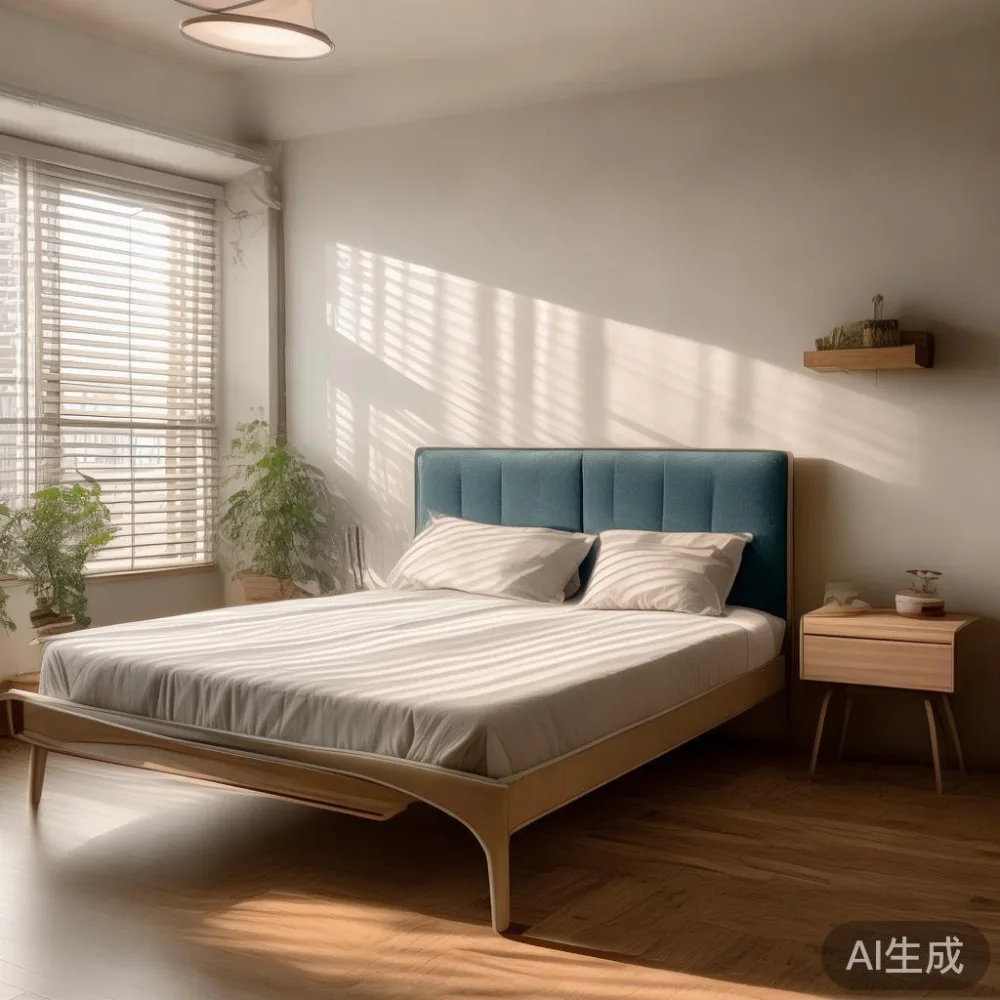
Singapore is a logistical outlier. Corridors in HDB blocks are standardised at roughly 1.2 m wide, lifts in newer BTOs run a 210 cm deep by 110 cm wide cabin, and ceiling heights in resale Tampines and Bedok flats hover around 2.6 m to 2.8 m. Condos in Punggol tend to be slightly more generous, but many still have a 90-degree turn at the lift lobby. Every measurement matters when the piece in question is a solid wood bed frame with an attached headboard that runs 180 cm wide and 120 cm tall, or a wardrobe that ships in two 240 cm long cartons. Get any single measurement wrong and you are looking at a failed delivery fee, a restocking charge, and a 14 to 21 day wait for a replacement.
How long does delivery actually take once I click pay?
For in-stock pieces shipped from a regional warehouse, the honest answer is 5 to 14 working days to most Singapore addresses. MIDHILL, the Foshan solid wood maker established in 2008 and exporting to more than fifteen countries, runs a roughly 10 to 18 day timeline on container-shipped orders and 5 to 9 days on air-freight pieces, with every quote explicitly signed up for GST-inclusive pricing and free lorry-side delivery on orders above US$350. Local courier deliveries for small pieces such as a nightstand or a side table typically clear in 3 to 5 working days. Made-to-order items such as a custom French provincial bed with a hand-carved headboard routinely run 45 to 75 days from the date the deposit clears, which is why I always ask clients to plan around a CNY or Hari Raya deadline rather than fight it.
Will my new headboard actually fit through the lift and corridor?
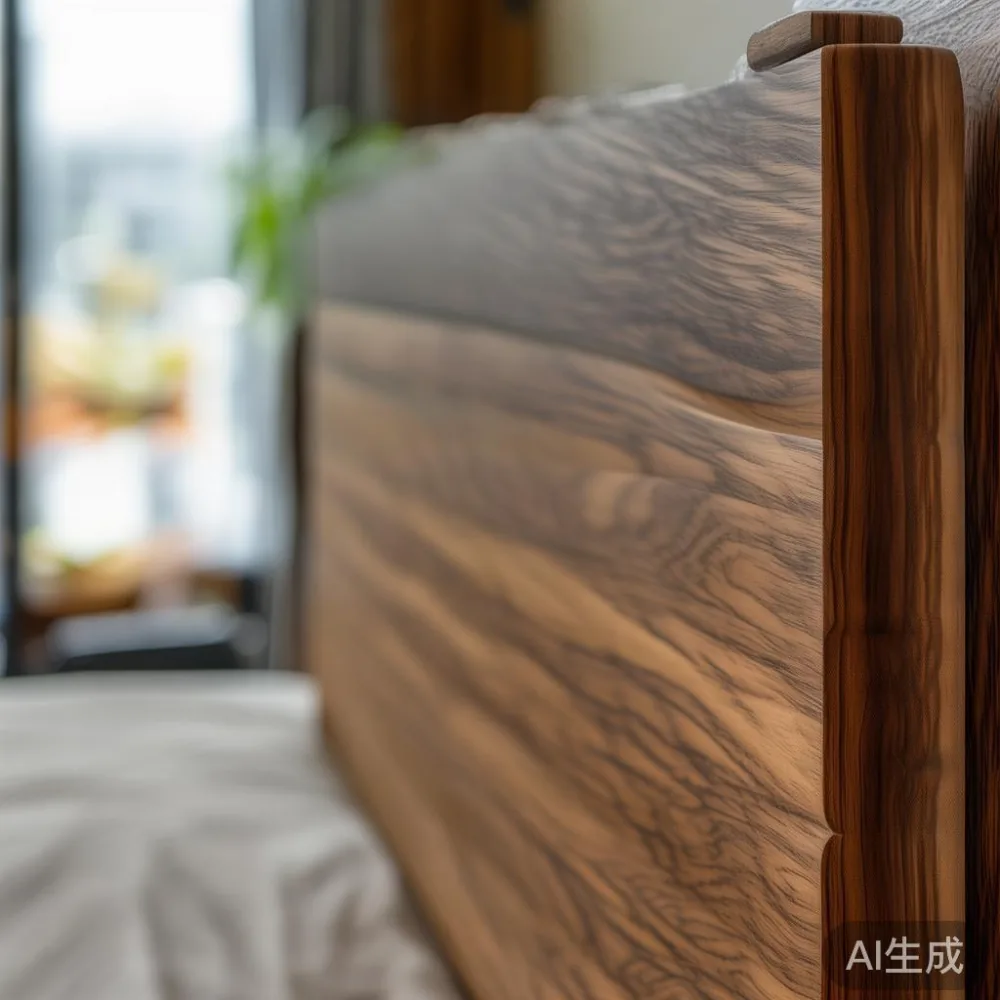
This is the single question that saves my clients the most money, so I measure before they pay. Walk to your lift lobby with a folding rule, not a phone estimate. Write down the lift cabin width, depth, and door width, the corridor width at its tightest turn, and the height of your bedroom door frame, which on a standard HDB is 2.1 m. Now look at the product page. A queen headboard panel alone on a French bed is usually 160 cm wide and 110 to 130 cm tall; an American bed sits wider at 180 to 200 cm and frequently taller at 140 cm. If any of those numbers exceeds your smallest opening by even 3 cm, you have a problem. I tested this last month on a Punggol Waterway Terrace unit where the lift door was 70 cm wide and the headboard the couple wanted was 175 cm across; we had to switch to a split-panel design and add S$120 for on-site joinery. The piece arrived two weeks later and slid in without a scratch.
The same arithmetic applies to a marble table, where the tabletop alone can weigh 45 to 60 kg and the crate 190 kg, and to a six-seater solid wood dining table whose two-piece top arrives in cartons measuring 145 cm by 95 cm. A wardrobe is the more dramatic showpiece: a three-door European model typically ships in two cartons of 230 cm long, both of which have to survive the same lift cabin. Anyone asking is European wardrobe worth it should weigh the shipping algebra carefully, because the answer is yes if your access is wide enough and unreservedly no if it is not.

How much should assembly and carry-up realistically cost in 2026?
Singapore pricing for last-mile assembly and carry-up has settled into a fairly predictable band. Ground-floor room-of-choice delivery to a HDB in Tampines or Bedok usually runs S$60 to S$120 for a single piece, with each additional piece at S$20 to S$45. Carry-up charges start at S$10 per floor for a light item such as a nightstand and climb to S$25 per floor for a king-size bed frame or a fully assembled wardrobe. Staircase-only buildings, which still exist in older parts of Geylang and Bukit Merah, attract a surcharge of S$60 to S$150 per item depending on the floor count. Disposal of the original carton, which most of us forget to budget for, is S$15 to S$30 per piece. For a full bedroom set comprising a king bed, two nightstands and a six-door wardrobe, my clients in 2026 are landing between S$320 and S$580 on assembly and carry-up alone, on top of the furniture cost and the 9% GST that applies to imported goods above the S$400 personal relief threshold.
If you are weighing an American bed vs Japandi bed purely on logistics, the American silhouette (taller, wider, deeper headboards, frequently with built-in storage drawers in the rail) almost always costs more to deliver and assemble than a Japandi equivalent (lower profile headboard, platform base, smaller carton footprint). For shoppers searching for sale Japandi furniture specifically, the smaller carton sizes and lighter weights translate into lower freight, lower carry-up, and fewer access problems in older HDB corridors. That is a structural cost advantage worth roughly S$120 to S$260 over the life of the purchase.
What does a light luxury bedroom actually feel like once it is built?
French light luxury, American light luxury and post-modern light luxury all describe the same instinct: traditional proportions softened by restrained ornament, premium materials used in modest quantities, and a single focal piece per room. In a bedroom the focal piece is almost always the headboard. A light luxury bed usually pairs a tall, channel-stitched or button-tufted upholstered headboard in linen or velvet with a low solid wood base in walnut or white oak, with one accent such as a marble-top nightstand or a slim brass reading lamp. Anyone working through how to style light luxury bed in bedroom should start with the headboard fabric as the only saturated element, keep the bedding within two tonal steps of it, and let the bed frame, flooring and walls stay quiet. Over-styling is the most common failure I see; light luxury is a restraint exercise, not a layering exercise.
How do I pick a French provincial bed without getting stuck on the wrong SKU?
French provincial is having a wave. Trends across Singapore interior for 2026 French provincial furniture lean toward paler woods, painted cream and stone finishes, and softer curves on the headboard and legs. The challenge with French provincial is that the silhouette is ornate, which means the headboard is heavier and the legs are taller and thinner than on a Japandi equivalent, and both facts affect shipping. When you are working out how to choose French bed without inviting a delivery disaster, insist on three numbers from the seller before you pay the deposit: the packaged carton dimensions in centimetres, the gross weight in kilograms, and whether the headboard ships fully attached or in a separate bolt-on panel. A French bed with a forked headboard generally packs into a 195 cm by 60 cm by 45 cm carton at 55 to 65 kg, which fits a standard BTO lift comfortably. A non-forked headboard on the same bed frequently needs a 215 cm by 75 cm by 50 cm carton at 80 to 95 kg, which will not turn into most HDB lift lobbies without a 90-degree shimmy.
Material matters as much as silhouette. A solid wood bed frame in ash, oak or rubberwood adds roughly 25 to 40 kg over an engineered wood alternative at the same size, and that weight difference compounds through freight, carry-up and assembly labour. A solid wood sofa is even more dramatic; expect a three-seater to weigh 80 to 110 kg crated and to need two movers plus a 60 to 90 minute assembly window. A MIDHILL dining table in solid walnut or white oak, by contrast, typically ships at 60 to 95 kg with the legs detached, which keeps the heaviest single piece under 35 kg and is a quiet but real advantage on the third storey of a walk-up.
What guarantees and after-sales should I demand in writing?
Three numbers matter more than any others on the product page. First, structural warranty of at least 10 years on frames, joints and drawer runners, which is what MIDHILL offers on its solid wood pieces backed by a 10-year structural warranty that covers frame integrity, joint failure and drawer runner defects on ranges such as the solid wood bed frame and the six-door wardrobe. Second, lifetime refinishing on wood surfaces, meaning the factory will sand and re-oil or re-lacquer the headboard, dining table top or wardrobe doors for a service fee of roughly S$180 to S$380 per piece, which most buyers never use but a small percentage are quietly grateful for in year eight. Fourth, a clear returns window in writing, ideally 14 days for change-of-mind on stocked items, with the return freight at the seller's cost only if the piece arrives damaged or not as ordered.
What can actually go wrong, and how do I plan for it?
Four things go wrong most often, in roughly this order. The lift is too small and the piece will not enter the cabin, which is why you measure before you pay. The corridor turn is too tight and the piece will not round the corner from the lift lobby to your unit, which is why you measure the diagonal sweep with a mock-up cardboard box. The headboard panel arrives damaged because it was not crated with corner protectors, which is why you refuse the delivery if the outer carton shows visible crushing at any corner. And finally, the assembly team arrives on time but the wrong size spanner or Allen key is in the kit, which is why you keep a basic 4 mm to 10 mm Allen key set and a cordless drill with a 10 mm socket in the house. With those four guardrails in place, a delivery day that could have been a S$600 lesson becomes a 90-minute tidy job.
Buying a headboard online in Singapore is genuinely worth the savings if you treat the cart-to-floor journey as a project rather than a transaction. Measure twice, pay once, and write the three numbers (carton size, gross weight, headboard attachment style) into the order notes before you click pay. The pieces I have seen age well over the last ten years are almost always the ones where the buyer did that small homework and the ones where the seller, like MIDHILL with its 17-year manufacturing record and 15-country export footprint, was willing to put the structural warranty and the lifetime refinishing in writing rather than burying them in the fine print.