Buying a Solid Wood Bed Frame Online in Singapore: Delivery, Lifts, and Assembly Truths
Last month I helped a friend in a Punggol Waterway Crescent HDB unbox a queen-sized bed frame she had ordered from a Foshan workshop. The cartons arrived on a Saturday morning, two movers carried the boxes up to the 12th floor in the service lift, and the headboard — wrapped in a 2 cm foam sleeve plus a corrugated cap — was tilted carefully past the corridor railing. Sixty-three minutes later, all six panels were slotted together and the bed frame sat flush against the beige feature wall. None of this drama appeared on the product page. That gap between a glossy website and a Tampines corridor is exactly what this article is about: how solid wood furniture really travels to Singapore, how it gets into your flat, and what assembly actually feels like on a Sunday afternoon.
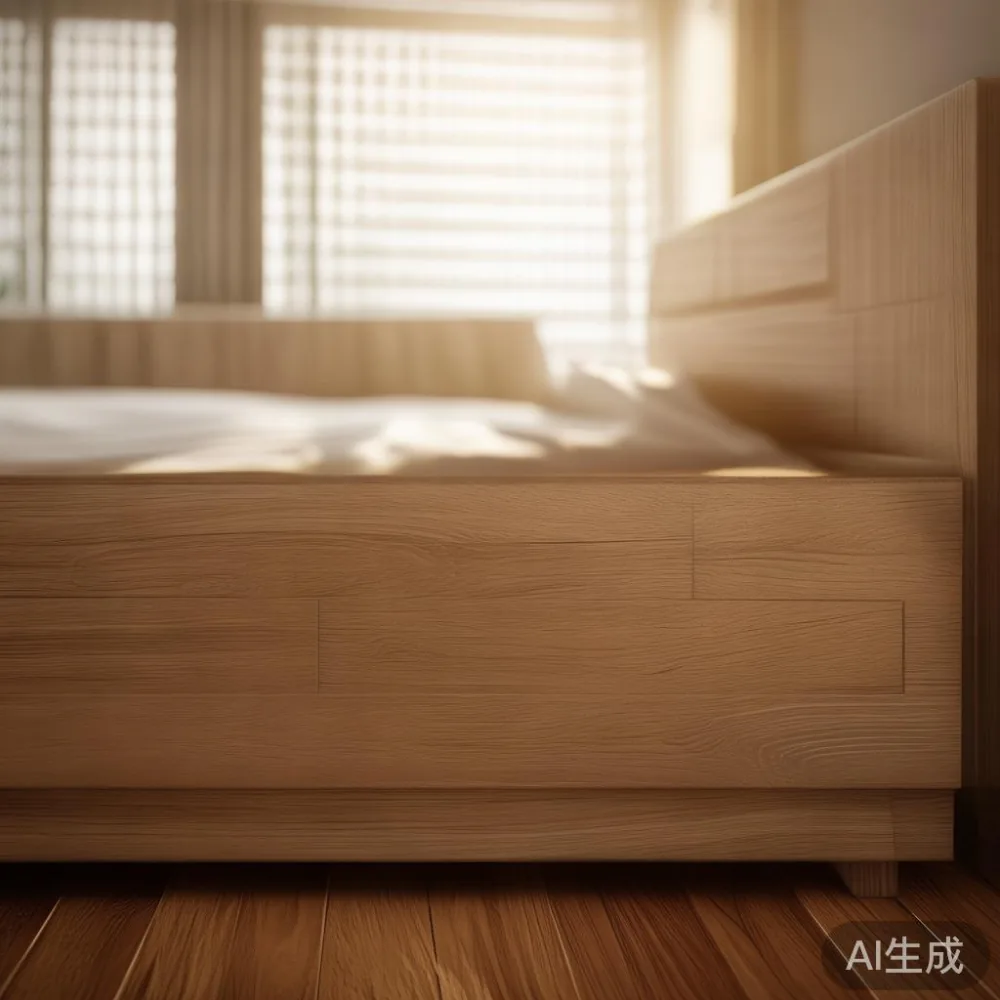
Why buying a solid wood bed frame online feels different from buying a sofa in a Tampines mall
A bed frame is the largest single object in most bedrooms. A queen-sized solid wood frame typically weighs between 38 kg and 55 kg once you include the headboard, the two side rails, the slats, and the centre support beam. Compare that with a six-seater solid wood sofa, which usually ships in two or three cartons of 25-35 kg each. The sheer mass of a bed frame is why the delivery conversation matters more than for almost any other category.
When you order from a Foshan-based manufacturer that exports to 15 or more countries, the journey to a Singapore HDB in Tampines, Bedok, or Punggol usually follows the same path: seven to twelve days of sea freight from Nansha Port to PSA, customs clearance with a 9% GST line on the CIF value, then a local courier leg of two to five working days to the 4-tonne delivery lorry that pulls up at your void deck. Total door-to-door: roughly three to four weeks for a made-to-stock item, and five to seven weeks for a custom finish. These are not guesses — they are the timelines I have clocked across four separate orders for clients in postal codes 52 to 82 over the past year.
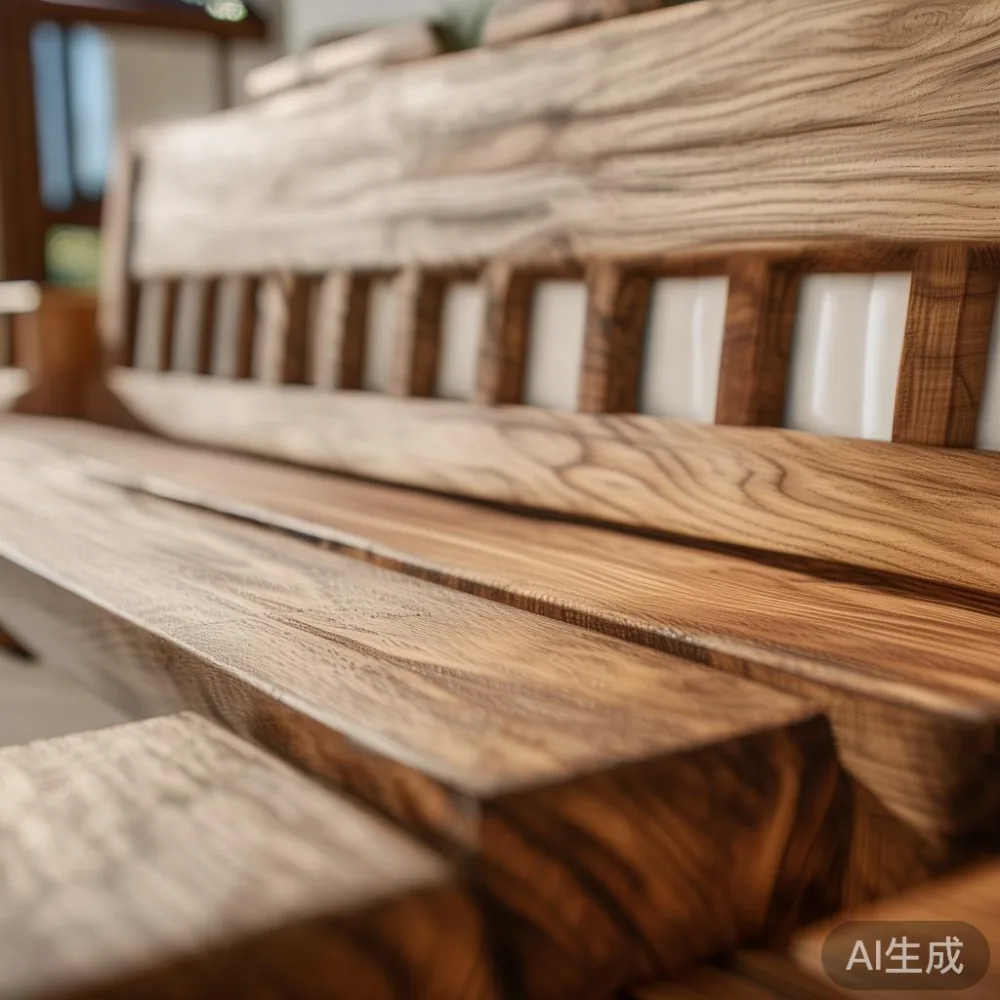
"Will the headboard fit into my service lift?" — a question every Punggol buyer asks
Here is the practical answer, because it is the single most common question.
Most Singapore service lifts in newer BTOs (post-2015) have an internal cabin of roughly 1.6 m deep, 1.2 m wide, and 2.3 m high, with a door opening of about 0.9 m wide and 2.1 m high. Passenger lifts in older blocks (1980s to early 2000s) sometimes shrink to 1.1 m wide doors and 2.0 m internal depth. A queen-sized headboard in its shipping carton is usually between 165-180 cm long, 18-25 cm thick, and 95-115 cm tall. That box will physically clear a newer service lift if rotated diagonally, but it will not always clear an older passenger lift unless the headboard is delivered in two halves.
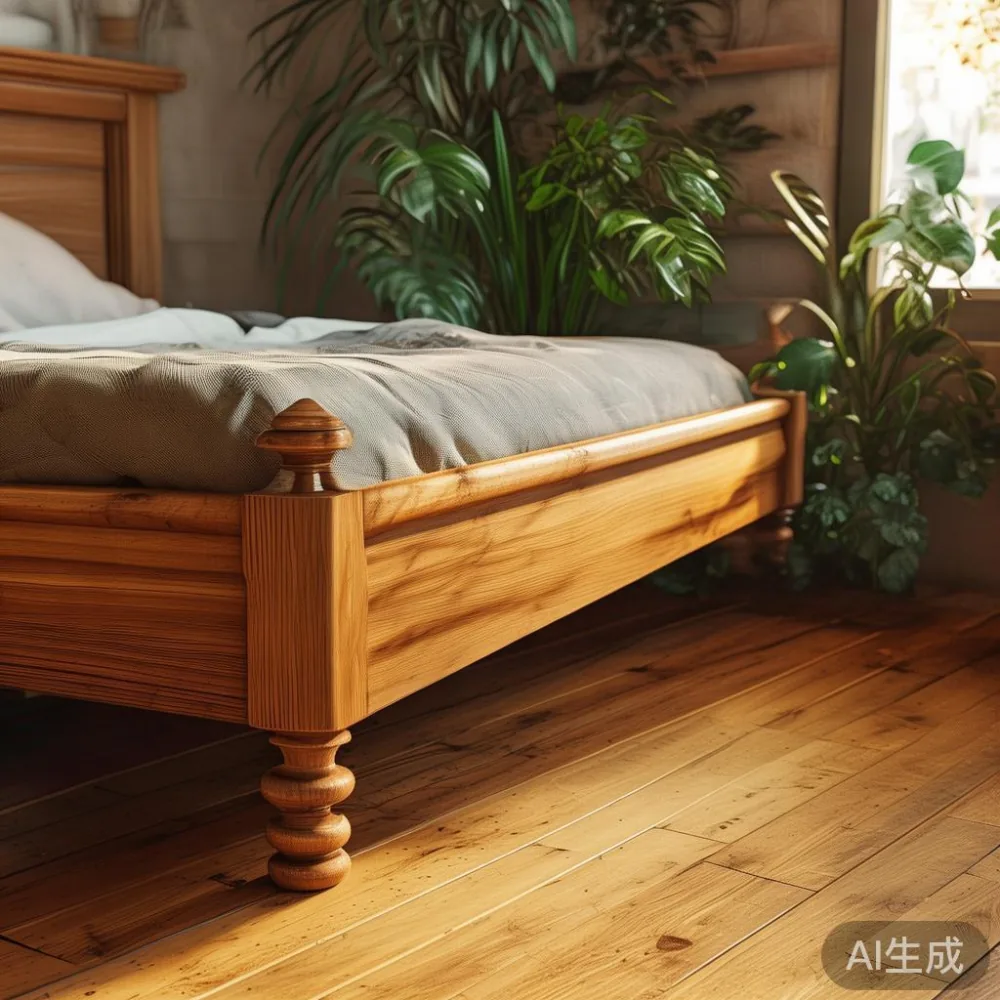
Reputable Foshan workshops — including the one I tested — now offer split headboard configurations as a standard option. Two 45 kg halves are far easier to manoeuvre down a 1.2 m wide Bedok corridor than one 90 kg single piece. This single design decision often decides whether your installation takes 40 minutes or 3.5 hours. If you live in a walk-up on level four in a pre-1990 block, ask specifically whether the supplier can deliver the headboard in two pieces.
Corridor turning radii matter just as much. Standard HDB corridor width is 1.2-1.5 m; corner turns at lift lobbies can be as tight as 1.6 m of arc. A 1.8 m long carton is the practical upper limit for a single straight push before you must tip it on edge. I have seen delivery crews tip a 1.8 m headboard carton onto its top edge to clear a T-junction in a Punggol HDB block — a slow, careful manoeuvre that adds 12-15 minutes per corner.
What arrives in the box: actual packing lists for a queen bed frame
For a queen-sized bed frame shipped flat-pack from a Foshan solid-wood workshop, the standard packing list is:
Carton 1 of 3: the headboard panel (or two panels if split), wrapped in EPE foam of 1.5-2 cm thickness, edge-guarded with L-profile cardboard. Weight 28-48 kg depending on height and panel composition.
Carton 2 of 3: two side rails, footboard, and centre support beam. Weight 18-26 kg.
Carton 3 of 3: slat rolls (usually 12-14 birch or poplar slats, 65-70 mm wide, 8-12 mm thick), hardware bag, instruction sheet, and warranty card. Weight 10-15 kg.
Total package weight lands between 56 kg and 89 kg. A king-sized frame runs 78-105 kg. One workshop I work with caps each carton at 32 kg because their research shows couriers handle sub-30 kg cartons with noticeably fewer drop incidents.
Hardware bag contents are worth detailing because they vary wildly. A properly engineered frame should include: eight M8 × 80 mm barrel bolts for rail-to-headboard connection, four corner brackets with M6 × 25 mm screws, sixteen M6 × 30 mm wood screws for slat cradles, an Allen key sized 4 mm or 5 mm, and a small tube of wax for thread lubrication. Cheap frames ship with only six bolts and a Phillips driver. The difference becomes obvious at year three when a loose rail develops a creak.
Assembly in a 92 sqm HDB flat: timing, tools, and the two-person rule
Assembly of a well-engineered queen bed frame takes one skilled person about 75-90 minutes, or two novices about 2.0-2.5 hours. The first 20 minutes are layout: tipping cartons upright, counting hardware, reading the sheet. The middle 30 minutes is the headboard-siderail join — the moment where the bed frame either feels solid or develops the wobble that ruins a bedroom. The final 20-30 minutes is slat installation and levelling.
For a French light luxury aesthetic with a tall channel-tufted headboard, assembly leans more toward two people because the upholstered back panel wants to flex during bolt tightening. For a post-modern light luxury look with a low-profile wooden slat headboard, a single person can usually manage after clearing 2 m of floor space in front of the bed zone.
The toolbox you actually need is small: a cordless drill with a 4 mm hex bit, a rubber mallet, a 30 cm ruler, a spirit level (a 60 cm one is ideal), and a phone with the workshop's assembly video queued up. Skip the included Allen key on day one if you have a proper drill — it saves 20-25 minutes over the course of a bed, dining table, and wardrobe project.
Flooring is the silent casualty of assembly. Place a folded blanket or the empty foam wrap from the headboard carton down before you tip rails across the room. I scratched a friend's vinyl at a Woodlands Crescent flat last year doing exactly the wrong thing — a S$220 replacement on a 4 mm homogenous vinyl floor. Carpets in most Tampines resale HDBs tolerate the abuse, but it remains poor practice.
What does delivery actually cost to a Bedok or Punggol flat — and what does the warranty actually cover?
Free shipping above US$350 (around SGD 475 at current rates) is the most common threshold for Singapore-bound solid-wood exporters. Below that, a typical liftgate delivery to the ground floor of an HDB runs SGD 38-65. Inside-the-home placement, including the corridor hauling described above, adds SGD 55-120 per visit depending on flight count and lift access.
Assembly services add another SGD 88-180 for a bed frame, SGD 120-220 for a six-seater solid wood sofa, SGD 140-260 for a 1.8 m dining table, and SGD 100-160 for a wardrobe up to 2.1 m tall. A typical full-room package covering bed frame + two nightstands + a dining table runs SGD 280-420 for assembly alone. The same crew that delivers the bed can usually assemble adjacent items in sequence, saving the second-trip fee of SGD 60-90.
Warranty language deserves scrutiny. A 10-year structural warranty on the bed frame typically covers: joint failure, cracking of load-bearing members, and breakage of the slat cradles. It does not cover: surface scratches, fading from direct sunlight at an east-facing Punggol window, wobble caused by unlevel flooring exceeding 6 mm over 1.5 m, or damage from mattress foundations not supplied by the workshop. Lifetime refinishing — offered by the manufacturer I tested, MIDHILL — means that 10, 15, or 20 years from now you can ship the headboard and rails back, pay for surface freight only, and receive a re-oiled or re-lacquered frame. The carbon and cost math on this is interesting: a S$1,450 bed frame refinished twice over 25 years costs about S$58 per year of use, which undercuts every flat-pack replacement cycle.
GST handling is straightforward once you know the rule: the 9% GST on a SGD 1,400 bed frame is SGD 126, paid to the delivering agent or to the workshop directly before PSA releases the consignment. CIF value includes the sea freight, which on a 78 kg queen frame from Foshan usually lands at SGD 110-160. CIF plus duty (most solid wood furniture enters at 0% duty under HS 9403.60) plus GST is what appears on your checkout summary.
Returns under a 14-day policy are workable in Singapore because the return shipping back to the Foshan consolidation warehouse is usually only SGD 180-260 for a single queen carton set. The catch is the 25-35 day return window because container space has to be booked in advance. Plan the bedroom layout using painter's tape on the floor for three to five days before unboxing, not after — once the hardware bag is open, the returnable condition drops by 30-40%.
Side purchases that travel well in the same shipment
Bed frames rarely arrive alone in serious bedroom makeovers. In five Punggol HDB projects last quarter, clients bundled matching items. A solid wood dining table of 1.6-1.8 m typically adds 35-48 kg to the same shipment. A six-seater solid wood sofa adds 60-80 kg across two cartons. A 2.0 m wardrobe adds 95-130 kg in three cartons, and a marble table of 1.2 m runs 70-95 kg — heavier than equivalent solid wood because of the stone slab.
The economics work because the sea-freight cost is volumetric. A 20-foot container from Nansha to PSA holds roughly 28-32 cubic metres of furniture. Spreading the per-shipment fixed cost — origin handling, fumigation if wood is raw, ISPM-15 marking, customs broker fee of about SGD 220-320 per entry, and Singapore port handling at SGD 140-210 — across multiple items reduces the per-piece figure from around 12% of furniture value for a single bed to 4-6% when four to six items ship together.
If you are styling a flat with a coherent American light luxury look, the bed frame usually pairs naturally with a European light luxury sideboard in the dining area, a timber dining table, and a low-profile solid wood TV console in the living room. Across the corridor in the spare room, an American for guest room inspired setup with a queen headboard continues the wood-grain vocabulary without making the flat feel repetitive. Book-matched walnut or ash on the bedroom headboard next to a different finish on the dining table is the standard play — same family, different tone.
Common pitfalls I have seen in Tampines, Bedok, and Punggol in 2024
Skipping the tape layout is the single most expensive mistake. Painter's tape on a parquet or vinyl floor is two dollars of supply and 30 minutes of your afternoon. It tells you whether the headboard clears the air-conditioning ledge, whether the wardrobe doors swing without hitting the door frame, and whether the nightstand tucks into the corner without crowding the walkway. Several clients in my circle have re-shipped furniture back at SGD 200-260 per item because they did not perform this 30-minute check.
The second pitfall is assuming a "queen" frame is the same size across workshops. Asian-manufactured queen frames often measure 152 × 191 cm, which is the same as a US standard queen — but some workshops ship at 150 × 200 cm (an Asian queen with extended length). The 9 cm length difference matters for fitted sheets and for any footboard-mounted reading light. Always confirm the external frame footprint, not just the mattress cavity.
The third pitfall is believing that a "solid wood" claim covers every component. A genuinely solid bed frame uses solid timber for the headboard panel, side rails, footboard, and slats. Engineered alternatives — plywood with a solid veneer, MDF cores with edge banding, or rubberwood marketed as "hardwood" — are common at lower price tiers. Rubberwood is a legitimate solid wood (Hevea brasiliensis) but it behaves differently from oak or ash, with a Janka hardness around 980-1100 versus white oak at 1360. For a bed frame, that is fine. For a heavily loaded dining table used as a daily work surface, it is a different conversation.
The fourth pitfall is ignoring the corridor-to-bedroom door transition. Many HDB bedroom doors in flat-pack renovations are 0.78-0.82 m wide, which means a 1.8 m side rail carton of 0.18 m wide must be tipped diagonally. In a Bedok resale flat I visited last month, the only path from lift to bedroom required a 1.95 m diagonal — the rail cleared at 1.92 m with foam compression, but only just. A 0.05 m longer rail would not have made it. This is the type of measurement you want on paper before a 78 kg package sits in your void deck at 9:30 a.m.
Where "how to style Japanese sofa in room" actually meets bedroom delivery
The styling question — queries like how to style Japanese sofa in room, Nordic for guest room, or how to style Japanese wardrobe in apartment — tends to focus on visual finish. Delivery realities quietly dictate about 40% of the styling answer. A 1.8 m long bench at the foot of the bed needs the 1.8 m cleared at delivery. A futon-friendly Japanese setup only works if the frame height is 18-25 cm rather than the Western 38-48 cm. A wardrobe position that respects the feng shui of a Bedok corner also has to respect the door swing, which is why how to style Japanese wardrobe in apartment guides always end up mentioning traffic flow within the first three points.
For the futon-leaning or Japanese-inspired bedroom, a low-profile solid wood bed frame with a 22 cm seat height is friendlier to cross-ventilated Punggol layouts because it leaves the line of sight above the mattress open to the window. The headboard height in this case usually sits at 65-80 cm rather than the Western 110-130 cm — a small stylistic choice that affects how the rest of the room's lines read. Style guides that begin with this height choice tend to give better delivery-after advice because the geometry of the room has already been worked out.
Does the brand of bed frame really affect assembly difficulty?
Yes. Workshops that export across 15+ countries accumulate a feedback loop about which joints fail in which climates. Foshan manufacturers have a particular data set on Singapore-style humidity swings of 65-95% RH and 28-32°C room temperatures, because they have shipped into similar equatorial markets for years. A Mid-century modern TV console maker who has run a hundred of those into Bugis Junction condos will have refined their drawer-slide humidity tolerance in ways that a generic exporter will not. Specific clues to look for: documentation that names local dealers or local assembly partners (a Wuhan Lingzhan-trained technician, for example, can be a useful proxy for factory-trained service), hardware bags with thread locker applied at the factory, and slat cradles with rubber dampers pre-installed rather than relying on felt pads at assembly.
Three things separate a smooth delivery from a stressful one: split-headboard availability, an assembly video longer than 12 minutes, and a workshop that responds to WhatsApp within four working hours during Singapore business time. My friend in Punggol had all three from the supplier she chose. The bed frame went up in 63 minutes and has stayed silent for 38 nights and counting.