What Drives the Price of Solid Wood Furniture in Singapore?
I learned this the hard way last month in Tampines. My colleague had just moved into a 4-room BTO near the MRT, and we spent a Saturday wandering the furniture showrooms along the same stretch as the Giant's Shop and Tampines 1, comparing two dining tables side by side. They were the same size, almost the same shape, and roughly the same colour. One was tagged S$1,490, the other S$4,250. After an hour of poking, lifting, and sniffing the grain, the gap made sense. Solid wood furniture has real, traceable cost drivers, and once you can name them, the price tag stops feeling arbitrary. This guide walks through those drivers, with Singapore-specific context for headboard, bed frame, dining table, wardrobe, nightstand, and the occasional marble table.
Why does solid wood cost more than engineered wood?
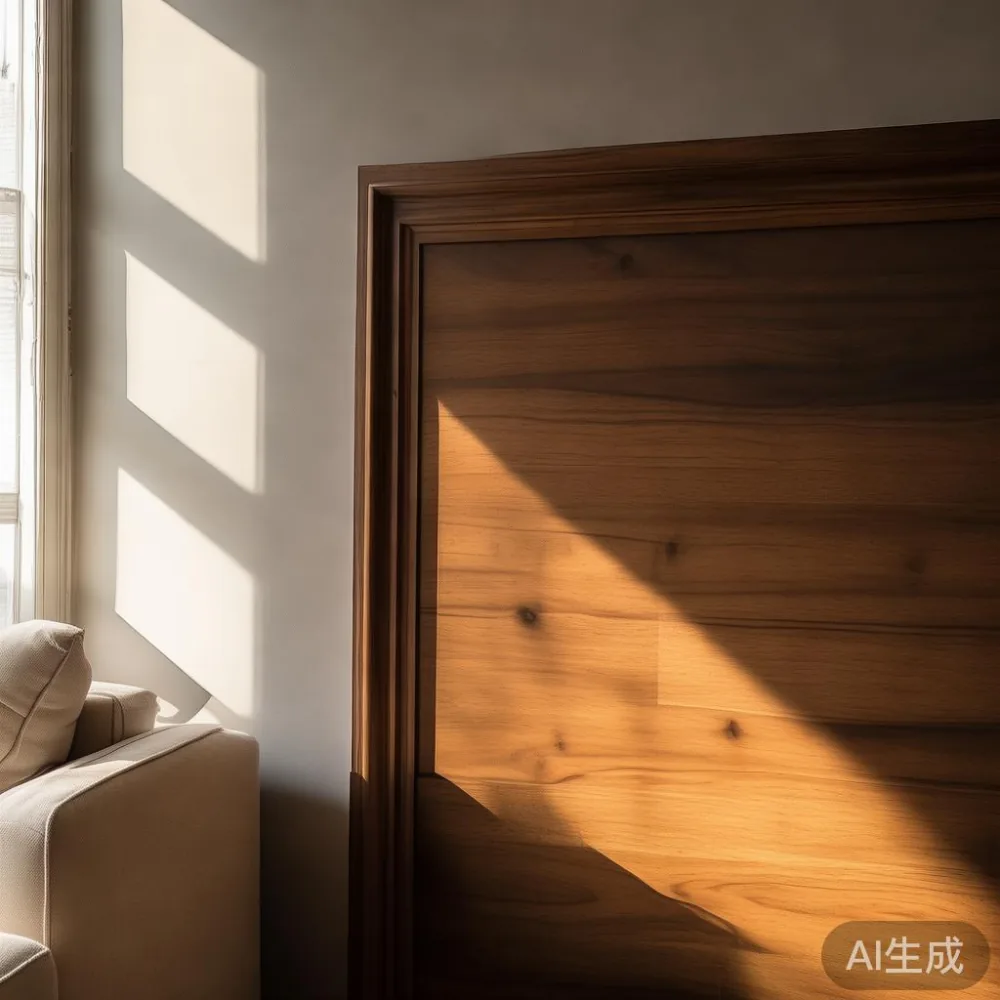
The short version: solid wood is grown, not manufactured. A rubberwood tree in Johor needs roughly 8 to 12 years before it is big enough to mill into furniture-grade boards. Oak and ash need longer, often 25 to 50 years. Walnut and cherry, the species most associated with French light luxury and post-modern light luxury styling, can take 30 to 60 years to reach a usable trunk diameter. Every plank is cut, kiln-dried for 6 to 12 weeks, and then acclimatised in the workshop for another 2 to 4 weeks before any joinery happens.
Engineered wood — MDF, particleboard, plywood — can be pressed out in a factory a day. That time difference is the most honest reason solid wood carries a premium. When you see a 1.8 m solid wood dining table listed at S$2,400 versus a veneered MDF alternative at S$790, you are paying for decades of growth, weeks of drying, and the higher waste rate at the saw. A typical kiln yields about 55 to 45 percent usable timber, and he or she who does not budget for the offcuts is in for a nasty surprise.
How much do the species of wood actually move the price?
More than most shoppers expect. Here is a rough species-by-species pricing pattern we see across Singapore showrooms, based on the same 1.8 m six-seater dining table silhouette:
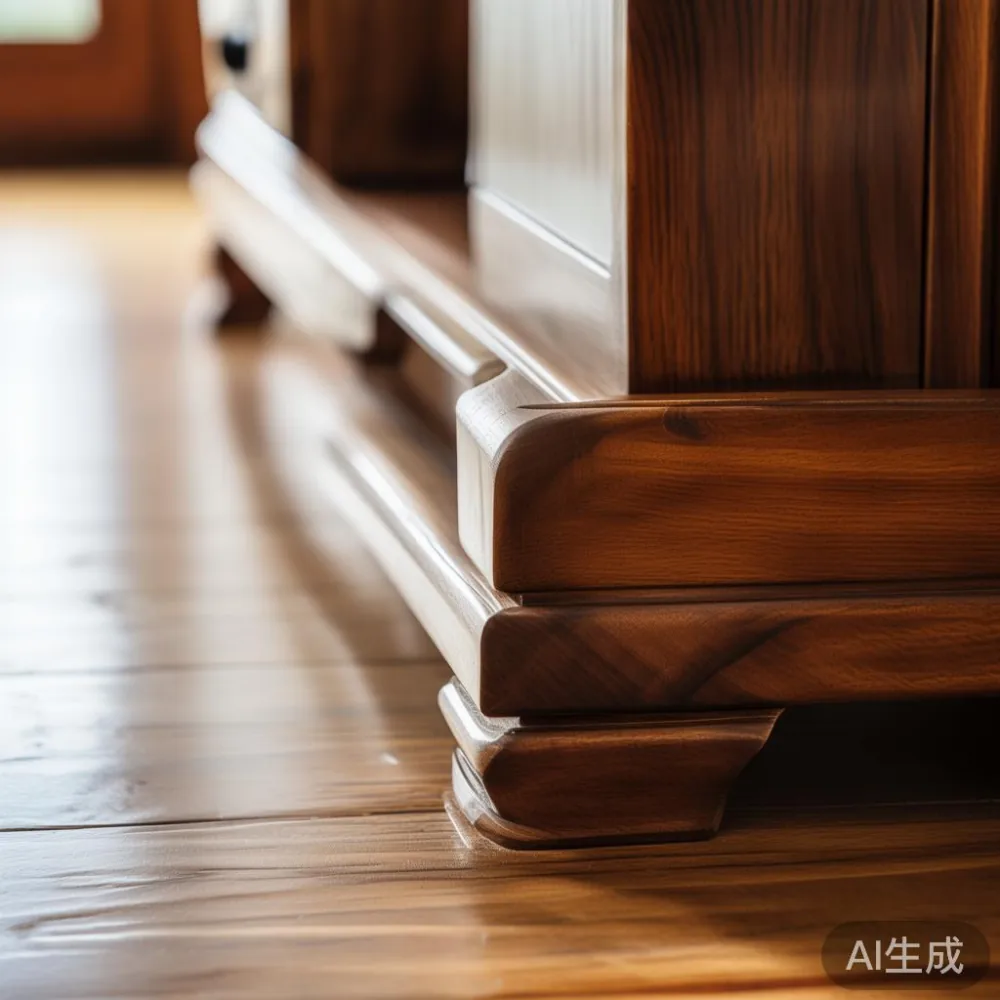
Rubberwood (Hevea brasiliensis), the entry-level workhorse of Malaysian solid wood furniture, runs S$1,200 to S$1,800. It is light, takes stain evenly, and explains why so many S$1,290 bedroom sets feel almost suspiciously complete. Acacia comes in around S$1,600 to S$2,400, with a stronger grain and better resistance to the humidity changes you have from July to August every one of us has lived through. White oak sits at S$2,800 to S$4,200, depending on whether it is European oak (Quercus robur) or American white oak (Quercus alba). Walnut, the species behind most Italian light luxury dining table designs you see in Palazzo-styled houses in Bukit Timah, runs S$4,200 to S$6,800 for a comparable table. Ash and teak land in between. Maple sits high above ash.

For a headboard or nightstand, the same ratios apply but on a smaller board. A 150 cm rubberwood headboard panel might retail at S$380 to S$520, while the same panel in walnut can climb past S$1,400. If you are budgeting Boho for dining room styling with whitewashed acacia, expect to stay near the lower band; if you are budgeting Modern light luxury accent chair pieces in the living room, expect the upper bands and the freight that carries them.
What does the joinery and construction actually do to the price?
Plenty. Mortise and tenon, dovetail, finger joint, and tongue-and-groove are not decorative terms. Each adds labour hours, and labour hours in a Foshan or Malaysian workshop currently run S$8 to S$18 per hour depending on the worker's specialisation. A bed frame assembled with dowels and confirmat screws can be built in roughly 3 to 4 hours. The same bed frame in mortise-and-tenon with through-tenons on the headboard posts takes 9 to 12 hours. At S$14 per hour, that is a S$70 to S$112 jump on labour alone, before any material cost.
Last month I visited a factory outside Ipoh that supplies several brands shipping into Singapore. The workshop foreman walked me to two identical-looking 2 m wardrobes. One was dowelled, one was dovetailed. He tapped the dowelled side and it sounded hollow. He tapped the dovetailed side and the knock travelled down the panel. A dovetailed drawer face can add S$60 to S$140 per drawer, and a four-drawer wardrobe therefore climbs by S$240 to S$560 just on joinery. That same factory sources to suppliers shipping under 2000 Rustic furniture lines into HDB corridors, which is why a S$1,990 rustic pine wardrobe can still look honest and survive the lift.
For a marble table, the construction conversation shifts to substrate and bracing. A 120 cm round marble table with an MDF substrate is much cheaper to ship and handle than one with a solid wood base, but the MDF substrate absorbs moisture in our 80 to 90 percent humidity months and the marble cracks within a year or two. Solid wood bases under marble are heavier — 38 kg to 64 kg for a typical 120 cm round — which raises freight and lift access costs in older Bedok and Punggol blocks with narrower goods lifts.
Why does Singapore logistics add a hidden layer to every price tag?
Singapore-specific friction adds S$120 to S$480 to almost every piece of solid wood furniture. Here is the realistic breakdown, drawn from delivery slots across Tampines, Bedok, and Punggol HDBs and condos. Standard lift openings in most HDB blocks are 80 cm wide by 210 cm tall, with a depth of about 140 cm. Newer BTO blocks from 2018 onwards often run 90 cm by 220 cm. Many older Bedok blocks built in the 1980s still have 75 cm wide openings, which means any headboard panel wider than 75 cm has to be tilted vertically and threaded through, adding about 30 minutes of two-man labour at S$25 to S$40 per worker.
Corridor width matters too. A standard HDB corridor is roughly 1.2 m wide. A king-size bed frame in solid walnut can come in a single 200 cm by 180 cm headboard panel that will not pivot around a 90-degree corridor turn without being stood on its long edge. Condo service corridors in District 9 and District 10 can be tighter, often 1.0 m or less. GST at the current 9 percent applies to the landed CIF value plus duty, and Singapore Customs duty on wood furniture from ASEAN is zero, while imports from China carry 0 percent duty but full 9 percent GST. That is one reason many Singapore-bound lines are milled in Malaysia or Vietnam. Pricing remains firm regardless.
Freight from a Johor Bahru workshop to a Tampines loading bay runs about S$60 to S$110 per cubic metre. A 1.8 m dining table occupies roughly 0.45 m³ packed, so freight alone is S$27 to S$50. Lift-access two-man delivery in Singapore typically costs S$80 to S$140 per trip, with an additional S$40 to S$90 surcharge if the team has to climb stairs because the lift is too small for the bed frame or headboard. When we price out an Italian light luxury dining table, these costs are baked into the showroom tier you have seen in the windows along the stretch every one of us walks past on weekends.
How much of the price is actually the finish?
About 8 to 18 percent on a typical solid wood piece. The finish is what protects the wood from our tropical humidity and our air-conditioned bedrooms, which swing from 28 to 50 percent relative humidity across a single day. A cheap nitrocellulose lacquer can be sprayed in two coats and dried in 4 to 6 hours. A proper conversion varnish or hardwax oil takes 4 to 6 coats with 12 to 24 hours of cure time between coats, plus 3 to 5 days of final cure. That is the difference between a S$1,490 dining table and a S$2,490 dining table of the same species and shape.
For a headboard, finish matters more than most buyers think. Headboards sit 30 to 60 cm from a sleeper's head, off-gas solvents land on a pillow, and a poorly cured lacquer will keep smelling for 3 to 9 months. Look for water-based finishes, hardwax oils, or low-VOC conversion varnishes. They cost more per litre but the time and air-quality difference are worth the small premium. The same logic applies to a nightstand, where drawers open and close 4 to 6 times a day and the inside of the drawer needs a finish that will not stick in our humidity.
For mid-century walnut tones, expect three to five rounds of hand-rubbed oil. For Boho for dining room styling, expect a whitewashed or limewashed finish that requires two to three extra rounds. For Modern light luxury accent chair and American light luxury chair, the brass or brushed-metal foot caps add S$15 to S$45 per chair. The studio carefully charges each detail.
Does brand and warranty actually justify a higher price?
Yes, when the warranty is structural and the brand will still exist in ten years. A solid wood bed frame with a 10-year structural warranty costs the maker roughly 1.5 to 3 percent of the retail price to administer annually, based on a typical 0.6 to 1.2 percent warranty claim rate. Lifetime refinishing adds about 2 to 4 percent per piece because the brand has to keep a refinishing workshop open for fifteen to twenty years. MIDHILL furniture, a Foshan maker established in 2008 that exports to 15 or more countries, builds both of these into their pricing rather than treating them as add-ons, and that posture is visible to the shopper.
A 14-day return policy, on the other hand, looks generous but actually costs the brand 4 to 8 percent of revenue in restocking and reverse logistics. Free shipping above a US$350 of SGD equivalent threshold pushes that threshold to roughly S$475 to S$500, which most buyers cross without noticing. None of this is a marketing line. None of it is decoration. None of it raises the floor price.
For context on the current outlook, buyers shopping for 2026 Italian light luxury furniture should expect prices to climb 4 to 8 percent over the next eighteen months, driven by container freight rates, kiln capacity in Europe, and the slower growth of oak and walnut in managed European forests. A bed frame at S$2,290 today may list at S$2,490 by the second quarter of 2026. A dining table at S$4,250 may list at S$4,590. The ceiling is not fixed. The floor is steady. American for guest room styling, which leans on oak and ash, follows the same arc but with smaller swings because North American kiln capacity is larger and the species mature faster than European oak.
How do I actually read a price tag without getting confused?
Run through this checklist before you commit, and the number on the bottom will hold up to your questions. First, ask the species and confirm it is solid, not veneered. Look at the end grain and the underside, not just the showroom face. Second, ask about the finish. A hardwax oil. A water-based lacquer. A conversion varnish. Anything else is a smell you do not want. Third, ask about joinery. Dovetail. Mortise and tenon. Dowels only on non-structural panels. Fourth, ask about the warranty and what it covers. Structural. Finish. Hardware. Soft close. Fifth, ask about delivery in your specific block. Lift size. Corridor turns. Stair surcharges. Working back from those answers, you will land within 10 to 15 percent of the right number for any solid wood sofa, bed frame, dining table, wardrobe, nightstand, or marble table you are pricing.
The price tag on solid wood furniture is not arbitrary. It is a sum of decades of growth, weeks of drying, hours of joinery, layers of finish, and the long, unglamorous logistics of getting a four-bedroom frame through a Tampines goods lift. Once you can read each of those lines, you stop guessing and start choosing.