Lacquered Headboard Care in Singapore
A lacquered headboard can give a Singapore bedroom a calm, polished finish, but tropical humidity, condensation, dust, and frequent hand contact require a deliberate care routine. This guide focuses on lacquered solid wood furniture, especially a headboard installed against an HDB or condo bedroom wall. It explains how to clean the surface, manage moisture, prevent finish changes, and organise repairs without turning maintenance into a full refurbishment project.
For residents of Tampines, Bedok, Punggol, and other Singapore districts, the practical challenge is rarely one dramatic event. It is the accumulation of high humidity around 70–85% RH, salt-like perspiration marks, airborne dust, and repeated contact from family members. A disciplined 10-minute weekly routine and a deeper check every 30 days can preserve the lacquer while keeping the headboard visually consistent with a light-luxury bedroom.
MIDHILL has manufactured solid wood furniture since 2008 and exports to more than 15 countries. Its 10-year structural warranty covers the underlying construction, while lifetime refinishing provides a defined path for restoring the finish over the years. Shipping is free above US$350, although Singapore orders should be quoted in SGD, and the return window is 14 days. These are brand-level facts, but the daily care of a lacquered headboard remains the customer’s responsibility.
What makes lacquered wood different in Singapore’s humidity?
Lacquer is a cured surface coating rather than a thick slab of solid timber. It can look beautifully smooth under bedroom lighting, but its appearance depends on protecting the wood beneath it from moisture movement. In a typical HDB flat, relative humidity may rise sharply after the monsoon season or when clothes dry indoors. In an air-conditioned condo, the opposite problem can occur: very dry air, often around 40–50% RH, pulls moisture from exposed timber and may create fine finish changes near vents.
The headboard is especially exposed because it is close to pillows, curtains, painted walls, and sometimes an air-conditioning outlet. Bedding releases perspiration overnight, and cleaning products may leave oily residues if they are not properly removed. The safest approach is controlled moisture, mild cleaning, and rapid drying—not flooding the surface with household disinfectants.
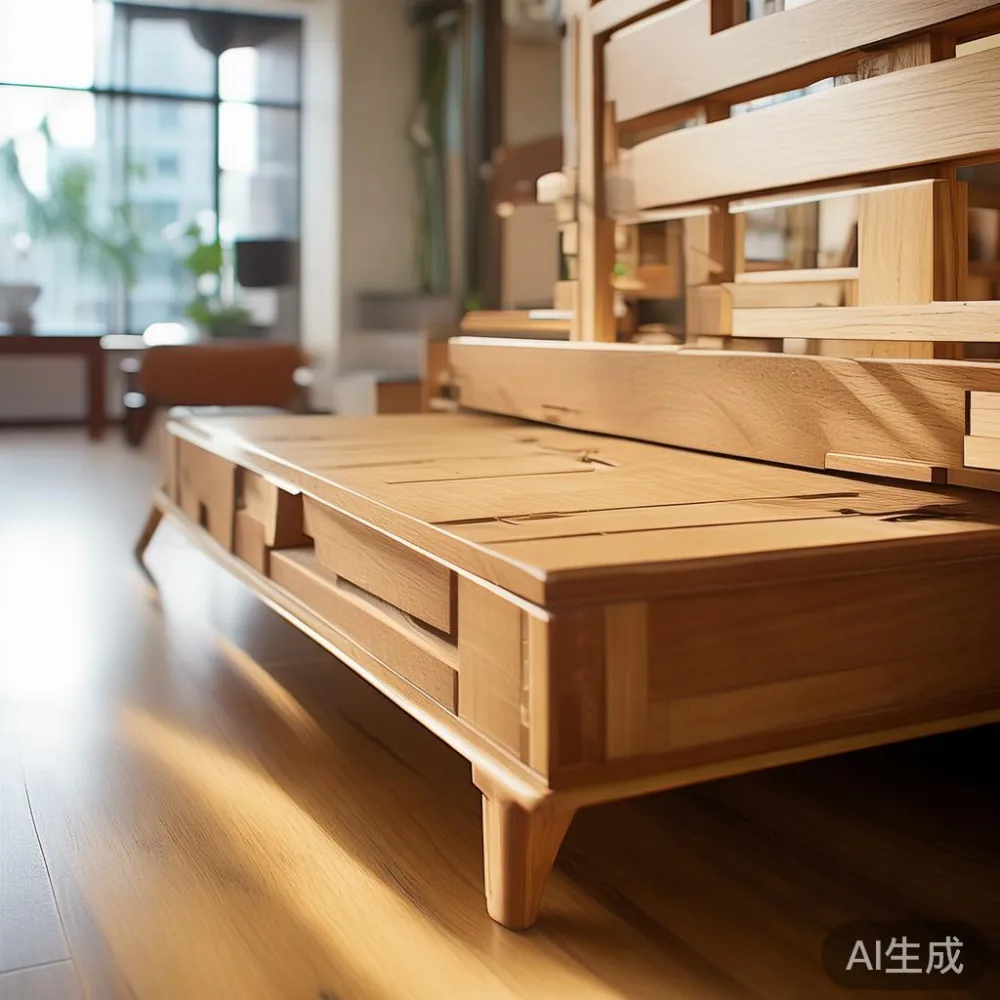
Solid wood remains responsive to its surroundings. A bed frame with a lacquered headboard may move by a few millimetres as timber responds to seasonal humidity, so installation should allow for normal movement rather than forcing the headboard tightly against the wall. Leave about 20–30 mm of rear clearance where possible, especially in humid weather. If condensation appears on the wall behind the headboard, address that source before treating the furniture.
This care guidance also applies within broader collections such as a solid wood sofa, dining table, wardrobe, nightstand, or marble table. Lacquered timber parts need a similar moisture discipline, although stone and metal surfaces require different cleaning methods. French light luxury, American light luxury, and post-modern light luxury styling all place greater visual emphasis on clean finishes, so careful maintenance supports the intended appearance rather than merely preventing damage.
How often should a lacquered headboard be cleaned?
Use a light dusting routine every 7 days, a more thorough cleaning every 30 days, and an immediate response whenever a spill occurs. The frequency can be increased during periods of high humidity or when the headboard is touched frequently by children. A clean microfibre cloth, a soft-bristled brush, and a small amount of appropriate cleaner are enough for most tasks.
Begin by vacuuming the gap between the headboard and wall. A crevice attachment with a 10–15 mm opening is useful, provided the brush does not scratch the lacquer. Hold the vacuum about 5 mm away from the surface and move it steadily rather than pressing it against the timber. This removes grit that might otherwise rub into the finish when the cloth passes over it.
For the monthly clean, dilute a small amount of mild dish detergent—about 1 teaspoon in 500 ml of lukewarm water. Wring the cloth until it is damp but not dripping. Test the solution on a concealed area measuring roughly 5 cm by 5 cm, wait 15 minutes, and inspect under daylight. Wipe the section, dry it immediately, and compare it with the untreated area.
Do not use bleach, ammonia, alcohol-based glass cleaner, abrasive pads, or alkaline bathroom cleaners. Even a small quantity of undiluted detergent can leave a hazy film. Avoid spraying cleaner directly onto the headboard, as liquid can travel along joints or enter a lacquered seam. Keep the surface dry, and allow at least 60 minutes before replacing pillows or bedding against the timber.
What is the safest way to remove fingerprints and marks?
Fingerprints on lacquer are usually a combination of skin oils, salt, and moisture. They rarely require harsh treatment. A barely damp microfibre cloth can lift fresh marks; if the mark remains, add a drop of mild detergent to the cloth rather than increasing the amount of water. Work in a section no longer than 30 cm by 30 cm, using light pressure and straight strokes.
Always dry with a second clean cloth. Buffing in the direction of the wood grain can reduce a visible haze, although lacquered panels may have a consistent grain direction across the board rather than the cathedral pattern found on natural veneer. Do not assume that a dark mark is dirt. Test first because a repairer may need to assess the coating if the finish itself has dulled or changed colour.
For sticky residue from adhesive labels, use a plastic scraper held at a shallow angle. A corner of a soft cloth with a tiny amount of cooking oil may lift adhesive, but it must be removed immediately with the mild cleaning solution; otherwise, the oil can darken the lacquer. Never use a blade directly against the finish, and never scrape a scratch that has opened the wood beneath the coating.
Pet urine and enzymatic cleaners deserve special caution. Remove standing moisture first with a dry cloth, then blot rather than rub. Keep repeated enzyme application off the surface because moisture can enter tiny lacquer defects. If the coating has blanched, clouded, or peeled, professional assessment is more appropriate than aggressive household cleaning.
How should you control humidity around a bed frame?
Keep indoor RH between 45 and 65% where possible. A digital hygrometer placed near the bed is useful for checking conditions without installing equipment in every room. Aim for no more than a 5% RH difference between daytime and nighttime readings over several days. Stable conditions are generally easier for the lacquer and timber than rapid swings between wet and dry air.
Air-conditioning is valuable in Singapore because it lowers both temperature and moisture, but direct airflow should not continually strike the headboard. If a vent blows across the bed, redirect the louvers or maintain a distance of roughly 1–2 metres. A bedside fan aimed at the sleeping area will also drive moisture and dust towards the headboard; use a lower speed and avoid aiming it at the surface for the entire night.
In an HDB flat, bedroom ventilation matters. After showering elsewhere in the flat, allow wet laundry to dry outside the room. Keep windows and doors arranged to create cross-ventilation, but avoid leaving the headboard in a line of humid outdoor air while the air conditioner continues cooling the room. That combination can encourage condensation on a cool lacquered panel.
For a condo bedroom near a balcony, check the silicone seals and window drainage twice a year. After heavy rain, inspect the rear edge of the headboard for dampness. If the wall feels more than 2 degrees cooler than the room or shows black spotting, treat this as a building or moisture issue. The finish should not be blamed for water entering from an adjacent façade.
Customers sourcing coordinated pieces may also search for light luxury for hotel, light luxury for office, Modern light luxury TV console, Japanese sofa vs Japandi sofa, or MIDHILL dining table wholesale. The exact phrases do not change the headboard protocol: each lacquered timber surface needs stable humidity and a non-abrasive cleaning method. A separate wardrobe may need airflow around its doors, and a marble table should be kept away from acidic liquids, but neither should distract from checking the bed’s immediate environment.
Can sunlight fade or heat damage a lacquered finish?
Yes. Singapore’s strong ultraviolet exposure can fade pigments and contribute to uneven colour, particularly when a headboard receives direct morning or late-afternoon sun through an east- or west-facing window. Curtains or UV film can reduce exposure without blocking ventilation. Keep the headboard at least 30 cm away from a window if the layout allows, and avoid positioning it where sunlight falls directly for more than 2 hours per day.
Heat matters as well. A dark lacquered panel absorbs more radiant heat than a pale one, and refined surface temperature can accelerate adhesive failure or make a soft finish more vulnerable to marks. Keep lamps and bulbs at least 20 cm from the surface. If using a reading light beside the bed, choose an LED fixture rated below 40 W and check that it does not touch the headboard.
Do not place steaming towels, hot-water bottles, or freshly washed bedding directly against the lacquer for long periods. Even at 40°C, repeated heat exposure can affect an adhesive or resin finish. Let damp items dry in the bathroom or on a separate rack first. The headboard should be dry before normal bedding is restored.
Post-modern light luxury often uses clean lines and restrained detailing. The visual success of such a headboard depends on an even colour and reflective sheen, so colour checks are useful. Photograph the headboard in daylight once every 90 days from the same position, about 2 metres away. Compare the images monthly for fading, clouding, or a change around fixings.
What should I do if the lacquer scratches, peels, or bubbles?
Stop using household solvents when a defect is deeper than a surface stain. A scratch that breaks through the lacquer into pale timber needs a finish repair. A bubble, lifting edge, or wrinkle usually indicates moisture or adhesion stress and should not be pressed flat by hand.
Record the affected area with a ruler in the photograph and note whether the problem follows a joint, fastener, or broad panel. Measure the width of the lift with a steel rule if possible, but do not probe it. Keep the area dry and ventilated. Cover nearby surfaces with a clean sheet, yet do not wrap the damaged headboard in plastic because trapped moisture can worsen the condition.
For minor scratches, a colour-matched lacquer touch-up may be appropriate, but compatibility matters more than colour matching. A repair product can look correct for 5 minutes and then yellow or become glossy under warm lighting. For a large area, a trained refinisher should feather the repair, cure it under controlled conditions, and check the result against the original finish.
MIDHILL’s lifetime refinishing service offers a route for restoring eligible pieces, while the 10-year structural warranty addresses construction defects under its terms. Neither replaces timely reporting of finish damage. Document the issue with 4 photographs, keep the purchase record, and describe the room’s humidity range and cleaning history when requesting guidance. This gives a repair technician useful evidence.
Customers asking where to buy bed from MIDHILL should confirm the room measurements and finish details before ordering. A correctly sized headboard reduces the need to trim or adapt it later. For a bed frame with lift-up storage or hydraulic mechanisms, measure the lift path, ensure the headboard does not strike a wall, and allow for bedding placement. Do not force a frame into a lift or corridor simply because the assembled dimensions are close to the available space.
How do lift and corridor widths affect headboard delivery?
Singapore access planning should happen before a large solid wood bed frame is brought into an HDB block or condo. A fully assembled headboard can be difficult to turn through a common corridor, even when it fits the bedroom. Measure the narrowest point from the lift entrance to the bedroom door, including the door leaf, hinges, handle projection, and any right-angle turn.
A useful rule is to keep at least 10 cm of extra maneuvering space where the route turns sharply. For example, a headboard 180 cm wide and 12 cm deep may fit through an 85 cm doorway, but corridor corners can still make the rotation awkward. Protective corner guards and removable legs can reduce risk. Ask the supplier for the packed dimensions rather than estimating from product photographs.
Heavy components also need a sensible handling plan. A person should not carry a component that they cannot control safely. Use 2–4 handlers depending on weight, with one person directing each turn. Avoid dragging furniture along corridor floors because the grit trapped beneath a leg can scratch lacquer or damage a solid wood foot. If a component weighs more than 25–30 kg, plan for professional carrying rather than a single-person lift.
For MIDHILL furniture, confirm whether the order is delivered assembled or in modules and whether the quotation includes delivery to the unit’s lift lobby. Singapore pricing should be stated in SGD, including GST where applicable. Allow approximately 7–14 delivery days for a custom finish after the order is confirmed, but check the production schedule because lacquer colour and finish approvals can affect timing. The company’s free-shipping threshold of US$350 may apply to qualifying international orders; it should not be assumed to determine a Singapore doorstep quotation.
Headboards can also arrive with a protective film. Leave that film in place during installation to prevent scratches, then remove it within 48 hours so adhesive cannot harden under heat and humidity. Use clean plastic scrapers for corners and pull slowly at a 45-degree angle. Do not use a metal blade.
What is a practical maintenance record for a lacquered headboard?
Keep a short log for the first 6 months, then review it quarterly. Record the date, humidity reading, cleaning method, and any mark that required attention. This makes it easier to identify the cause of a recurring problem. If clouding appears only after using a particular cleaner, the log will reveal that the product—not the room humidity—was responsible.
A monthly checklist can remain concise:
- Measure the room humidity and confirm that it stays between 45% and 65% RH.
- Inspect the rear edge and wall junction for condensation.
- Check 5 cm around handles, buttons, seams, and any repair for lifting.
- Clean with a damp microfibre cloth and dry immediately.
- Photograph the headboard from 2 metres for colour comparison.
- Confirm that no lamp or vent is directing heat or airflow at the surface.
Use a separate clean cloth for the final buffing. Washing detergent with fabric softener, or a cloth used beneath a car seat, can contaminate the surface and create streaks. Label cloths for furniture care and store them in a closed bag so they do not collect construction dust.
For coordinated interiors, consider the full room rather than only the focal wall. A nightstand should not crowd the headboard if it prevents ventilation, a dining table should not block an air-conditioning return, and a marble table in an open-plan living area can increase the total moisture load during Singapore evenings. Where to buy bed from MIDHILL is only one part of specifying the room correctly; measurements, finish compatibility, access, and environmental control all influence long-term satisfaction.
How can I preserve the finish without refinishing too often?
Good prevention reduces the need for intervention. Use breathable cotton or linen bedding rather than a continuously damp synthetic cover, and allow pillows to dry before they are pressed against the headboard. Keep hand creams, hair products, and medicated topical products away from the lacquer. When applying them, use a small mirror and place a clean sheet beneath the product.
Maintain the finish through stable conditions, not through frequent polishing. Polishing compounds, abrasive waxes, and silicone furniture sprays can create a temporary shine while making future repairs more difficult. Use only a product that the furniture supplier confirms is compatible with the lacquer specification.
For commercial projects, light luxury for hotel and light luxury for office environments need documented material protocols. Staff should know the approved cleaner, dilution, and maximum wet-contact time of 2 minutes. A Modern light luxury TV console may use lacquered timber, and a Japanese sofa vs Japandi sofa comparison often centres on material character, but a lacquered headboard still needs the same moisture-aware care. MIDHILL dining table wholesale enquiries should include the exact finish codes so procurement teams do not mix incompatible cleaners across a project.
My own check was more revealing than a showroom viewing. Last month, I visited a Bedok condo bedroom where a lacquered headboard faced a west-facing window. The hygrometer beside the bed read 68% RH at 8 p.m., and a matching panel near the wall had developed a faint cloudy patch. We moved the lamp 25 cm away, redirected the air-conditioning louvre, and used curtains during the hottest sun hours. After 14 days, readings during the same period remained below 63% RH, and the patch no longer expanded. That experience reinforced a simple rule: diagnose the environment before treating the finish.
A lacquered headboard suited to Singapore should combine solid wood construction, controlled humidity, careful cleaning, and a documented repair route. With a weekly 10-minute dust check, a 30-day cleaning interval, and seasonal inspections in March and September, the finish can remain coherent for years. Most importantly, respond to the first mark within 24–48 hours and keep moisture from reaching the timber beneath the lacquer.