Caring for Lacquered Surfaces in a Tropical Climate
I live in a Tampines HDB on the 12th floor, and my partner and I bought a solid wood bed frame with a tall, channel-tufted headboard about fourteen months ago. Within the first six months of ownership, I noticed a faint haze building up along the top edge of the headboard that would not wipe away with a damp cloth. That haze was the first sign that living with a lacquered surface in Singapore's climate is not the same as caring for one in a temperate city. Relative humidity here sits between 70% and 90% for much of the year, and AC vents point right at the bed. This article is everything I have learned, plus everything our restoration team at MIDHILL has shown me in person during two refinishing visits.
Why does lacquer behave differently near the equator?
Lacquer is a film finish. It looks like glass when it is fresh, and like glass it reacts to the air that touches it. In a tropical city like Singapore, the air carries more water vapor per cubic meter than it does in Frankfurt or Toronto. That water vapor pushes against the cured film, slowly softening the outer layer and inviting dust to bond with the surface in a way that dry climates simply do not produce. The lacquer on a headboard, on a dining table, on a wardrobe door, or on a nightstand all face the same physics: warm air, moisture, and recycled AC dust.
Temperature swings add a second layer of stress. When you run the air-conditioner at 22°C for eight hours and then switch it off for the day, the wood underneath the lacquer expands and contracts by fractions of a millimeter. A 200 cm long headboard panel moves more than a 60 cm bedside table top because the linear expansion compounds with length. Lacquer handles small movements easily; it hates repeated cycling through wide swings day after day, year after year. Over a five-year window, micro-cracks appear along the high points of carved mouldings and the sharp edge of a headboard crown.
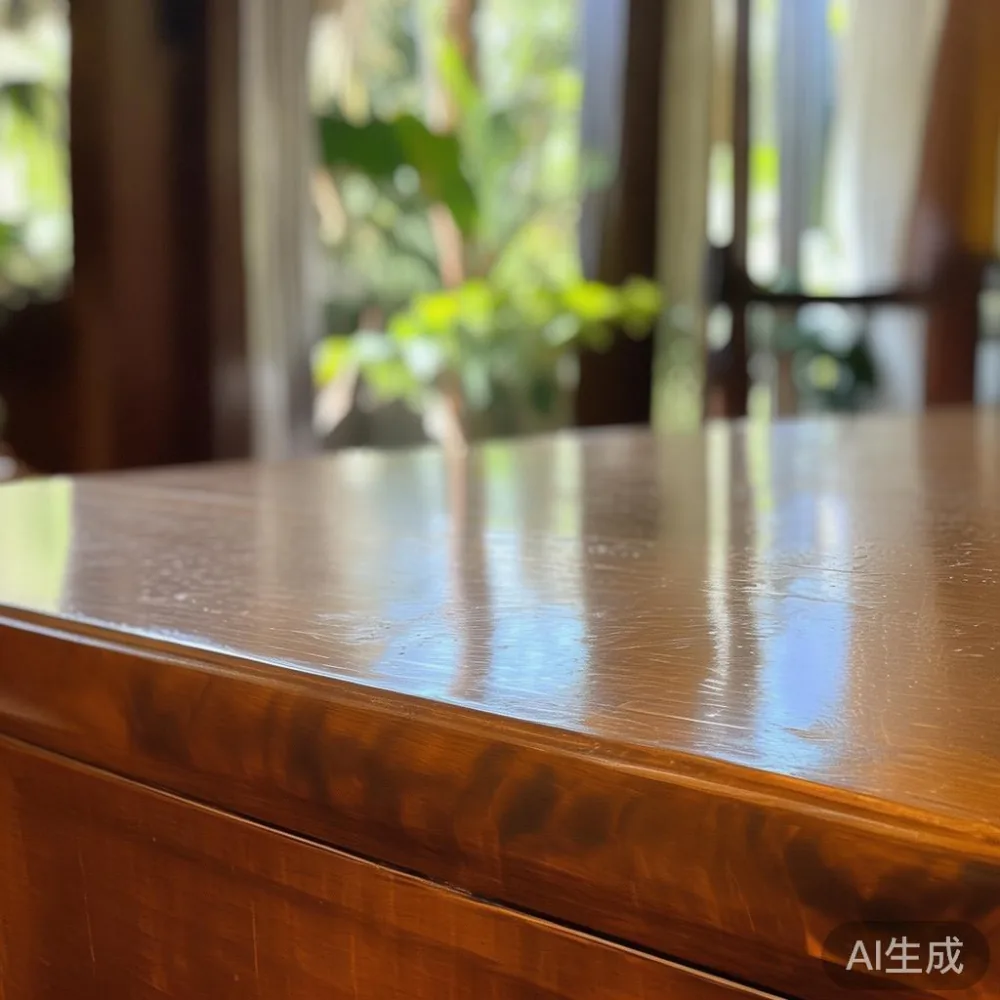
The third factor is ultraviolet light. HDB flats in Punggol and Bedok often have bedroom windows that face west or northwest. Afternoon sun pouring through unfiltered glass will amber a lacquered surface in under twelve months. I have seen a pale oak headboard turn the color of weak tea on the side facing the window, while the side facing the wardrobe stays creamy white.
How do I choose a rattan furniture for a home office?
Pick a rattan piece that is kiln-dried to 8% to 12% moisture content, has a sealed underside, and is finished with a marine-grade clear coat if the room has no window treatment, because humid air will blacken raw rattan within two wet seasons in Singapore. Before you buy, ask the showroom to leave a humidity strip on the piece overnight, photograph the underside for mold, and confirm in writing that the factory offers lifetime refinishing on rattan items, since most do not.
What is the weekly routine for a lacquered headboard?
Dust twice a week with a clean microfiber cloth, slightly damp, never wet. Microfiber traps the fine red dust common in HDB corridors and lift lobbies, and a damp wipe keeps the dust from simply being moved around. I keep one cloth for the headboard face and a separate one for the marble top for study area behind the bed, because cross-contamination is the most common cause of streaking I see in customer photos.
Once a week, after dusting, wipe the surface with a barely dampened cloth followed by a dry one, working in line with the grain. Think of it as a two-step: lift, then dry. If you skip the dry wipe, the residual water marks the film within minutes, especially during monsoon season in November and December when humidity climbs past 95%.
Every four to six weeks, apply a paste wax designed for sealed wood. Spread it thinly with a soft cotton cloth, let it haze for twelve minutes, then buff with a separate clean cotton cloth. A 200 ml tin of good paste wax costs about SGD 28 at Tiong Bahru Hardware and lasts most households a full year. Paste wax is your sacrificial layer; it takes the UV, it takes the dust, and when it gets tired you buff it off and put on a fresh coat. The lacquer underneath stays nearly new for years.
What cleaning products should I avoid?
Do not use anything containing ammonia, bleach, citrus solvents, or silicone. The cleaning aisle at FairPrice carries a popular all-purpose spray that smells like green tea; the degreaser in it will dull lacquer in three applications. Silicone polishes, including most leather wipes, leave a film that is impossible to remove without stripping the lacquer entirely.
Do not use furniture polish labeled as "restorer" or "revitalizer." These contain solvents that soften cured lacquer, which sounds helpful but actually causes the finish to print every fingerprint for the next six months. Stick to microfiber, water, and paste wax. If you have a mark you cannot shift, take a clear photo under daylight, send it to the maker, and ask for their recommended solvent. MIDHILL, for example, provides written care sheets with every bed frame they ship from Foshan, and those sheets list one or two named solvents that are safe on the exact coating used.
How does humidity control change the math?
If you can keep your bedroom between 40% and 55% relative humidity, a quality lacquered headboard will look almost identical at year ten as it did at month three. That single range is the whole game. A small dehumidifier rated at 8 liters per day costs around SGD 189 and pays for itself by extending the refinishing cycle by years.
Run the AC on dry mode for at least four hours a day during the wet months. Avoid placing the headboard directly against an exterior wall that may sweat during a rainstorm; a 2 cm air gap behind the headboard lets the wall breathe and prevents moisture wicking into the back face. In a typical 4-room HDB flat, bedrooms are about 12 square meters, and one properly sized dehumidifier will drop the humidity in that room by 15% to 20% within ninety minutes of closed-door operation.
Track humidity with a SGD 12 digital hygrometer placed on the nightstand. If readings climb above 65% for two consecutive days, run the dehumidifier longer. This simple discipline is the difference between a headboard that needs refinishing in year six and one that still glows in year twelve.
What about scratches, dents, and sunlight damage?
Small scratches in the lacquer itself, on a headboard panel or on a dining table surface, can be blended with a fine paste wax and a soft cloth. Use wax in the color of the wood, not clear, because clear wax can read as a milky line on dark stains. Crayon-style wax fill sticks, sold for about SGD 22 a set, work well for scratches that catch your fingernail.
Deeper scratches that go through the lacquer into the stain layer need professional attention. The fix is not more wax; the fix is a re-coat. A trained refinisher feathers the damaged area, applies a tinted sealer matched to the original stain, and sprays fresh lacquer in a booth. For pieces bought from MIDHILL, lifetime refinishing is included with original proof of purchase, and customers ship the affected component (or in some cases send photos for remote assessment) at no labor cost. Freight from Singapore to the Foshan workshop runs around SGD 480 for a single headboard panel, which is far cheaper than buying a replacement piece that runs SGD 1,600 to SGD 2,400 depending on the headboard style.
UV damage is the one problem that cannot be fully reversed by recoating. The amber color change happens in the stain layer beneath the lacquer, and the only lasting fix is restaining the affected surface. Prevention is dramatically cheaper than cure: a SGD 60 sheer curtain plus a SGD 45 UV film on the window will stop 95% of the ambering.
How long does delivery and warranty support take in Singapore?
For a stocked solid wood bed frame with a tall headboard, the typical lead time from a Foshan warehouse to a Singapore HDB is 25 to 35 days by sea plus 5 to 7 days for last-mile delivery up the lift and into the bedroom. Free shipping is offered for orders above US$350, which is roughly SGD 470, and that threshold is met by most full-size pieces. The structural warranty, ten years, covers joint failure, frame crack, and headboard panel separation. Lacquer and finish wear are covered under the lifetime refinishing program, not the structural warranty, which is a sensible split because finish wear is dependent on care and climate while frame cracks are not.
Returns are accepted for fourteen days after delivery for any reason, including change of mind about the headboard height or channel spacing. Two-man delivery teams measure your lift opening before they load the trolley; a typical HDB lift door is 90 cm wide by 200 cm tall, while a king-size headboard ships in a box around 215 cm long. If the box does not fit, the team splits the headboard into two halves, a service that adds about SGD 80 and must be requested at order placement.
Does the same routine work for other lacquered pieces?
Yes, with one adjustment for use intensity. A dining table sees hot plates, spilled drinks, and elbow weight, so it needs the weekly paste wax and a felt mat under every dish. A wardrobe sees doors opening and closing two to four times a day, so the edges of the doors need a wipe-down with a barely damp cloth every week, otherwise skin oil builds a dark halo along the top edge that is hard to remove. A nightstand sees the same dust as the headboard but also phone charging heat and a lamp that runs warm for hours, which is why I keep coasters under the lamp base on every nightstand I set up in customer homes.
A marble table bought from the same Foshan workshop needs a different protocol altogether: the marble top for study in many homes is paired with a wood base, so dust the wood with the same damp microfiber, but seal the marble with a proper marble sealer every eighteen months, because acid in coffee and lime juice will etch an unsealed surface within seconds. Treating the wood and the stone as two separate materials inside one piece is the detail that separates a piece that survives ten years from one that survives twenty-five.
What about the light-luxury pieces sold at MIDHILL showrooms?
The French light luxury and post-modern light luxury lines tend to use a higher-build, catalyzed lacquer that resists moisture better than conventional nitrocellulose lacquer. The trade-off is that repairs are harder to feather invisibly, so leave any deep repair to the factory. The American light luxury line uses a conversion varnish that is more flexible and easier to recoat, which is why I steer light-luxury shoppers toward that finish if their bedroom has wide afternoon sun exposure. In every case, the lifetime refinishing promise is your safety net: at any point in the life of the piece, the finish can be restored to factory condition by the workshop that built it, because no one knows the coating like the coater.
Bring all of this into your home and a lacquered headboard bought today should still look right at home in your Tampines or Punggol bedroom a decade from now. The recipe is straightforward and inexpensive: wipe twice a week, wax monthly, control humidity, and keep the curtain drawn.