How to Match Furniture to a Warm Minimal Interior
A warm minimal interior does not mean an empty room. It means controlling contrast, choosing tactile materials, and giving each large furniture piece enough breathing space. In a Singapore HDB flat or condo, where rooms often share natural light and where lift and corridor dimensions affect delivery, careful measurement matters as much as colour selection. The headboard is especially useful because it establishes the bedroom’s vertical focus while leaving the wall, bedding, and floor visually quiet.
For clients furnishing Tampines, Bedok, and Punggol homes, I usually begin with 3 numbers: the room width, the mattress size, and the usable wall length. A 150 cm mattress needs a little more lateral clearance than a 120 cm model, while a 180 cm bed demands more space in a compact bedroom. Measurements should be taken after measuring the actual door, lift, stairwell, and corridor turns. A solid wood bed frame may fit the bedroom but fail to reach the unit if a corridor narrows below its diagonal dimensions.
What defines a warm minimal bedroom?
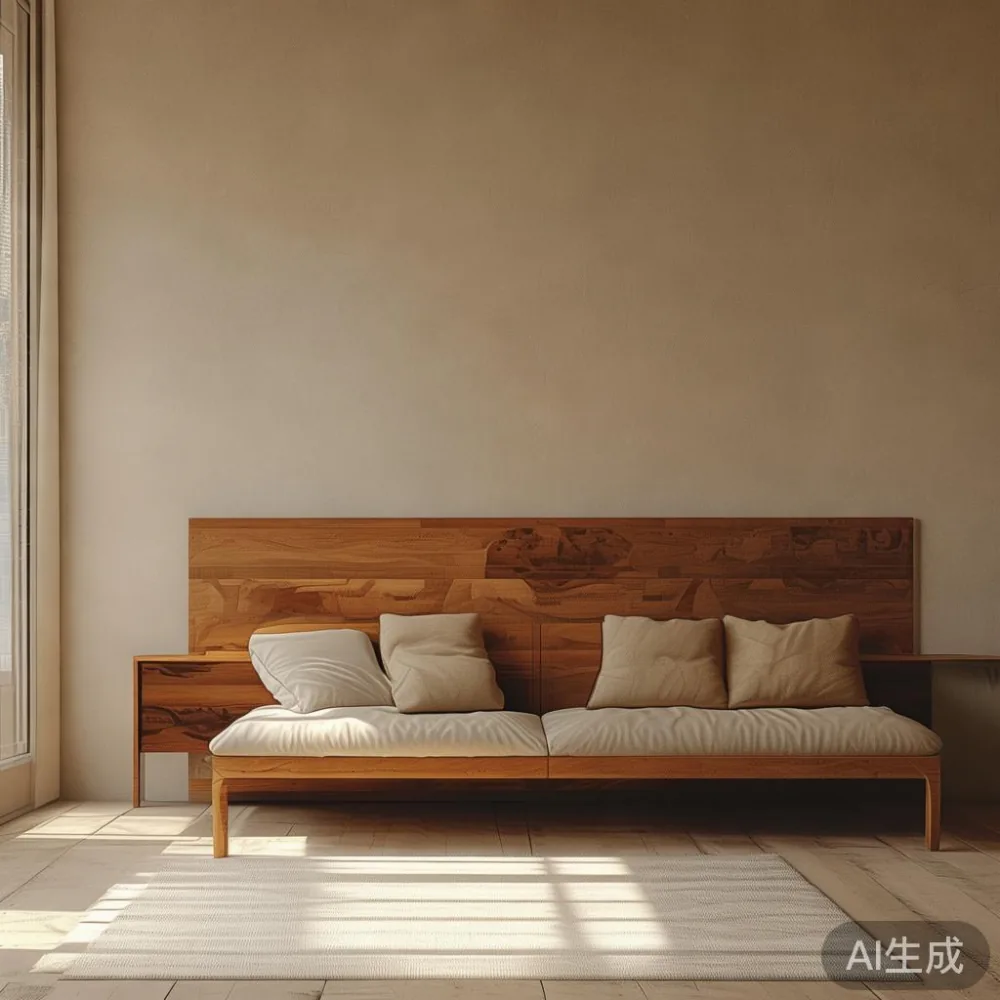
Warm minimalism works through balance: pale walls, medium-toned timber, soft textiles, and a small number of visible objects. The palette can include warm white, sand, oatmeal, muted clay, light oak, and honey-brown wood. Avoid making every item the same colour, because the absence of contrast can make a room feel flat. A simple solid wood headboard with a natural finish can provide structure against a warm white wall while a linen bed cover adds texture.
Light luxury is relevant here, but it does not require ornament everywhere. French light luxury often suggests upholstered forms, curved edges, and gentle fabrics; American light luxury leans toward clean profiles, generous proportions, and relaxed comfort. Post-modern light luxury can combine one classic material with a simpler silhouette. In a Singapore apartment, I would translate those ideas into a restrained room: a wood headboard, one upholstered element, two lamps, and a narrow nightstand on each side if circulation allows.
For practical planning, keep at least 60 cm clear beside the bed where possible, 70–90 cm in front of a nightstand, and 75 cm along a main circulation route. These are planning targets rather than fixed rules, but they reduce the feeling of crowding. In a 280 cm-wide HDB bedroom, a 160 cm bed leaves about 60 cm on each side. A 180 cm bed leaves 50 cm per side, so storage must be chosen carefully.

How do I choose a headboard for a warm minimal room?
Choose the headboard by looking at the room from the doorway, not by judging the sample alone. A solid wood design with straight lines suits a warm minimal interior when its proportions are calm and its finish is not too glossy. Slatted heads create a gentle rhythm; upholstered panels add softness; broad timber panels create a stronger architectural effect. The mattress should overlap the headboard by at least 5 cm if the headboard is designed to support a mattress edge, but follow the bed frame manufacturer’s dimensions.
Measure the wall before ordering. A headboard mounted above a 150 cm mattress might be 160–180 cm wide, while a headboard for a 180 cm bed might be 190–210 cm wide. Leave 10–20 cm from curtains, air-conditioning vents, and switches where possible. The headboard should not block a socket or make pillow access awkward. For a compact room, a height of 95–120 cm above the floor is often comfortable, but the finished mattress height must also be considered.
The word headboard appears in design discussions more often than many customers expect because it affects both appearance and installation. A recessed headboard can look neat in a narrow room, while a thick timber frame needs more wall clearance. Check the mounting system, wall material, and included hardware before drilling. In older HDB flats, uneven plaster walls may require a carefully levelled fixing approach rather than forcing a rigid frame into place.
For a cohesive palette, pair the headboard with a simple bed frame in the same or a closely related wood tone. If the headboard is darker, choose bedding in cream, stone, or muted beige rather than adding another dark accent. The contrast should be controlled, not eliminated. A small ceramic lamp or a book in clay colour can repeat the warmth without making the room busy.
What is the best proportion for a solid wood headboard?
Proportion should follow the mattress and wall, not a decorative trend. For a 120 cm mattress, a headboard around 130–150 cm wide can look intentional. For a 150 cm mattress, 160–180 cm is a useful range. For a 180 cm mattress, 190–210 cm gives the bed a composed appearance. If the wall is narrow, a headboard that extends only 5–10 cm beyond the mattress may preserve space, but the design must still look deliberate rather than undersized.
Height also affects visual weight. A headboard extending 20–30 cm above the mattress may feel balanced with low bedding, while a very tall panel can dominate a low-ceiling room. Keep the highest point at least 20 cm below a ceiling pendant or ceiling fan where possible. If there is a window directly behind the bed, a lower headboard may preserve daylight better than a tall installation.
Consider the material finish under Singapore light. Warm white walls can make pale timber look slightly yellow, while cool grey walls can make honey wood appear richer. Ask for daylight and evening samples rather than relying on a showroom photograph. A satin finish usually reflects less sharply than gloss and suits a minimal room. If you are comparing a light oak effect with a warmer walnut tone, test both beside your actual bedding and floor.
How do I coordinate a nightstand with the bed frame?
A nightstand should echo the bed’s material or shape without copying every detail. A solid wood nightstand with one drawer, 40–50 cm wide, and 45–55 cm high is practical beside many mattresses. Its top should sit within roughly 5–10 cm of the mattress top for convenient reach. If the room is narrow, a 30–40 cm wall-mounted or slim nightstand can preserve floor area, though it should still support a lamp and a glass safely.
Use one repeated finish across the bed frame and nightstand, then introduce contrast through the lamp shade, handle, or textile. Matte black hardware can look sharp against light wood, but warm brass or brushed champagne metal may suit a softer interior better. Keep cords tidy with a 3–5 cm cable gap behind the nightstand. Do not place a nightstand where it blocks the 70 cm route from the bedroom door to the bed.
In one bedroom I visited last month in Tampines, the owners had chosen a 160 cm solid wood bed frame and then tried a 60 cm-wide nightstand. The room looked balanced from the entrance, but the nightstand reduced the usable walking space to about 54 cm. Replacing it with a 42 cm model restored a cleaner route and made the headboard appear wider. That small change showed why measurements should be made after the bed is positioned.
How can I use marble without making a warm minimal room feel cold?
A marble table can serve as a light-luxury accent, but it should be limited in scale and carefully balanced with wood. A small round marble side table beside a timber bed or an oval marble dining table can introduce a cool surface against a warm palette. Choose veining that is soft rather than visually loud, and keep at least one warm element nearby: oak, rattan, linen, or matte ceramic.
For a dining area in a condo, a marble-topped dining table around 140–160 cm long can suit four people, while a 180–200 cm model can seat six. Check chair clearance: allow about 75–90 cm behind each seated position, and ensure the table does not pinch the route from the kitchen. If children or elderly family members use the space, rounded corners and stable chairs are practical additions, not decorative distractions.
A light-luxury dressing table is another possible use, provided it remains compact. Place it in a dressing corner rather than filling every wall. A 100–120 cm wide table with a simple mirror can work beside a bedroom, but the mirror should not reflect a visually cluttered doorway. The same rule applies to a light luxury dressing table in a living area: one polished surface can create focus, while several reflective objects create noise.
How do I keep a wardrobe and other storage visually quiet?
Storage should support the room’s calm character, especially in HDB bedrooms where built-in cupboards may already occupy considerable wall area. A wardrobe with full-height doors can make the ceiling feel lower, while open shelving can make a small room feel busier. If a freestanding wardrobe is used, choose a depth around 55–60 cm for hanging clothes and allow adequate door-opening space. Confirm the internal layout for long garments, shelves, and drawers before ordering.
For a mid-century or contemporary warm minimal look, flat-front doors in warm white, taupe, or light timber can blend with the wall. If the wardrobe is darker than the wall, repeat its tone in a small item such as a lamp base or bed frame detail. MIDHILL wardrobe planning is most effective when the finish, handle, internal compartments, and room measurements are reviewed together rather than selected separately.
Storage is also relevant in the living room. A solid wood sofa with a restrained profile can face a dining table without competing with it. When considering how to style American sofa in apartment living rooms, keep the sofa around 10 cm from the wall if space permits, or leave a deliberate 5 cm gap for cleaning. A rug extending 20–30 cm beyond the sofa front can visually connect it to the room. Check that the sofa does not reduce a corridor to less than 70 cm.
How can solid wood pieces work in a lift and corridor?
Delivery planning protects both the furniture and the home. Measure the lift door, lift interior, unit door, hallway, and every turn. Record the narrowest point, not only the corridor width. A solid wood bed frame may be delivered as several pieces, while a wardrobe may arrive as a flat-packed or modular unit. Ask the supplier for the packed dimensions and weight of each carton.
For example, a 180 cm bed frame packed in two cartons should still fit a 90 cm lift doorway if the cartons are narrow and can be angled carefully. A solid wood sofa may have a larger outer carton and require a two-person carry. A dining table may need to be turned vertically, so measure the ceiling height as well as the corridor length. These checks should happen before payment, not on delivery day.
Singapore’s GST should be included in the final quotation. A sample quote of SGD 2,880 before GST becomes SGD 3,110.40 after 8% GST, so budget approximately 8% above the listed item price. Delivery timing should also be confirmed in writing. Allow roughly 7–14 delivery days for a made-to-order solid wood piece, while stock items may be available sooner. Confirm whether stair carry, lift reservation, or assembly is included.
Protection matters because solid wood responds to humidity and movement. Keep new furniture away from direct air-conditioning airflow and standing water for the first few weeks. Wipe with a soft, slightly damp cloth and dry immediately. Do not use soaking wet mops on a headboard or bed frame. A 10-year structural warranty can provide confidence about construction, but care instructions still determine how the surface ages.
What lighting and textiles keep the room warm?
Warmth comes from light quality as much as wood colour. Use lamps with a colour temperature around 2700–3000K, and keep bedside lighting softer than overhead lighting. A 40–60 cm lamp shade on a slim nightstand can illuminate the bed without filling the room with glare. If the bedroom has no natural light, a layered arrangement—wall light, bedside lamp, and controlled ceiling light—creates depth.
Textiles should be breathable and easy to coordinate. Linen, cotton, or cotton-linen bedding in oatmeal, warm grey, clay, or soft ivory works with a timber headboard. Add texture through a knitted throw or a woven cushion, but limit the number of patterns to one or two. For a warm minimal room, the bed should be made neatly enough to show its silhouette; excessive accessories can obscure the headboard.
A solid wood dining table in the adjoining space should not compete with the bedroom palette. Match its warmth through one repeated colour, such as a beige runner or muted terracotta chair. An Italian light luxury sofa could provide a refined living-room focal point, but its scale must suit the apartment. Check seat depth, arm clearance, and the distance from the dining table before selecting it.
Can a European bed fit a Singapore apartment?
A European-style bed can fit if the design is adapted to local room dimensions and delivery access. Oversized frames, high posts, and wide footboards may look elegant in a large room but reduce circulation in an HDB flat. Before asking how to style European bed in apartment interiors, measure the mattress area, bedside gaps, and the route into the room. A 160 cm bed with a 210–230 cm length is often easier to manage than a 200 cm frame in a narrow bedroom.
Choose a bed frame that visually supports the headboard rather than hiding it. A slim timber surround, upholstered panel, or low-profile footboard can maintain the European reference without adding too much bulk. Keep curtains clear of the frame and check that the headboard does not interfere with window handles. If the bedroom is shared with a wardrobe, align the bed centrally where possible, but preserve access to both wardrobe doors.
For a polished result, make one feature the main focus and let the remaining pieces support it. The headboard can be the main bedroom feature; the wardrobe can blend into the wall; the nightstand can repeat the wood finish; and the bedding can provide softness. This approach makes light luxury for bedroom feel natural rather than over-decorated.
How do I plan a coordinated room before ordering?
Create a simple project sheet with room dimensions, mattress size, wall colours, flooring, existing curtains, and delivery constraints. Add the intended headboard width and height, then place the bed frame, nightstands, wardrobe, and lighting on the plan. Leave at least 60 cm beside the bed where possible, keep the main doorway clear, and test the route for a dining table or solid wood sofa before ordering.
Finish selection should be reviewed in the home. View the timber under daylight, evening light, and the room’s air-conditioning conditions. Check whether the colour works with your floor, skirting, door frames, and switch plates. For a marble table, compare the veining against the wall and textiles. For a dining table, measure chair pull-out space. For a wardrobe, verify the internal fittings and door swing.
Keep a 10% visual buffer rather than filling every centimetre. Minimal interiors need negative space, particularly around the bed and headboard. A room with fewer pieces can still feel luxurious when proportions are correct, surfaces are calm, and materials are allowed to age visibly.
MIDHILL designs solid wood furniture for practical homes, with production established in 2008, exports to more than 15 countries, a 10-year structural warranty, lifetime refinishing, and delivery support for larger orders. Confirm the final quotation, GST, delivery days, and return terms before purchase. Orders over US$350 qualify for free shipping under the stated policy, while Singapore customers should request the applicable local delivery arrangement and return conditions in writing.
A well matched bedroom is assembled from relationships: headboard to wall, bed frame to floor, nightstand to mattress, and lighting to timber. Start with accurate measurements, repeat 2 or 3 colours, control the number of textures, and allow the room to breathe. The result is a warm minimal interior that feels refined in a Tampines flat, a Bedok condo, or a Punggol home—not because it contains more furniture, but because every piece has a measured purpose.