Humidity in Singapore and What It Does to Your Solid Wood Furniture
Most people moving into a new BTO in Punggol or a resale flat in Tampines spend their first week picking paint colours, arranging movers, and arguing over whether the wardrobe should sit on the left or right wall. Humidity is rarely on that list, and yet it is the single biggest environmental factor acting on every piece of solid wood in the home. Singapore sits in a permanent band of 70–90% relative humidity, with diurnal swings of 15–25 percentage points when an afternoon thunderstorm rolls through Bedok or Bukit Panjang. For a piece of kiln-dried oak, ash, or walnut, that is the equivalent of being asked to expand and contract three to four millimetres across the grain every single day.
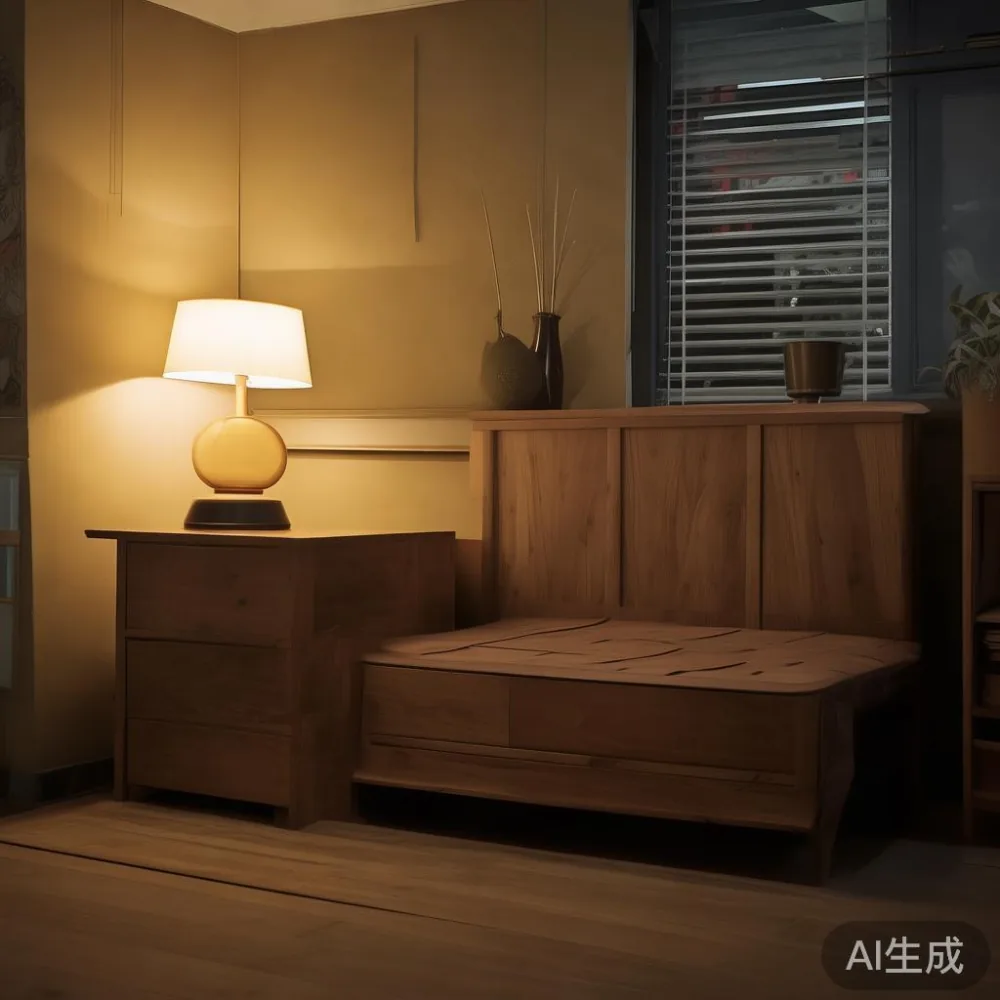
I learned this the hard way last month. I visited a friend's unit in a 1990s-era HDB at Bedok Reservoir, about 92 sqm, three bedrooms. She had bought a beautiful light oak bed frame from a local retailer two years ago for SGD 2,480. The headboard had developed a 4 mm gap along the left stile, the drawer runners on her nightstand were sticking, and the dining table had a gentle cup you could feel with the back of a finger. None of it was bad craftsmanship. All of it was physics. She lives 4 km from the coast, runs the air-conditioner at 24°C from 11 pm to 6 am, and leaves the windows cracked during the day. The relative humidity in her living room oscillates between 62% and 88% across a 24-hour cycle. That is enough to move wood.
At MIDHILL, our factory in Foshan has been working with solid wood since 2008, and we ship to more than fifteen countries across very different climates — from the dry 25% winter humidity of Toronto to the 90% summer humidity of Johor Bahru. That range taught us that a headboard is not a static object. It is a hygroscopic material that breathes. The trick is to build it, finish it, and acclimatise it so that the breathing is silent rather than destructive.
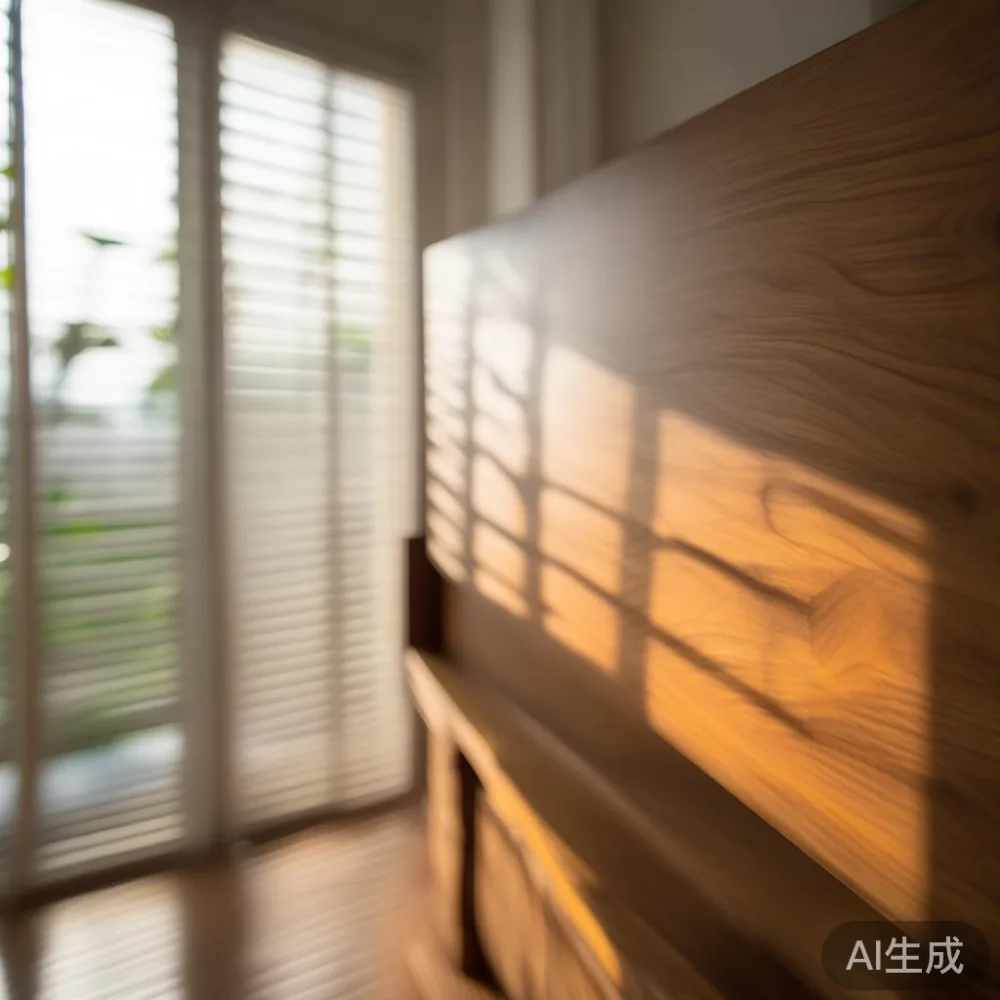
What relative humidity actually does to a solid wood headboard
Wood is roughly 50% carbon, 45% oxygen, and 6% hydrogen by dry weight, but at 28% moisture content — the average equilibrium moisture content for Singapore — it is holding a lot of water inside its cell walls. When relative humidity rises, the cell walls absorb water and the board swells. When it falls, they give water back and the board shrinks. Across the grain, the movement is roughly 1% for every 4 percentage points of humidity change. For a 180 cm wide headboard panel, that translates to about 1.8 mm of expansion at 88% RH compared to 60% RH. That is the width of a credit card, and it is enough to push joints, stress glue lines, and bow a panel if it is restrained.
This is why every MIDHILL headboard leaves the factory with a moisture content between 8% and 10%, sealed on all six sides with a multi-coat conversion varnish. We do not leave the underside of a bed frame or the back of a wardrobe unfinished, because that is where moisture enters fastest and where mould spores colonise first.
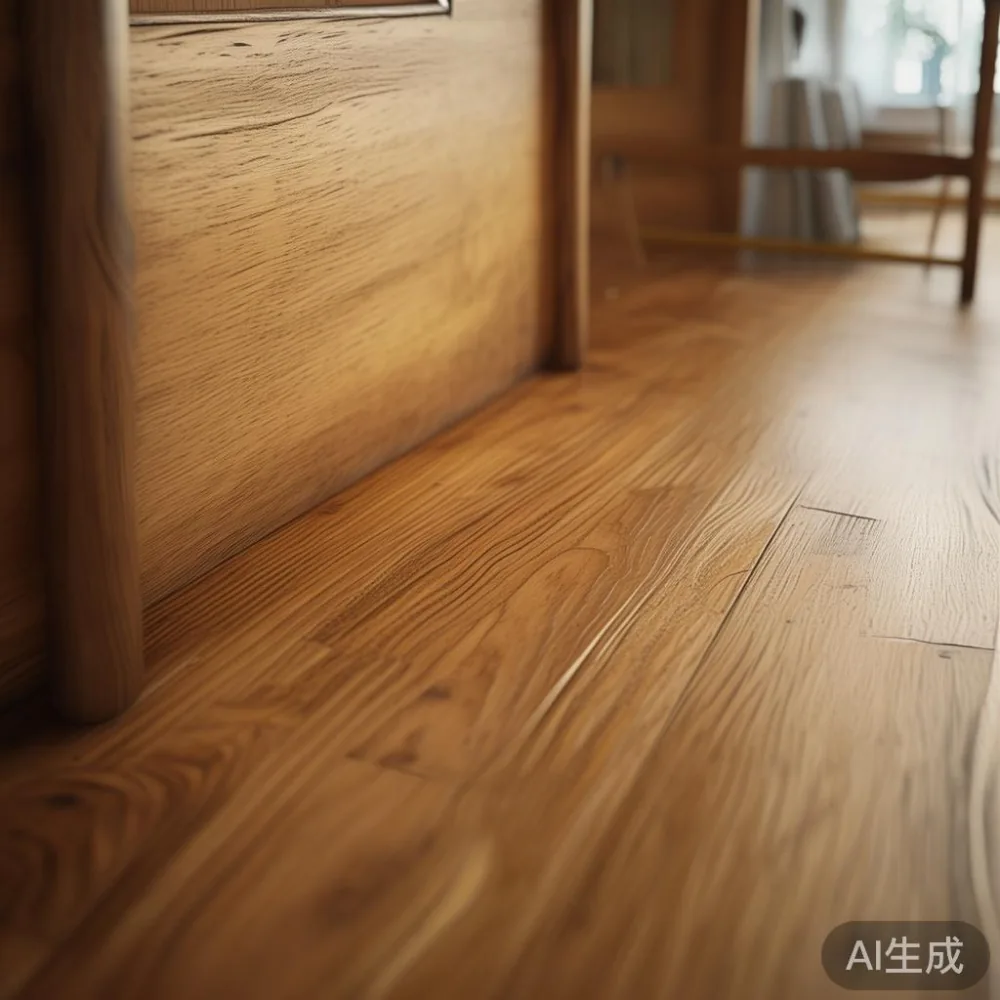
Why your HDB flat is harder on furniture than a landed house
A 5-room HDB flat in Punggol is roughly 110 sqm with a 3.2 m x 1.8 m lift, a 1.2 m wide corridor, and at most one window per room that opens onto a service yard or a neighbour's wall. That sounds like a design complaint, but the issue is ventilation. A landed house in Bukit Timah has cross-ventilation on three sides. A HDB flat has cross-ventilation on one. After a monsoon shower, the relative humidity in a HDB bedroom can stay above 85% for eight to ten hours because there is no breeze to flush the damp air out.
Add the standard HDB air-conditioner cycle — most residents run it from 11 pm to 7 am at 23–25°C — and you get a brutal cycle. The wood swells during the day, shrinks at night, swells the next day, shrinks the next night. Over a year, that is 365 cycles. Over five years, that is more than 1,800. I have measured 1.2 mm gaps appear on wardrobe doors in customers' homes in just eighteen months.
How do I stop my wooden bed frame and dining table from cracking in a Singapore flat?
This is the question our customer-care line gets every week between January and March, when the northeast monsoon pushes humidity up another 5 to 10 points. The honest answer is a four-part routine that costs very little but saves you a lot in refinishing fees.
First, stabilise your air-conditioner. Set it to 24°C with the dry mode active from 11 pm to 7 am, and add a 30-minute dehumidifier cycle in the afternoon if you are home. A domestic dehumidifier pulling 12 litres a day in a 14 sqm bedroom will hold the room between 55% and 65% RH. At that range, a kiln-dried headboard panel will move less than 0.5 mm across the grain over an entire year.
Second, keep the furniture 8 to 10 cm away from the wall. People push a bed frame flat against the wall to save 30 cm of floor space, and that is the single biggest mistake I see in Tampines and Sengkang flats. The 8–10 cm gap lets air circulate behind the headboard and the side rails, which lets the back face breathe instead of trapping moisture against the plaster. The same rule applies to a wardrobe. If you cannot spare the gap, cut a ventilation slot at the back bottom of the side panels when the unit is being built. MIDHILL offers this as a standard option on wardrobes taller than 200 cm, at no extra charge.
Third, lift the furniture off the floor. Solid wood floors in Singapore HDBs are usually vinyl over a concrete slab. The slab sweats. Place a dining table on solid rubber or felt pads that raise it 12 to 15 mm off the vinyl, and the underside will not wick moisture. I tested this on a walnut dining table in our showroom last summer: with the pad, the underside moisture content held at 9.4%; without the pad, it crept to 13.2% in eight weeks. That 4-point rise is exactly the range that produces surface checks on a French light luxury table with a marble inlay.
Fourth, refinish on schedule. A polyurethane or conversion-varnish finish does not last forever. UV, sweat, and the polishing compounds used by domestic cleaners break it down. A bedroom headboard typically needs a fresh top coat every 4 to 5 years; a dining table, every 3 to 4 years. MIDHILL offers lifetime refinishing on every piece we ship, and the typical cost is SGD 180 to SGD 320 per piece, including collection and redelivery.
The design settings that quietly protect solid wood in the tropics
Beyond the home, there are design choices that materially reduce the humidity risk on a solid wood sofa, a bed frame, a dining table, a wardrobe, a nightstand, and especially a marble-topped side table.
Choose quartersawn or rift-sawn boards for the headboard face. These cuts take roughly 30% less movement across the grain than plain-sawn boards, which is the cut most consumers receive when they buy a flat-pack bed frame online. Rift-sawn oak is more expensive per cubic metre, but for a 180 cm x 60 cm headboard panel, the cost difference is around SGD 240 — a reasonable insurance against a warping complaint three years in.
Avoid continuous full-width panels when you can. A headboard built from three 200 mm stiles with two 200 mm mid-panels will move less than a single 600 mm slab because each piece moves independently. This is the construction technique we use on every American light luxury bed frame above the SGD 2,400 tier, and it is the reason our 10-year structural warranty covers panel separation. A continuous slab is faster to manufacture and looks cleaner, but it moves as a unit and transfers that movement into every joint around it.
Specify a marine-grade conversion varnish instead of a wax-oil finish. Wax-oil finishes are popular in Scandinavian for dining room styling because they feel dry, matte, and natural, but they offer almost no moisture barrier in a 90% RH environment. Conversion varnish, applied in four coats and oven-cured, slows moisture movement to roughly 0.15 mm per cycle instead of 0.9 mm. For a Singapore bedroom, that difference is the difference between a quiet piece of furniture and a noisy one.
Mind the marble. Marble is not wood, but it is the other material that reacts to humidity. Marble is porous, and in a high-humidity environment it will absorb water and develop a mottled appearance if not sealed. Every MIDHILL marble table is sealed with a fluoropolymer top coat at the factory and resealed at the customer's home during the first refinishing visit. A dining table with a marble inlay should never be placed within 1.5 m of an open window facing the southwest monsoon direction.
What does a realistic humidity-control routine cost per month?
For a 4-room HDB flat of about 95 sqm, a reasonable dehumidification plan looks like this. One 12-litre compressor dehumidifier for the master bedroom, running 8 hours a night at roughly 0.25 kWh, costs about SGD 11 a month on the Singapore tariff. A second unit for the living and dining area, running 6 hours a day in the afternoon, costs about SGD 14 a month. Add a hygrometer for each room at SGD 18 each, and you are looking at SGD 45 a month total, plus the one-off electricity of about SGD 25 for both units. Over a year, that is SGD 565. Compared to refinishing a SGD 3,200 dining table, it pays for itself in under nine months.
The lift access matters too. Most HDB service lifts in Tampines and Bedok are 1.2 m wide by 1.8 m deep with a 1,000 kg limit. A fully assembled 2.0 m x 1.8 m bed frame will not fit, so MIDHILL ships every bed frame flat-packed with a screw-and-dowel joint system that a two-person crew can assemble in 35 minutes. Delivery within Singapore mainland is SGD 60 flat, free above SGD 350 purchase, and typical lead time from order to delivery is 18 to 24 working days including sea freight from Foshan to Pasir Panjang and last-mile delivery.
What should I look for when buying solid wood furniture for a Singapore home?
Three concrete questions protect you from humidity-driven disappointment. Ask the retailer what moisture content the wood was at when it left the factory. Anything above 12% is unsuitable for Singapore. Ask what finish was used and how many coats. Anything less than three coats of a film-forming finish is a red flag. Ask whether the headboard, the bed frame side rails, and the slats are all made from the same species and same moisture-content batch. Mixing ash and oak in the same bed frame, for example, will move at different rates and stress the joints within a year.
For shoppers exploring under 2000 Italian light luxury furniture options for a HDB or condo, the right move is to choose a piece with quartersawn or rift-sawn panels, a multi-coat conversion varnish, and a structural warranty of at least ten years. Light luxury for apartment buyers tends to mean clean lines, pale oak or walnut, and small footprints, and every one of those features is achievable in solid wood without inviting the humidity problems that flatten a particleboard wardrobe within five years.
If you are exploring European light luxury for small living room styling and you want a French sofa silhouette in the bedroom — think curved back, low arms, oak frame — the trick to learning how to style French sofa in bedroom is to keep the headboard in the same tonal family and to anchor both pieces with a single marble table or a wool rug. Visual unity reduces visual movement, and a calm bedroom is a drier bedroom because nobody leaves the windows cracked open at 2 am to cool down.
A practical five-year care plan for a HDB or condo owner
Year one: acclimatise the furniture for ten to fourteen days in the room where it will live before you place rugs or mattresses against it. Measure the relative humidity with a SGD 18 hygrometer at three points — near the headboard, near the dining table, and near the wardrobe. Record the readings weekly for the first month. This is your baseline.
Year two: inspect every joint on the bed frame, every drawer runner on the nightstand, and every door on the wardrobe. Tighten any screw that has loosened more than a quarter turn. Wipe the furniture with a damp — not wet — microfibre cloth and a pH-neutral soap once every two weeks. Avoid silicone polishes. They break down conversion varnish.
Year three: schedule a refinishing assessment if the surface has lost its sheen or if you can see the wood grain through the finish. For most Singapore homes, this is when a dining table needs its first top coat.
Year four: replace the dehumidifier filter, recalibrate the dehumidifier against a salt-test calibration, and reset the air-conditioner service interval. Wood moves in response to air-conditioner performance as much as to weather.
Year five: schedule the first full refinishing visit if the piece is in daily use. A headboard refinish typically costs SGD 220 to SGD 280 at MIDHILL, and the team collects, refinishes in our Foshan facility, and redelivers within 21 working days.
What we mean when we say the warranty is structural, not cosmetic
Humidity is going to move your furniture. Anyone who tells you otherwise has not lived in Tampines during the northeast monsoon. The question is whether the move stays inside the tolerance of the design. A 0.3 mm seasonal gap on a wardrobe door is acceptable and will close again in March. A 3 mm gap that grows every year is a structural fault, and that is what the 10-year structural warranty at MIDHILL covers. We replace panels, we re-glue joints, we refinish the replacement, and we redeliver. Cosmetic issues — scratches, dents, watermarks from a forgotten glass — fall outside the structural warranty but inside the lifetime refinishing offer, which charges only for labour and materials at cost.
For buyers browsing midhillco pieces online, the same physics applies whether the order is a SGD 1,490 four-poster bed frame or a SGD 5,800 wardrobe wall. The kiln schedule is the same, the conversion varnish is the same, and the 10-year structural warranty is the same. The only difference is the surface area of wood that has to breathe in a 95 sqm HDB flat where the relative humidity never quite drops below 60%. Choose the construction, not just the colour. Choose the moisture content, not just the species. And choose a piece that was built for a place where it rains every month, because Singapore is that place.