How to Style a Headboard Without Making a Small Singapore Flat Feel Crowded
A compact HDB bedroom in Tampines can look crowded even when it contains only 4 pieces of furniture. The usual culprit is not the floor area but the visual weight around the bed: a tall headboard, bulky bedside units, a thick bed frame and several overlapping accessories can compete for attention. In a Bedok condo with a wider window wall, the opposite problem may occur—one oversized headboard leaves the rest of the room looking sparse.

For Singapore interiors, the answer is proportion rather than excess. A carefully scaled headboard can define the bed, add texture and create the polished character associated with French light luxury, American light luxury or post-modern light luxury. The goal is not to fill every centimetre, but to make each piece feel deliberate.
Measurements and delivery conditions matter here. Lift doors, lift-car dimensions and corridor turns should be checked before a wide solid wood bed frame is ordered, while the headboard should be considered as part of the room's vertical composition. MIDHILL furniture uses solid wood, carries a 10-year structural warranty and is backed by lifetime refinishing, so selection should begin with accurate measurements rather than a hurried online purchase.

What size headboard suits a small Singapore bedroom?
For a queen bed measuring 152 cm wide by 191 cm long, a headboard around 160–170 cm wide usually looks balanced. A king bed at 180 cm by 191 cm can carry a headboard measuring 185–195 cm, provided the installation area is at least 225 cm wide. These are visual guidelines, not fixed rules; check the actual mattress and bed frame before ordering.
Height changes the effect more dramatically. A headboard extending 20–30 cm above the mattress creates a modest, upholstered or panelled look. Rising 40–60 cm above the mattress gives a stronger architectural feature but may compress a low-ceilinged HDB room. In many Singapore flats, the practical target is 95–115 cm from the floor, with at least 15 cm of wall clearance above.
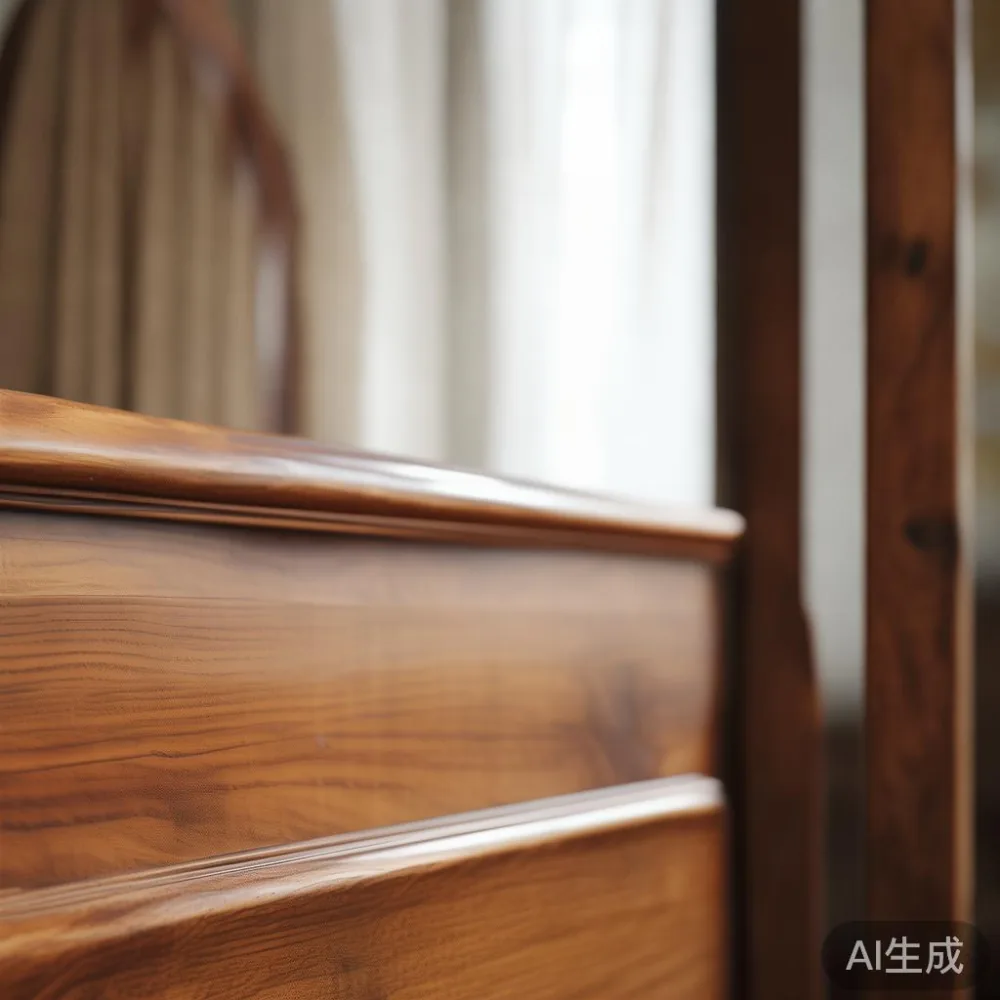
Leave 60 cm beside the bed for a nightstand and a usable walkway where possible. If the room offers only 45 cm on one side, consider a slim floating shelf or narrow nightstand rather than forcing a conventional cabinet into the passage. A headboard that reaches 25–30 cm beyond each side of the mattress can visually absorb some of that tightness, but it should not block switches, ventilation grilles, sockets or access to window shutters.
For HDB bedrooms with recessed window bays, the bed may sit beside rather than directly against the main wall. In that arrangement, keep the headboard under 105 cm high if it stands near a window. A dark timber panel can frame a bright view; a pale panel may disappear against daylight. In Bedok and Tampines blocks where afternoon sun is intense, lighter finishes generally create a more open impression than very dark walnut tones.
Can a large headboard work in a small HDB flat?
Yes, if its width, height and visual depth are controlled. A 180 cm-wide headboard may suit a 3.4 m-wide master bedroom, while a 210 cm-wide statement panel may overwhelm one at 3.0 m. Check the bed width plus the intended nightstand positions, and allow 5–10 cm between the headboard edge and a side wall where possible.
Visual weight matters as much as the number of centimetres. Horizontal channels, shallow frames and pale solid wood make a broad panel feel calmer than deep fluting, thick borders or high-contrast stone details. An upholstered surface adds softness but can make the wall appear busier; a simple wood headboard with 2–4 cm of depth usually retains more visual space.
Alignment also affects spaciousness. Centre the bed on the longest uninterrupted wall, rather than shifting it 5 cm sideways to accommodate an existing socket. If a door or wardrobe swing intrudes, adjust the nightstand instead. Preserve a clear route of at least 60 cm from the room entrance to the bed and approximately 55–70 cm between the bed and a wardrobe where space permits.
One local example illustrates why measuring first matters. Last month I visited a colleague's new 3-room BTO in Punggol and measured its bedroom at 2.85 m wide, with a ceiling height of 2.65 m and a lift door listed at 90 cm wide by 2.0 m high. His initial plan involved a 190 cm-wide headboard and a solid wood bed frame. After checking the route, the frame was reduced to 168 cm wide and the headboard to 170 cm, preserving 48 cm on the right for a narrow nightstand and about 58 cm on the left for circulation.
Which headboard finish suits different condo interiors?
Light oak, ash and pale walnut suit Scandinavian, Japandi and warm-minimalist rooms. Dark walnut or stained oak creates stronger contrast and works with American light luxury, where clean joinery and a restrained mix of materials are preferred. Post-modern light luxury can accommodate a rounded or geometric profile, provided the shape is repeated only once or twice elsewhere in the room.
Match the bed frame to the headboard when the room is narrow. One continuous timber tone reads as a single calm composition. If the bed frame is already dark, a pale upholstered headboard can lighten the area; if the frame is light, a slim timber headboard adds definition without increasing visual weight. Avoid too many competing woods: one main timber family plus metal or fabric accents is usually enough.
Hardware scale should also be deliberate. Lever handles around 12–15 cm long look intentional on a headboard wider than 140 cm. Small knobs around 3–4 cm diameter suit compact panels. A marble table can echo a stone surface, but in a 3 m-wide room, keeping the headboard entirely timber is often cleaner.
Consider the room's colour balance using the 60-30-10 method. Let the wall and bedding occupy roughly 60% of the visual field, furniture and headboard about 30%, and objects such as lamps, art or cushions the remaining 10%. This is a guide, not a mathematical requirement, but it prevents a decorative headboard from becoming the only focal point.
How do I stop a headboard from making the bedroom feel crowded?
Keep the area within 30 cm above the mattress relatively quiet. A single lamp, a 20 × 30 cm framed print or a narrow shelf is enough. Two large artworks placed on either side can make the bed feel wider than it is; one centred 40 × 50 cm print may have the same presence with less lateral occupation.
Use the headboard to establish rhythm, then repeat that rhythm elsewhere. Vertical channels can be answered by narrow bedside lighting, while a panelled timber headboard can pair with a simple rectangular bed frame. If the headboard is curved, select one rounded object nearby rather than several. A small round wall clock, a slim brass-finish reading lamp and a folded throw are practical examples.
Keep cords managed within a 10 cm zone behind the nightstand, use a cable channel along the bed frame and avoid trailing fabric to the floor. In compact HDB bedrooms, a wall-mounted reading light can replace a table lamp, freeing approximately 20 × 30 cm of surface area. It should be installed at 90–110 cm above the floor, subject to the user's reach and reading position.
Storage should be vertical without becoming bulky. A fitted wardrobe up to 240 cm high can use the wall well, but a shallow 35–45 cm depth is often more suitable beside a bed than the standard 60 cm depth. A slim wardrobe with sliding doors saves projection into the corridor inside the bedroom. If a separate wardrobe is unavoidable, maintain a gap of at least 10 cm between it and the headboard so the bed does not appear locked into the wall.
What is the European bed vs Japandi bed difference for a small room?
The European bed vs Japandi bed comparison is less about national style than the balance between ornament and simplicity. A European-style bed frame may use shaped rails, curved legs, tufting, cane or a more decorative headboard. A Japandi bed usually emphasises low profiles, clean lines, pale timber and minimal visual interruption.
For a compact Singapore room, a Japandi bed can preserve airiness because the headboard is often narrow and low. However, a pale, linear design can look too sparse in a larger condo bedroom. Adding one textured panel, a modest upholstered insert or a framed artwork can provide focus. If you are comparing options, how to style Japandi bed in room starts with proportion: select a frame that leaves at least 55–60 cm of circulation on the main side and keep the total headboard height near 100–110 cm in a lower-ceiling room.
A European-inspired frame offers more character when paired with a restrained headboard. If the bed frame has carved details, keep the headboard plain. If the headboard has fluting, choose a smooth frame. This avoids double detailing and makes both pieces feel related.
Watch mattress height. A low-profile mattress may sit only 20–25 cm above the floor, leaving more usable visual space below the headboard. A taller mattress at 30–35 cm raises the whole composition. Avoid combining a thick mattress, tall legs and a high headboard unless the bedroom measures at least 3.3 m in width.
Can a solid wood bed frame and headboard fit through the lift?
Sometimes, but the product dimensions alone do not answer the question. Ask the building manager for the lift-car door width, internal depth, internal height and diagonal clearance. Also measure the corridor turns, doorway width, threshold height and the narrowest point between the parking area and the flat.
For a common Singapore lift with a 90 cm door and 1.4 m internal depth, a full queen bed frame may need to be assembled in the bedroom. Some MIDHILL bed frames are designed for this reason, but exact assembly needs must be confirmed with the supplier. Headboards may arrive as separate pieces, allowing a 170 cm panel to pass through a 90 cm door if turned correctly; a rigid 190 cm panel with corner protectors may not.
Allow roughly 2–5 working days for delivery within Singapore, depending on stock and the destination, with a longer 7–14 day estimate for made-to-order items or remote locations. Since the furniture maker offers free shipping over US$350, Singapore customers should still compare the quoted SGD price including GST before proceeding. For local purchases, the displayed amount should include 9% GST, but checking the final invoice prevents confusion.
Tenants and owners should check whether the condo requires protective floor covering or moving-hour bookings. A 2-person delivery team may be needed for a bed frame heavier than 40 kg. Keep assembly space of at least 200 × 120 cm if possible. MIDHILL's 10-year structural warranty and lifetime refinishing provide reassurance after the physical fit has been handled carefully.
How should the rest of the room complement the headboard?
Begin with the bed as the room's anchor, not an isolated object. A solid wood sofa can follow the same light-to-mid timber tone if it sits in the living area, while a solid wood dining table can use a slightly deeper shade to ground an open-plan condo. Repetition should remain subtle: the furniture can share warmth, not look identical.
For living zones, how to style French sofa in room depends on maintaining breathing space. A curved French-style sofa can suit French light luxury, yet a small HDB living room may need a 180–210 cm three-seat model rather than a 240 cm statement piece. Keep 75–90 cm between the sofa and dining chairs, or 40–60 cm in a compact setting where the route is short and straight.
How to style light luxury sofa in room follows a similar principle: reduce competing patterns and let one refined material carry the effect. Cream upholstery, pale timber and brushed brass create a light-luxury atmosphere without covering the room in ornament. If you want a practical example, how to style French sofa in room can begin with a 40 × 50 cm rug beneath the front legs, a single textured cushion and one table rather than a dense arrangement of accessories.
The dining area should echo the bedroom without copying it. A MIDHILL dining table in rounded solid wood would complement a curved headboard; a rectilinear dining table would pair with vertical or panelled wood. For a compact dining setting, allow 90 cm around the table, or 75–85 cm on a low-traffic side. A small marble table can work as a side surface near the sofa, although its visual weight should be balanced with something light nearby.
At the bedside, European light luxury nightstand is a useful reference point for a refined but restrained approach. Choose a solid wood nightstand around 35–45 cm wide and 45–55 cm high, with one drawer for approximately 25 × 30 cm of visible surface. Avoid a matching pair in a very tight room if one unit already provides enough storage. A wall-mounted alternative may be better where the floor is needed for circulation.
The broader search for luxury light luxury furniture should not lead to too many materials at once. A disciplined palette of one wood tone, one upholstery colour and one metal finish can feel more luxurious than several fashionable objects. This is especially helpful in HDB flats, where flooring and doors often already provide strong visual structure.
What should I check before ordering a headboard?
Make a measurement sketch, even for a digitally planned room. Record the room width and length, ceiling height, mattress dimensions, existing wardrobe depth, window position, door swing, socket locations and lift access. Mark a 60 cm circulation zone beside the bed and a clear opening of at least 70 cm for the main door.
Then compare the headboard's width, height, depth and weight with the intended position. Confirm the mattress-to-headboard gap, usually no more than 3–5 cm, and check whether the bed frame uses slats, a centre support leg or a wall-fix system. A queen frame may weigh 45–70 kg depending on timber and construction, so lifting it up a corridor or into a lift should be planned with at least 2 people.
Confirm the finish under the room's lighting. View samples where possible and consider how morning and evening light alter pale timber. Arrange delivery only after checking the lift booking rules, and measure packaging as well as the assembled frame. For MIDHILL orders, verify whether the headboard and bed frame are stocked or made to order, since this affects the estimated delivery window.
Finally, assess maintenance and returns. A protective felt layer beneath furniture helps preserve HDB or condo flooring. The stated 14-day return period should be checked against the product's condition and assembly requirements. The lifetime refinishing service and 10-year structural warranty are useful long-term assurances, but neither replaces correct measurements or careful installation.
Which combination creates the most spacious result?
A width-matched headboard, a visually continuous bed frame and one narrow bedside surface generally create the most spacious result. Choose a headboard no more than 5–10 cm wider than the bed frame, unless the architecture clearly supports a broader panel. Keep the headboard's projection within 3–5 cm, limit bedside accessories to 2–3 items and preserve the clearest route through the room.
In a Tampines HDB flat, a 160–170 cm pale-oak headboard with a 152 cm queen bed may feel generous. In a Punggol condo with a narrower bedroom, a low 165 cm headboard and floating shelf can preserve proportion. In a larger Bedok unit, a 190 cm walnut panel could become the room's defining feature, provided the remaining furniture stays restrained.
The most successful room is not the one with the most furniture or the most expensive-looking headboard. It is the one in which scale, route and visual weight agree. Measure in centimetres, plan in SGD, check delivery in days and let the headboard provide character without taking over the bedroom.