Veneer vs Solid Wood Headboards: A 5-Year Cost Comparison for Singapore Homes
When I helped my cousin choose a headboard for her new 4-room HDB flat in Tampines last month, she stared at two nearly identical showroom samples and asked the question every Singaporean homeowner eventually asks: "Is the veneer version really that much worse than solid wood?" The price gap was SGD 380. Five years later, one of those headboards will still look like a wedding photo, and the other will look like a cautionary tale. Below is a frank, number-by-number comparison of what each option really costs over five years in a local context — corridor widths, lift access, GST, humidity, and all.
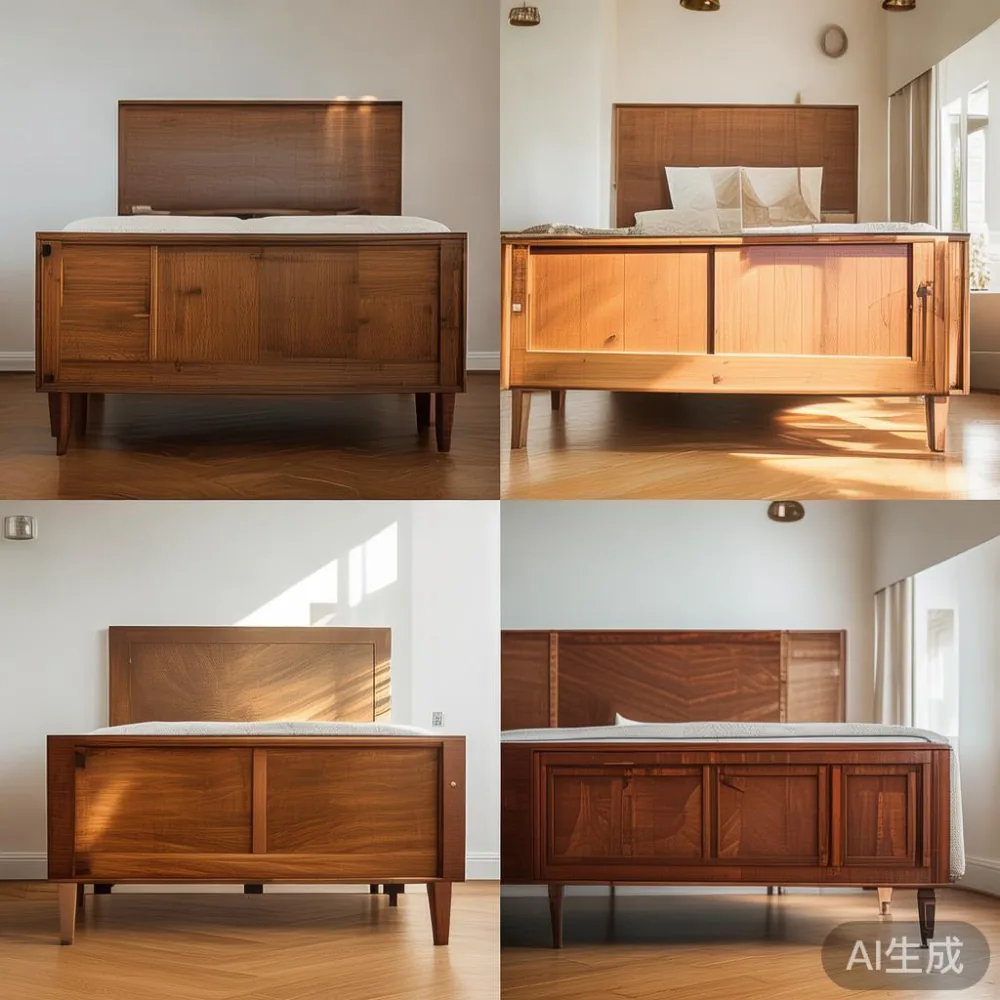
Why the headboard is the one piece worth thinking about harder
A headboard is the only large furniture panel in a bedroom that does almost nothing except stand there and look beautiful. It is not load-bearing in a structural sense (your bed frame does the lifting), but it absorbs every Singapore-specific punishment: the 9 p.m. thunderstorm you forget to close the window for, the 32°C afternoon when the master bedroom turns into a sauna, the daily sweat from a person sleeping two feet away, and the occasional bak kwa splatter from an enthusiastic husband. A dining table gets wiped. A wardrobe is mostly hidden. A solid wood sofa lives in air-conditioned common space. The headboard has to perform against bare wall, bare skin, and bare humidity.
This is exactly why MIDHILL, a Foshan factory operating since 2008 and shipping solid wood furniture to more than 15 countries, builds every headboard — and every matching bed frame, nightstand, and wardrobe in the same collection — from kiln-dried hardwood rather than wrapped MDF. The headboard is the showcase piece of the bedroom, and the bedroom is the room where Singaporeans spend the longest unbroken hours.
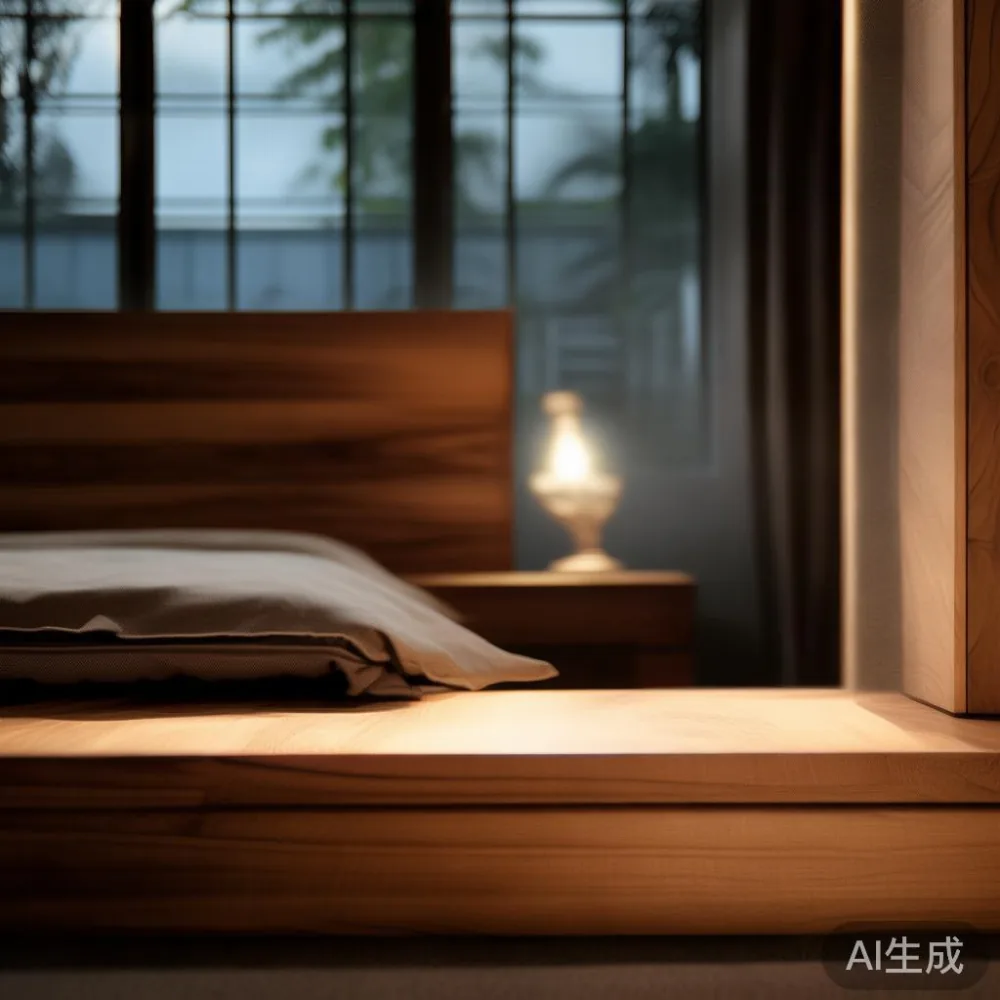
The two samples, side by side, in Singapore dollars
Let me put real numbers on the table. Both headboards are king-size, 180 cm wide × 120 cm tall × 6 cm deep, upholstered in the same linen-blend fabric, with the same curved silhouette. Both fit a standard Singapore king mattress and clear a 90 cm HDB corridor during delivery.
Veneer-over-MDF headboard: SGD 480 retail, delivered to a Bedok condo. Weight: 28 kg. Core: medium-density fibreboard wrapped in 0.6 mm oak or walnut veneer.
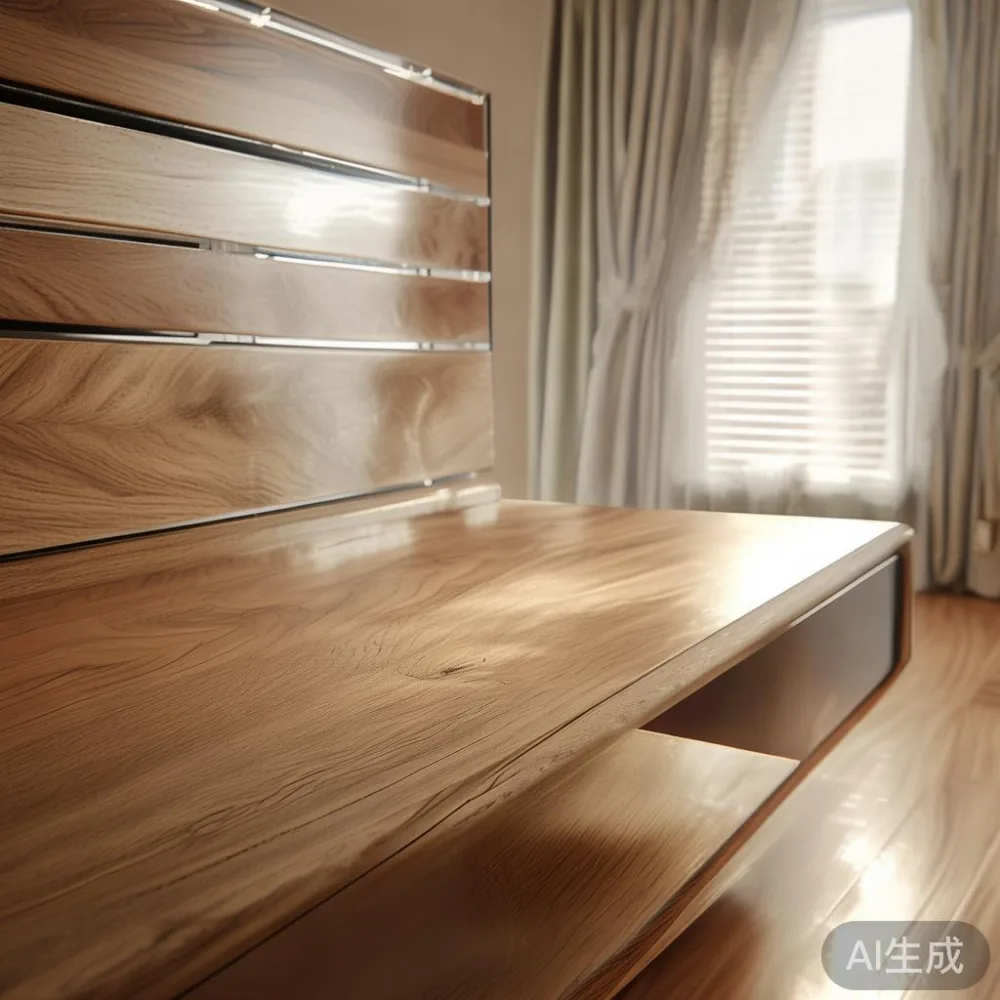
Solid wood headboard (same look): SGD 860 retail, delivered to the same Bedok condo. Weight: 42 kg. Core: kiln-dried ash or rubberwood, mortise-and-tenon joinery, fabric wrapped around a real wood frame.
The sticker difference is SGD 380. The question is whether that SGD 380 buys you five years of regret avoidance. Let's run the ledger.
What "the same look" actually costs over 60 months
Year 1 is identical on paper. Both headboards arrive in a 2.4 m long box that fits a standard HDB cargo lift. Both take about 40 minutes to assemble. Both look showroom-fresh. The veneer unit has a slightly more uniform grain because the veneer is rotary-cut; the solid wood unit has subtle figuring and three small colour variations between panels. Most owners do not notice in Year 1.
Year 2 is where the bills start to diverge. In a Punggol HDB with morning sun blasting the east-facing wall, the veneer headboard begins to fade unevenly. The 0.6 mm veneer is too thin to be sanded, so a discolouration patch is permanent. The solid wood unit develops a honey patina that 90% of owners actually prefer. No repair needed.
Year 3 is where the veneer headboard swells. A friend in a Yishun walk-up left the window cracked during a week of daily 2 p.m. showers. Moisture wicked up through the MDF core, and the lower 15 cm of veneer bubbled. The repair quote from a local carpentry shop was SGD 220 for a partial re-veneer, or SGD 380 for a full replacement. She chose replacement. Her solid wood neighbour had no such problem — the kiln-dried hardwood simply absorbed and released the humidity without dimensional change.
Year 4 is the silent killer for veneer. Small corner chips appear because the MDF substrate is exposed at every cut edge. Each chip repair runs SGD 35 to SGD 60 from a handyman. The solid wood unit gets a light wipe with beeswax (SGD 18 a tin, lasting two years).
Year 5 is replacement day for the veneer unit. Resale value on Carousell for a five-year-old king headboard with bubbling and chips is around SGD 80 to SGD 120, and that assumes someone is willing to collect it. The solid wood unit at year five, lightly refinished, still commands around SGD 350 to SGD 450 second-hand. That is real money back in your pocket.
Is Italian light luxury bed worth it if you only keep it five years?
This is the question I get from clients choosing between a SGD 1,400 imported Italian light luxury bed with a marble-topped nightstand and a SGD 860 solid wood set from a Foshan maker with a 10-year structural warranty. The honest answer is: yes, Italian light luxury for guest room purchases make sense if you treat them as five-year decorative leases, because the styling ages faster than the structure. But for your own master bedroom — the room you actually sleep in — solid wood wins on cost per year, full stop. The Italian version costs roughly SGD 1,400 spread over five years: SGD 280 per year. The solid wood version costs SGD 860 minus SGD 400 resale, spread over five years: SGD 92 per year. The solid wood set is roughly one-third the annual cost, and you also keep a piece that you can refinish in Year 10 and pass to your kid.
How to choose American bed style without paying American freight
American bed style in Singapore usually means a tall, chunky headboard in walnut or oak, paired with a low-profile solid wood bed frame and a heavy nightstand. The trap is buying a "American-style" set made from veneer-over-MDF that looks correct on Day 1 and peels by Day 600. The actual question of how to choose American bed comes down to weight and grain. Lift the headboard. If it feels heavier than 35 kg for a king-size panel, you are holding solid wood. Tap it. Solid wood rings; MDF thuds. Ask the showroom for the kiln-dry certificate. MIDHILL publishes moisture-content data for every batch, which is rare in the industry and a quiet signal of build quality.
How to choose French provincial sofa for a HDB living room
Although this article is about headboards, the matching pieces matter. A solid wood sofa in the same French provincial light luxury style as the headboard uses kiln-dried beech or ash frames, 8-way hand-tied springs, and removable linen covers. The MDF version uses particleboard frames, sinuous wire springs, and glued-on fabric. When clients ask how to choose French provincial sofa for a flat with a 90 cm corridor and a 1.1 m lift door, the answer is always: measure the box, not the assembled piece. A solid wood sofa in a king-box typically ships in 2.2 m cartons. The MDF competitor ships in 2.6 m flat-packs because it cannot be folded. That extra 40 cm is the difference between a free delivery and a SGD 180 manual-hoist surcharge from the carpentry contractor.
How to style European bed in apartment settings with light luxury finishes
The European bed look in a Singapore apartment is less about ornament and more about proportion. A 120 cm tall headboard in a 2.8 m ceiling room reads as confident; in a 2.6 m HDB ceiling it reads as looming. The trick for anyone wondering how to style European bed in apartment spaces is to drop the headboard height to 90 cm, keep the footboard low or absent, and let the marble table — a small, round, 45 cm Carrara piece — anchor the bedside. That marble table is one of the few places where a non-wood surface belongs. Solid wood and marble share the same thermal mass, so they feel right together.
Japanese for dining room — what does that even mean in Singapore?
Japanese for dining room in a HDB context usually means a low, solid wood dining table (72 cm standard height), straight-grained ash or oak, no ornamental carving, paired with a bench rather than chairs. The reason it pairs so well with a solid wood headboard in the next room is grain consistency. If your bedroom is ash and your dining table is rubberwood, the eye registers the mismatch. MIDHILL ships the same species across the bedroom, dining, and living collections, so a Tampines family can match a 1.8 m dining table, a 6-seat solid wood sofa frame, a 2.4 m wardrobe, and a king headboard in one shipment from Foshan — one customs entry, one delivery slot, one GST bill at 9%.
The hidden Singapore costs nobody mentions
Three local costs catch first-time buyers out. First, GST: at 9% on a SGD 860 headboard, you pay SGD 77.40; on a SGD 480 veneer version, SGD 43.20. The veneer is cheaper in absolute tax, but the tax is the same percentage. Second, delivery to a fifth-floor walk-up in Bedok without a cargo lift: SGD 80 for the MDF unit at 28 kg, SGD 120 for the solid wood unit at 42 kg. Third, disposal at end-of-life: a 28 kg MDF headboard costs SGD 45 to cart away because the MDF cannot be burned or recycled in Singapore. A 42 kg solid wood headboard can be cut up for firewood or given to a workshop.
Free shipping over US$350 (about SGD 475) applies on most Foshan-direct purchases, so both headboards technically qualify. But the solid wood unit pushes you into free-shipping territory on its own, while the veneer unit still needs a nightstand or a small dining chair to clear the threshold — which then leads to a mismatched room.
What does a "light luxury" headboard actually cost per year of use?
Let me normalise everything to one number. Assume both headboards are kept for five years in a non-air-conditioned master bedroom in a Singapore HDB or condo.
Veneer headboard, 5-year cost:
- Purchase: SGD 480
- GST: SGD 43.20
- Delivery to fourth floor: SGD 80
- Year 3 partial repair: SGD 220
- Year 4 chip repairs: SGD 90 (three visits)
- Year 5 disposal: SGD 45
- Resale value: minus SGD 100
- Net 5-year cost: SGD 858.20, or SGD 171.64 per year.
Solid wood headboard, 5-year cost:
- Purchase: SGD 860
- GST: SGD 77.40
- Delivery to fourth floor: SGD 120 (free above US$350)
- Year 3 maintenance wipe: SGD 9
- Year 4 beeswax refresh: SGD 18
- Year 5 light sand and re-oil (DIY): SGD 45
- Resale value: minus SGD 400
- Net 5-year cost: SGD 729.40, or SGD 145.88 per year.
The solid wood headboard is actually SGD 128.80 cheaper over five years, and roughly SGD 26 per year cheaper to live with. The 14-day return window catches any factory defect; the lifetime refinishing service catches any Year 10 patina.
What if I want to match a solid wood headboard with a TV console and a marble dining table?
This is the question I fielded from a client in Punggol Waterway Ridges last quarter. She wanted a king bed, a 1.6 m marble dining table, a 1.8 m four-door wardrobe, and a MIDHILL TV console in the same light luxury palette. The bundle shipped as one consolidated order from Foshan, clearing Singapore customs once. Total delivery to her 12th-floor unit was 11 days from order, including the weekend. Total GST bill: 9% on the combined SGD 4,200 invoice. The marble table went in the lift because the lift door was 1.2 m and the carton was 1.15 m. The solid wood bed frame went in flat-pack and was assembled in the bedroom in 35 minutes by two people. The point: matching wood species across a headboard, a dining table, a wardrobe, a nightstand, and a TV console is only possible when you buy from one factory. That is the structural argument for a single-source supplier.
Will a solid wood headboard really outlast a veneer one in Singapore humidity?
Yes, and the margin widens every year you keep it. The first two years look identical. Years three to five are where veneer fails and solid wood simply ages. Years six to ten are where solid wood becomes an asset — refinishable, re-stainable, re-selling at 40–50% of original. Veneer has no Year 10. Most are in a Yishun or Jurong carpentry skip by then.
Final checklist before you buy the headboard
Before you sign for any headboard, ask the showroom four questions. What is the core material — solid hardwood, plywood, or MDF? What is the moisture content at delivery — under 12% is the Singapore-safe target. What is the joinery on the frame — mortise-and-tenon or dowel and glue? What is the warranty on the structure versus the finish? A 10-year structural warranty covers warping and joint failure. A 1-year finish warranty covers the fabric or lacquer. Both matter. A MIDHILL headboard carries both numbers in writing, and the lifetime refinishing service is the quiet third number that makes a 20-year ownership horizon realistic.
The bedroom is where you spend a third of your life. The headboard is the largest single piece of wood in that room. Spend the extra SGD 380 once, and stop thinking about it for the next decade.