Veneer vs Solid Wood Headboards: A 5-Year Cost Comparison for Singapore Homes
A headboard is often the first decorative object a family sees when entering a bedroom, yet its material can affect purchase price, daily comfort, and the cost of ownership for years. For Singapore residents fitting a bed frame into an HDB flat or condo, the choice is rarely just about appearance. It also involves corridor and lift access, humidity, cleaning, repairs, and whether the piece can be refinished later.
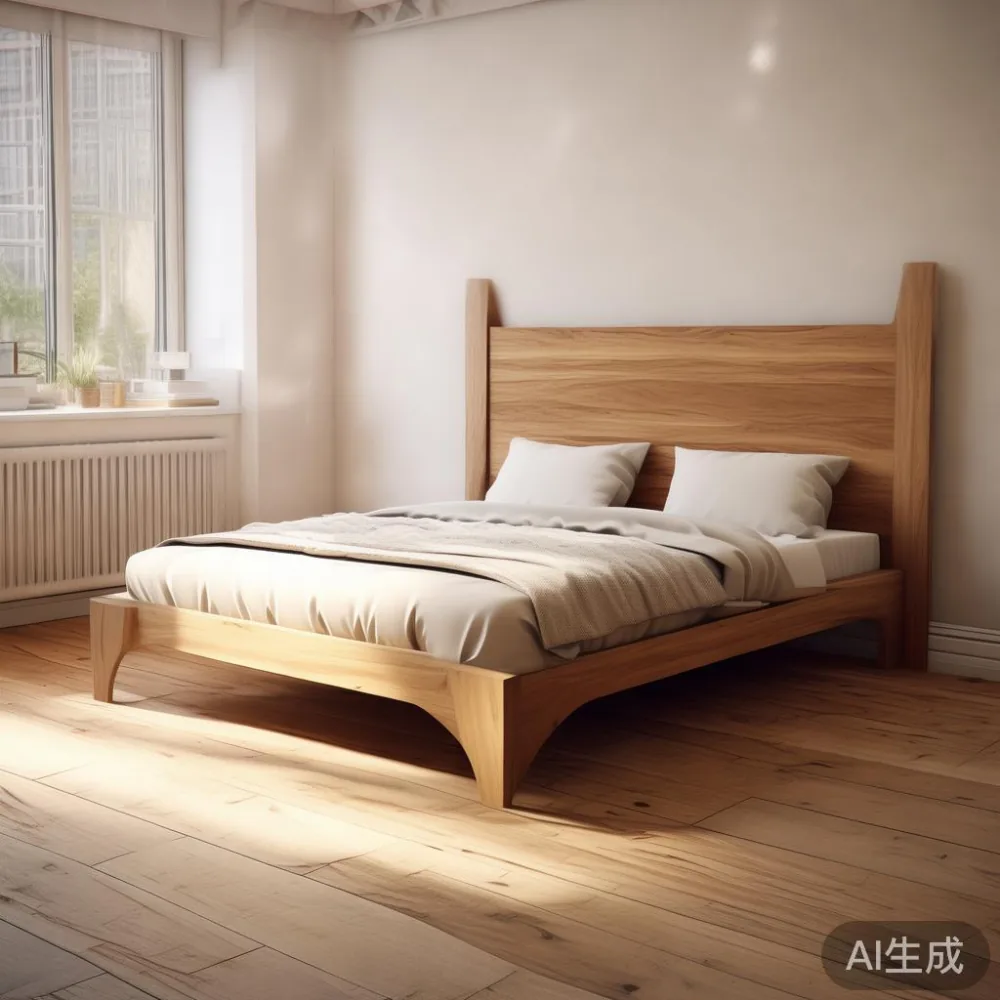
This comparison looks at veneer and solid wood headboards over a 5-year period. I used current indicative Singapore prices in SGD, typical dimensions and weights, and a practical ownership model rather than a showroom-only calculation. For context, I visited my colleague’s Tampines home last month to inspect a 145 cm-wide timber headboard and measure the route from the condo corridor to the bedroom.
The figures are directional rather than quotations. Veneer grades, timber species, joinery, mattress sizes, and installation conditions can change a final price materially.
What is the real 5-year cost difference between veneer and solid wood headboards?
For a typical Singapore queen bed with a 150 cm-wide headboard, a mid-range veneered unit may cost S$420, while a comparable solid oak or solid rubberwood unit may cost S$780. Over 5 years, that opening difference is S$360 before maintenance. Add refinishing, repair, replacement, and energy-related considerations, and the gap can narrow to around S$120–S$250 depending on use.
The calculation below assumes one queen-size headboard, 150 cm wide by 105 cm high, fixed to a bed frame or wall, purchased at the start of Year 1 and retained through Year 5. It excludes a mattress and includes ordinary household use.
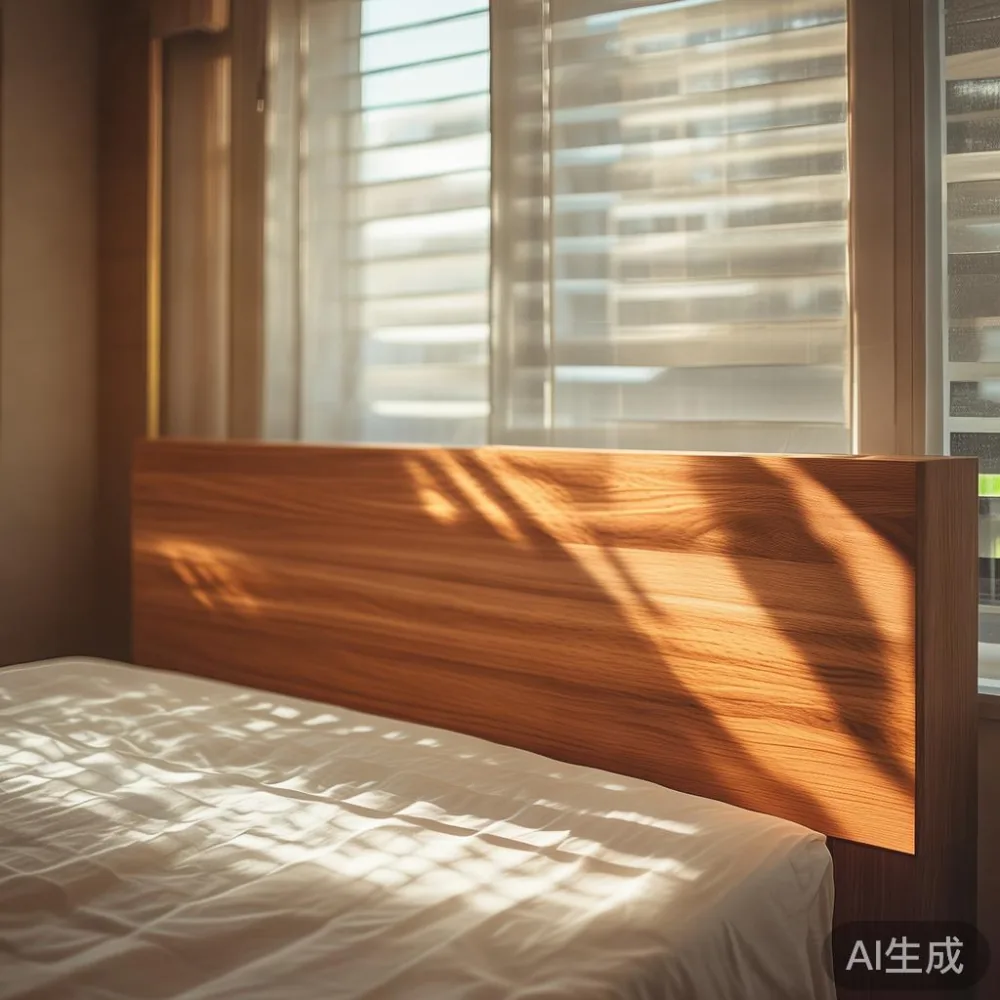
The veneered example includes an MDF or plywood core, a 0.6–1.2 mm wood veneer face, and a protective finish. Its indicative purchase price is S$420, delivery is S$45, and the estimated total weight is 28 kg. The solid wood example uses kiln-dried rubberwood, ash, or oak with the same approximate dimensions, a purchase price of S$780, S$45 delivery, and an estimated weight of 42 kg.
Neither solid wood nor veneer automatically performs better in every home. A well-built veneered headboard can be stable and visually convincing, while poorly seasoned solid timber may move or split. The ownership result depends more on specification and care than on the label alone.
How much do veneer and solid wood headboards cost to buy in Singapore?
The purchase price is the clearest difference. A veneered headboard for a queen bed commonly ranges from S$280 to S$650. A comparable solid wood headboard generally ranges from S$520 to S$1,250, with denser oak and more elaborate frames sitting toward the upper end.
For smaller HDB bedrooms, a 120–140 cm headboard may cost S$240–S$480 in veneer and S$450–S$850 in solid wood. Condo owners choosing a 160–180 cm architectural panel may spend S$650–S$1,100 in veneer or S$950–S$2,200 in solid wood. Slatted, channel-tufted, upholstered, and wall-mounted designs add different amounts of labour, so dimensions and style should be compared separately.
GST is shown in the broader figures above because Singapore’s tax treatment can depend on the seller’s registration and documentation status. Buyers should request a line-item invoice showing the goods, delivery, and any applicable GST. An invoice issued by MIDHILL should also state the timber or veneer construction clearly rather than using vague “wood” wording.
Delivery is another practical cost. Most in-stock Singapore deliveries take 3–7 working days after confirmation, while made-to-order pieces can take 30–60 days. Standard delivery to most Singapore addresses may be free above S$350, subject to the stated terms. Above that threshold, a S$420 veneer headboard could qualify for free delivery, whereas a lower-priced S$280 item might carry a S$35–S$50 fee.
My colleague’s headboard was wrapped in 3 layers and fitted inside a protective carton measuring 158 × 18 × 112 cm. The 42 kg solid wood version could still be managed by two people with a 180 cm sofa, but the narrow lift at her Tampines block measured 110 cm wide at the door and 100 cm at the turning point. The package fitted diagonally with careful padding. A 200 cm headboard would not have passed without removing protective boards or opening a different access route.
Do lift and corridor widths affect the cost of a solid wood headboard?
Yes. The larger and heavier a solid wood headboard is, the more likely a second-person delivery or hoisting service may be needed. Bed frames, solid wood sofas, dining tables, and wardrobes all share this access problem, although this comparison remains focused on headboards.
Before ordering, measure the lift door, lift car, landing, corridor corners, stair turns, and bedroom doorway. Record the narrowest point rather than the average width. For example, a corridor might be 115 cm wide but narrow to 86 cm because of a downpipe or electrical box. A rigid 150 cm headboard can often be tilted, but an ornate frame with side wings may not.
Allow at least 15–30 cm of working clearance around packaging when turning through a corridor. For very narrow access, a modular headboard made in 2–3 sections can reduce the largest packed section to 75–100 cm. That choice may cost S$80–S$220 more, yet avoid a S$150–S$350 carrying or hoisting charge.
The heavier solid wood example also has more exposed surface to protect during transport. Veneer is usually lighter because its core is engineered, which can reduce transit damage. If your home has narrow access, the smaller difference in total cost may be the delivery charge rather than the furniture itself.
What maintenance and repair costs should I expect over 5 years?
In the base ownership scenario, the veneer headboard receives no major repair during Years 1–5, but the finish is renewed once at a local workshop for S$60. The solid wood headboard requires one minor joint tightening and one refinishing service for S$180. These are practical estimates for normal use, not promises of a fixed service price.
Veneer can scratch, bubble, or chip at edges if exposed to prolonged moisture. High-pressure cleaning and steam cleaning can loosen adhesive or distort the core. Use a dry microfibre cloth, a slightly damp cloth for dust, and pH-neutral cleaner suitable for the finish. Avoid silicone-heavy furniture sprays and direct sun through unshaded east-facing windows.
Solid wood can be sanded and refinished, but the repair method matters. Small marks may be treated with a wax or touch-up product for S$25–S$80. Full refinishing can cost S$150–S$350 for a 150 cm panel. A deeper split or loose joint may add S$90–S$250, depending on the timber and whether spare stock is available.
Singapore’s humid climate creates a useful test. Solid timber expands and contracts as humidity changes, so quality suppliers use kiln-dried stock with suitable joint construction. A 12–18% moisture-content check is a useful specification to request for interior furniture. Veneered panels should use a stable core and well-bonded veneer, with sealed edges.
Neither material should sit directly against a damp wall. Keep 3–5 cm of airflow where possible, and use a dehumidifier in persistently humid bedrooms. For HDB rooms near a window, a solid wood headboard with a light oil or matte hardwax finish is generally easier to maintain than a very glossy lacquered veneer.
Is a solid wood headboard worth the higher price for a Singapore home?
The answer depends on priorities. A solid wood headboard is usually more convincing at close range, can retain more character as the finish wears, and offers greater repair flexibility. It is particularly appealing for owners who value French light luxury, American light luxury, or post-modern light luxury styling, where natural timber grain is part of the design.
For example, someone comparing a French bed vs Mid-century modern bed may notice veneer more quickly because the repeated grain pattern repeats across a wide panel. Solid wood avoids that repeated pattern. Likewise, a French light luxury bed vs Mid-century modern bed comparison often places warm timber against clean geometry, making grain variation and edge detailing more visible.
The solid option is also relevant when comparing a solid wood sofa, bed frame, dining table, wardrobe, nightstand, or marble table. Those products share a material vocabulary, but a headboard must still be judged as a stable wall or frame component with a comfortable relationship to the mattress.
The lower-cost case is stronger for renters, children’s rooms, and homes where the headboard may be replaced after a few years. A well-specified veneer headboard can provide the desired visual effect at a lower initial outlay. If the five-year plan ends with moving out, the veneer may offer a more sensible capital expense. For an owner keeping the same home for at least 5 years, solid wood’s repairability can justify part of the premium.
Look for slow-grown timber, even joints, rounded edges, and a finish that can be renewed. Hardware should include wall anchors appropriate for the wall type. In HDB flats, installation into masonry may be included, while condo owners may need to confirm with building management before fixing anything into a common wall.
How does the 5-year cost calculation compare in a realistic Singapore scenario?
For the base scenario, the veneer headboard begins with a purchase price of S$420 and delivery of S$45, making its initial outlay S$465. The solid wood headboard begins at S$780 plus S$45 delivery, or S$825. The initial solid wood premium is therefore S$360.
Across 5 years, the veneer scenario includes S$60 for one finish renewal and S$40 for consumables such as cleaning cloths and small touch-up materials. The total is S$565. The solid wood scenario includes S$180 for refinishing, S$50 for a minor tightening, and S$35 for wax or care materials, producing S$1,090. The total difference is S$525.
That figure can overstate the long-term gap if the solid headboard is resold. Assuming a cautious resale value of S$250 for the used veneer and S$480 for the used solid wood unit, the net 5-year costs become S$315 and S$610. The difference is S$295. A buyer who expects to keep the piece for 10 years may see the advantage shrink further because refinishing is spread across a longer period.
Access can alter the result. Suppose the solid headboard requires a two-person carry that costs S$180, while the veneer does not. Total solid ownership becomes S$1,270, and its net cost after resale becomes S$790. Conversely, choosing modular construction could keep both delivery profiles manageable and bring solid wood closer to S$610 over 5 years.
Here is a simple comparison:
Veneer: S$420 purchase + S$45 delivery + S$60 renewal + S$40 care = S$565 total. After estimated resale value: S$315 net.
Solid wood: S$780 purchase + S$45 delivery + S$180 refinishing + S$50 repair + S$35 care = S$1,090 total. After estimated resale value: S$610 net.
These numbers exclude mattress wear and bedroom decoration costs. They also assume the headboard is protected from direct water and excessive sunlight.
Which style and construction suit Tampines, Bedok, and Punggol homes?
In Tampines HDB bedrooms, a compact 120–140 cm headboard may suit limited wall space better than a full-width timber wall. A light oak veneer with vertical channels can create a calm focal point without adding much visual weight. In Bedok, where many bedrooms receive strong morning light, a matte solid wood finish may show scratches less obviously than a high-gloss surface.
Punggol condos often have larger master bedrooms, so a 170 cm solid wood headboard can become part of a post-modern light luxury composition. Pairing it with a restrained bed frame and a solid wood nightstand keeps the room coherent. A marble table can add polish, but its cool surface should be balanced by the warmth of timber.
For shoppers searching “best Industrial sofa for 2026” or “best Boho wardrobe for 2026,” the headline phrase may lead them toward a different category. The useful principle is consistency: look for compatible timber tone, edge profiles, and finish depth rather than choosing every piece from a passing trend list.
A customer considering “is European light luxury bed worth it” should compare more than the bed. The headboard occupies a large vertical surface and often sets the perceived quality of the whole room. A European-inspired look may justify better veneer bonding, matched grain, and precise mitres. A cheaper alternative can still look convincing when the bed is styled with fewer objects and balanced lighting.
The same discipline applies when comparing a Japanese bed vs Japandi bed. Japandi usually emphasizes proportion, restraint, and texture. A slatted solid wood headboard may suit that language better than a heavily carved panel, while pale veneer can work if the edges and joints are clean.
What should I check before ordering a headboard from a furniture maker?
Ask for a material schedule that states whether the piece is solid timber, veneer on plywood or MDF, or a combination. For a solid wood headboard, request the species, finish, and expected weight. For veneer, ask for the veneer thickness, core material, edge treatment, and whether replacement veneer is available for future repair.
MIDHILL was established in 2008 and exports to more than 15 countries, so its production standards are relevant when asking about consistency. Its 10-year structural warranty adds useful protection for properly used furniture, while lifetime refinishing is a notable advantage for solid wood ownership. Still, the written warranty terms should be checked for exclusions, registration requirements, and coverage of moving or installation problems.
Confirm the packed dimensions before approving delivery, especially for older HDB blocks and condos with glass lift entrances. Ask whether delivery is curbside, room-of-choice, or lift-to-door. A 14-day return period can also help if the colour or scale does not suit the bedroom, subject to the stated condition and return terms.
For solid wood, look at the end grain and joints, not only the showroom face. The headboard should feel substantial without being unnecessarily heavy. For veneer, inspect corners and edges for lifting, then check that the patterned panels are arranged deliberately.
Price is only one part of the decision. Over 5 years, a S$420 veneer headboard may cost S$565 with basic care, while a S$780 solid wood headboard may cost S$1,090 before resale value. Solid wood earns its place through durability, repairability, and distinctive grain, while a well-built veneer can offer a sensible lower-cost route to the same visual direction. Choose the construction that fits the room, access route, humidity level, and likely length of ownership—not simply the material printed on the sales page.