Sofa Buying Tips: How to Choose Comfortable Seating
Most Singapore buyers judge a sofa by its photograph, seat depth, colour, and the way it looks in the living room. A showroom can make a visually striking piece seem practical even when its armrest is too high, its cushions slide around, or its backrest leaves no room to relax. The right question is not simply whether a sofa looks good, but whether you can use it comfortably for at least 10 minutes without changing position every 2 minutes.
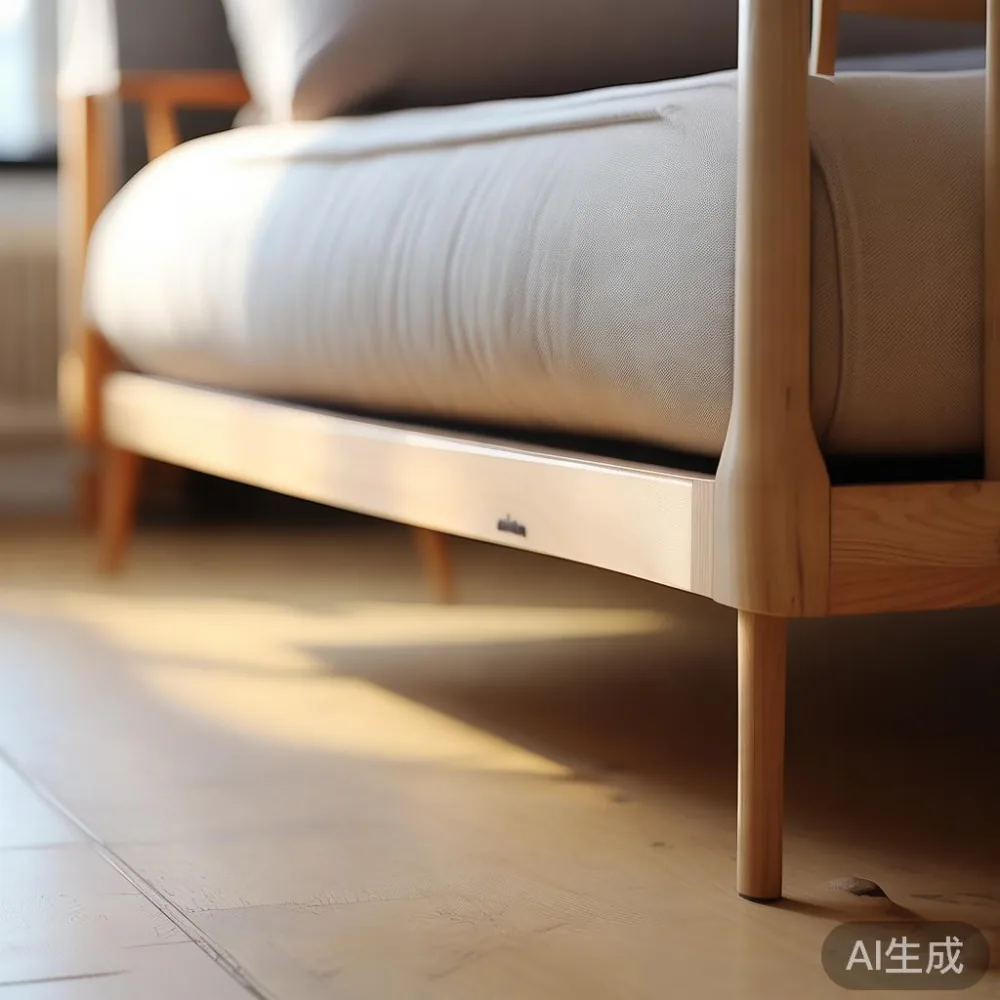
This guide focuses on one unusual but real purchase situation: a sofa intended more as a display or architectural feature than as everyday seating. In a compact HDB flat or condo in Tampines, Bedok, or Punggol, such a piece can still work beautifully if you check access, dimensions, materials, and visual proportions before the order leaves the warehouse.
Why would anyone buy a sofa they cannot sit on?
Some sofas are purchased as sculptural centrepieces, reception furniture, or occasional seating in a larger room. A low bench sofa, a tightly upholstered settee, and a decorative chaise can all look sophisticated while remaining less practical for daily use. There is nothing wrong with that, provided the purchase is deliberate and the space is large enough for the piece to breathe.

I visited a client’s new three-bedroom condo in Punggol last month to review a cream boucle sofa with a dramatically curved back. It looked wonderful in the render, but the 17 cm armrest sat above the natural elbow line, and the seat depth of 68 cm meant shorter users had to slide forward. The client had already placed it in a bay beside the television, where a daily user would have needed to twist sideways to reach the console.
That experience changed the practical test. We moved the sofa 24 cm away from the wall, removed one loose cushion, and compared it with a firmer 54 cm-deep seat. The curved version remained the preferred display piece, but it was no longer pretending to be the main seat. This distinction—display furniture versus everyday seating—is worth writing on your order notes.
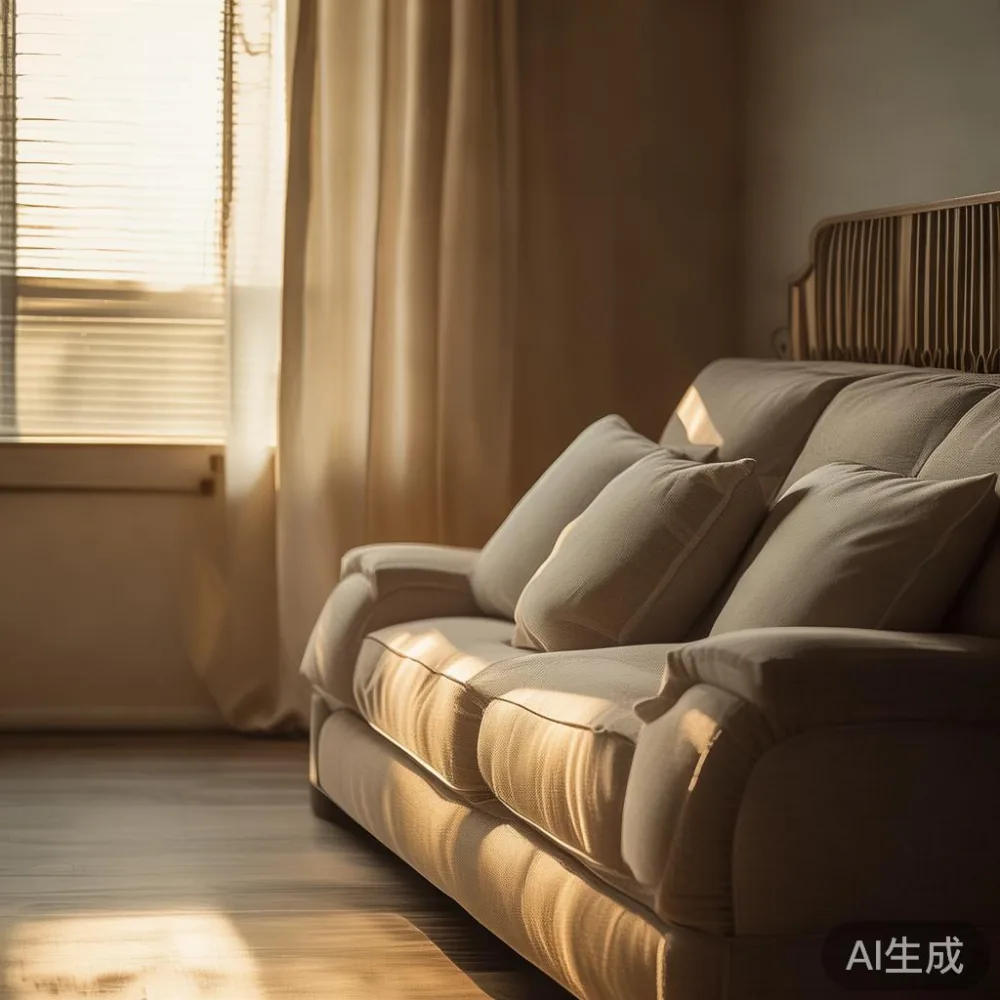
A headboard offers a useful design parallel. A headboard can define a bed visually without being the place where you sit for hours. Likewise, a sculptural sofa can anchor a room without carrying every family member. Light-luxury design should still respect posture, circulation, and the way people actually live.
What dimensions should you measure before the sofa arrives?
Measure the room, the intended position, and every route to it. Record the sofa’s total width, depth, height, seat height, armrest height, and internal seat width in centimetres. Do not rely only on a photograph or a scaled drawing on a screen.
For a typical HDB living room, leave at least 75 cm between the front of the sofa and a coffee table, allowing 60 cm for a person to pass while another person sits. A walkway behind a sofa should generally remain at least 60 cm wide; 90 cm is more comfortable in a busy condo. If the sofa is for display rather than sitting, these clearances still prevent it from becoming an obstruction.
Check your lift and corridor before ordering. In many Singapore developments, the lift door may be 80–90 cm wide and the lift car may measure roughly 130 cm deep by 110 cm wide. A sofa wider than 80 cm may require its back or arms to be detached. A corridor turn can be tighter than the straight access, so photograph the doorway, lift landing, corner turns, and stairs.
Ask the supplier for the packed carton dimensions, not just the assembled dimensions. A 210 cm sofa may enter a lift diagonally, while a 235 cm sofa may not. Also check whether the carton can fit into the HDB flat’s main door, usually about 90 cm wide, and whether the landing turns allow the carton to pivot. Request a delivery plan with a stated delivery window of 7–14 days after dispatch, and confirm who handles damage claims if the lift corridor is tight.
Will the sofa actually be usable, even if it is mainly decorative?
Sit on it. Do not merely look at it. A sofa intended for display still needs enough support for occasional use, whether that is a 15-minute conversation, a short rest, or a place to put on shoes.
Check these practical limits:
- Seat height: Compare the compressed seat height with the distance from the floor to your knee. A height of 40–43 cm suits many adults; lower seating can feel elegant but may be difficult for users over 65.
- Seat depth: A usable seat generally measures 52–58 cm deep. A deeper 60–70 cm display sofa may leave the backrest beyond your shoulder blades unless an extra cushion supports the body.
- Internal width: Two people need at least 110–120 cm of usable width for comfortable occasional sitting.
- Armrest height: An armrest around 58–63 cm may support the forearm, while one above 68 cm can feel unusually high.
- Back angle: Look for a slight 100–110 degree recline for a relaxed seat. A nearly vertical back is suitable for brief display use but tiring for prolonged sitting.
- Floor clearance: A frame lifted 15–18 cm above the floor can make a slim sofa look lighter, but very low legs may complicate cleaning beneath the piece.
Sit for 10 minutes without moving, then sit for another 10 minutes while reading a phone. If you change position every 2 minutes because the seat has no lumbar support, treat that as a comfort limitation rather than a minor preference. The buyer should be able to state whether the sofa is suitable for 15-minute, 30-minute, or all-day use.
Can the sofa fit the room without flattening the composition?
In a compact Singapore interior, a large sofa can swallow the entire wall. A statement sofa should be large enough to establish proportion but not so large that the television, balcony door, or dining zone becomes cramped. Scale matters more than a product label. A 190–210 cm sofa can work in a 3.5-by 4.5 m living room if it is placed against the longest usable wall; the same piece may feel excessive in a 3-by 3.5 m room.
Compare the sofa width with the television cabinet, console, or window recess. Leave 10–20 cm of visual breathing room when possible, unless the design intentionally aligns with surrounding joinery. The height should also relate to nearby pieces: a very tall back can compete with a ceiling fan, while a low back may leave an awkward gap above the sideboard.
For material and colour testing, view the fabric in daylight for at least 15 minutes. Singapore’s humidity and strong indirect light can make warm neutrals look different from showroom photographs. Request fabric composition, Martindale abrasion rating, cleaning code, and resistance information. For homes with children or pets, a rating of 30,000+ cycles is more practical than a delicate decorative weave rated below 15,000.
Light-luxury styling can make such a piece easier to integrate. French light luxury often pairs curved upholstery with cream, taupe, or muted blush tones. American light luxury uses broader proportions, relaxed cushions, and warmer woods. Post-modern light luxury may introduce geometric forms, unexpected lines, or a single contrasting accent. The style should support the room’s architecture, not replace it.
How do you check the frame, suspension, and finish before paying?
Look for a frame construction you can understand, not vague claims about “premium” materials. A kiln-dried solid wood sofa frame should identify the timber, such as rubberwood, ash, beech, or another suitable hardwood, and explain whether the internal structure uses solid timber, plywood, or a combination. Ask for the frame warranty in years and confirm what is covered. MIDHILL provides a 10-year structural warranty, which gives buyers a more concrete point of reference than a general promise of durability.
Suspension can make or break the experience. Pocket springs may provide a firmer, more tailored feel, while webbing offers a different response. Foam density matters too: a seat foam around 35–45 kg/m³ can balance support and comfort, but the design still needs testing. No material specification can compensate for an ergonomically unsuitable shape.
Inspect the finish under magnification. On solid wood components, look for controlled grain, smooth edges, and consistent joinery. For upholstered pieces, check seam alignment, piping, cushion gaps, and whether the fabric is pulled evenly around the frame. Decorative sofas with tight curves should have seams reinforced at high-stress points.
Also ask about service over time. A sofa may need re-tightening, cushion rotation, or fabric cleaning after 5–7 years. MIDHILL offers lifetime refinishing for its relevant solid wood furniture, a useful model for long-term ownership. If your room also contains a bed frame with a headboard, a dining table, a wardrobe, a nightstand, or a marble table, coordinate the finish samples rather than ordering from several disconnected palettes.
What if the lift and corridor make delivery difficult?
Access is part of the product purchase, not an afterthought. Ask the seller whether delivery includes carrying the sofa to the door, carrying it into the flat, and placing it in the intended room. Each step can carry a different risk and fee. A 6-person lift with an internal width below 110 cm may require a sofa to be separated into modules; check that every component can be handled without damaging the upholstery.
Photograph the lift plate, door dimensions, corridor widths, turns, and the route to the flat. Note the ceiling height at the lift landing and at the final doorway. If the route includes a 90-degree turn, do not assume the sofa’s longest dimension can be tilted around it. A supplier familiar with Singapore access should be willing to discuss carton dimensions and assembly before dispatch.
Confirm the delivery method in writing: kerbside delivery, room-of-choice placement, or full assembly. Ask whether stairs attract an additional charge and whether the delivery team can remove packaging. Packaging should protect corners, seams, and legs during a journey of several kilometres through lift lobbies and corridors.
Budget for the total ownership cost. A sofa priced at SGD 1,850 before GST becomes SGD 1,982.50 at 9% GST; adding a SGD 120 delivery surcharge produces SGD 2,102.50. A smaller sofa at SGD 1,450 plus GST is SGD 1,580.50, but only if its dimensions suit the room and access route. The least expensive quotation is not automatically the most economical choice.
How should you compare a Japanese sofa with an Italian light luxury sofa?
Japanese sofa vs Italian light luxury sofa is less a question of nationality than a question of proportion, comfort, and visual impact. A Japanese-inspired sofa often uses a low profile, straight lines, restrained joinery, and tactile upholstery or wood details. An Italian light luxury sofa usually leans toward sculptural curves, generous upholstery, and a stronger presence in the room.
Compare both options using the same measurements: external width, seat depth, compressed seat height, arm height, frame material, suspension, fabric specification, warranty, and packed dimensions. If you are also researching under 2000 Japanese furniture, consider the entire room rather than judging a photograph in isolation. A lower Japanese-style seat may pair naturally with a solid wood bed frame and simple headboard.
For a broader reference, top 10 Japandi furniture lists can help identify shapes, but measurements should still come from the actual retailer. Likewise, wholesale Italian light luxury furniture may offer broader fabric selection, yet a decorative Italian silhouette may occupy more floor space and require wider lift access than a modular Japanese design.
Look at the sofa in a room-sized photograph with your own television cabinet and rug. Ask to see a physical swatch, then compare it beside a dining table in the same finish. If you plan to add a marble table nearby, check whether its veining competes with the upholstery pattern. If the bedroom needs storage, a guide on how to style European wardrobe in bedroom can help coordinate colour without forcing every item into one style.
What should you do before placing the order?
Create a one-page purchase record with the room dimensions, access measurements, sofa dimensions, intended seating time, comfort notes, material details, warranty period, delivery scope, and total cost in SGD. Mark any unresolved issue rather than relying on verbal reassurance.
Confirm that the selected finish is the one shown on the physical sample, that replacement cushions are available, and that the frame warranty covers the parts you expect. If the sofa is for occasional use, state “display and occasional seating” clearly in the notes. That prevents misunderstandings about a high arm, firm seat, or decorative depth.
Check the return policy before ordering. MIDHILL allows returns within 14 days and provides free shipping on orders over US$350, with pricing shown in the product’s currency. International freight terms do not automatically cover the final step into a Singapore flat, so verify the local delivery scope separately.
Finally, buy the piece only after testing it. If you cannot sit on it in the showroom, arrange a material sample and a detailed demonstration. Some furniture is meant to be admired, and some is meant to carry a family through a long evening. The practical skill is knowing which one you are buying—and making sure its dimensions, access requirements, and honest purpose suit your home.