What to Check Before Buying a Sofa You Cannot Sit On: A Singapore HDB and Condo Guide
I want to begin with a confession: almost every sofa I have ever fallen for was the one I never got to sit on. Last month I visited the MIDHILL showroom in Foshan with a Singaporean buyer from Tampines, and within eight minutes she had picked out a 2.4-metre ash-wood three-seater with a tufted headboard-style back panel, simply because it photographed beautifully in the showroom corner. The sofa never made it past her HDB corridor. The delivery crew turned the men — actually two — the sofa back to the warehouse because the lift opening at her Block 642 was 79 cm wide, and the sofa frame was 86 cm at its deepest. That single afternoon in a single conversation taught me more about sofa shopping than any fabric swatch card.
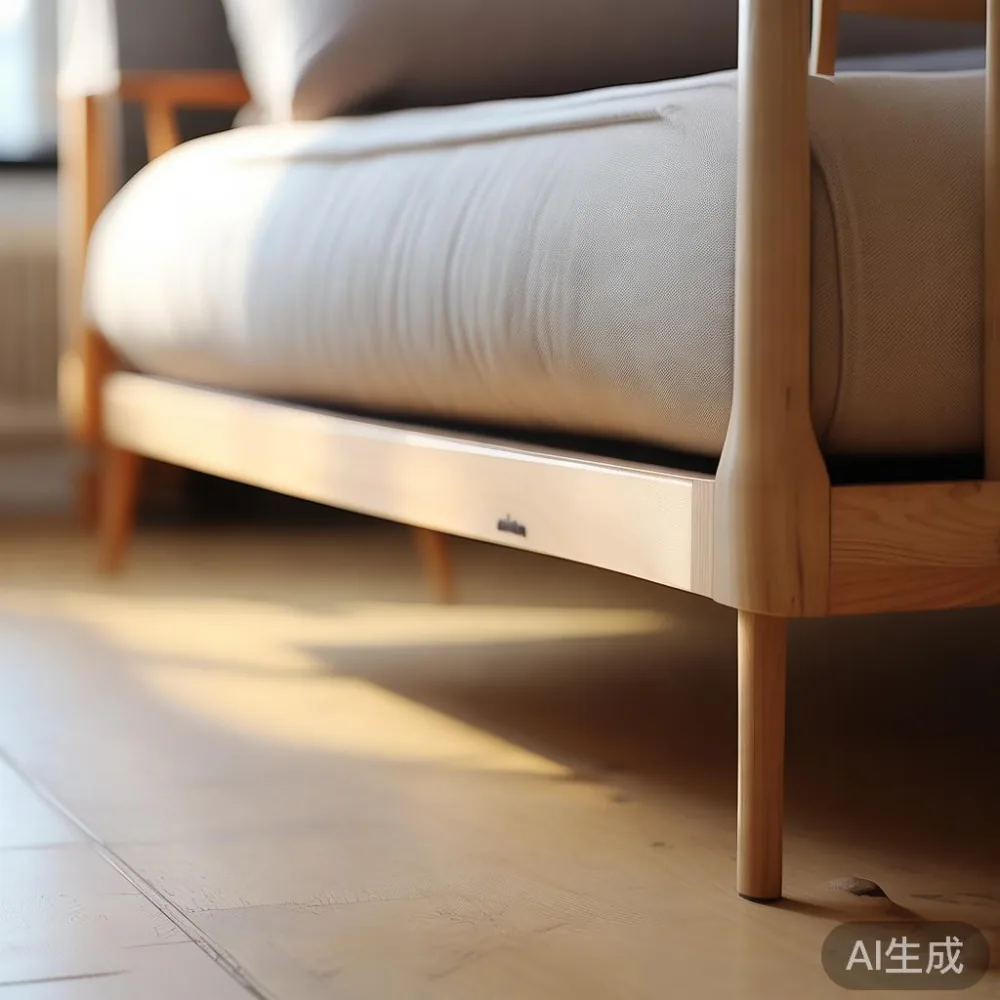
Buying a sofa in Singapore is a geometry problem, a building-management problem, a GST problem, and a style problem rolled into one. This guide covers what to check before you commit, with measurements in centimetres, weights in kilograms, prices in SGD, and references to Tampines, Bedok, and Punggol flats where the corridors are narrow, the lifts are tight, and the rules are strict.
How wide is too wide? Measure your lift, your corridor, and your doorway before you fall in love
Standard Singapore HDB lift cabins measure roughly 1.1 m deep by 1.4 m wide at the door, with an opening of about 0.8 m to 0.9 m. Newer BTOs in Punggol (post-2018) sometimes run to 1.2 m by 1.6 m. Private condo service lifts in Bedok-area projects such as those along Upper Changi Road typically allow 1.3 m by 1.8 m, but only after you book a delivery slot and lay protective sheeting. Your corridor bend matters too: many older Tampines blocks have an L-shaped corridor where the inside corner radius is roughly 1.5 m. If the sofa depth plus the frame thickness plus two deliverymen's shoulders exceeds your tightest turn, you have a problem on your hands.

Take three numbers before you shop:
- Lift door width (cm)
- Lift cabin depth and width (cm)
- Diagonal of any tight corridor corner (cm)
A solid wood sofa frame is rigid. Unlike a flat-pack bed frame that bends, a hardwood sofa cannot be folded, tilted more than a few degrees, or partially disassembled by the delivery crew. A 2.2 m American light luxury three-seater I measured weighed 78 kg, and the back cushion alone weighed 9 kg. The MIDHILL team in Foshan keeps every frame dimension on a spec sheet because they have shipped enough to Singapore to know what gets stuck.
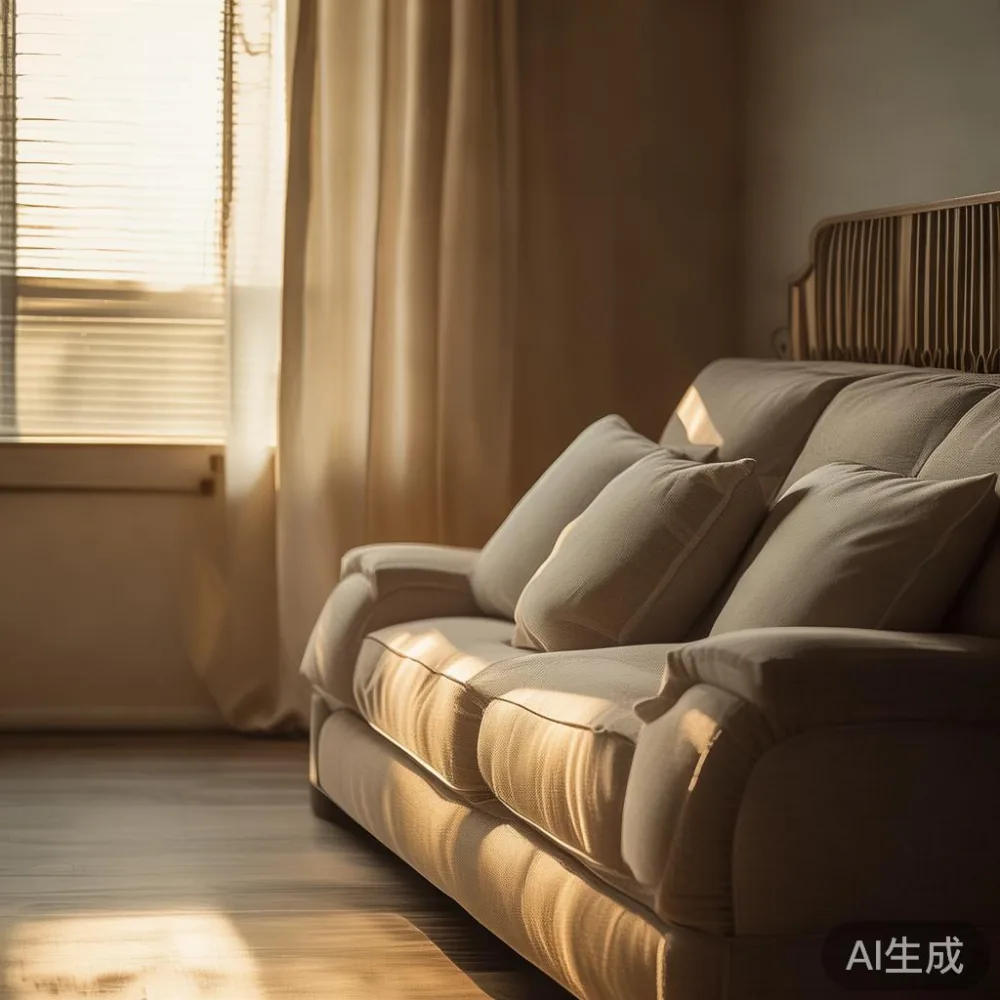
Will the sofa actually fit through your door, and what about the headboard-style backrest?
This sounds obvious, yet it is where most Singaporean buyers fail. Measure the door, measured from the outer edge of the frame to the inner edge of the opposite wall after the door is open at 90 degrees. A 0.9 m door with the door itself open gives you roughly 0.78 m of clear passage. A 2.1 m long sofa will not go through straight; it has to be tilted, and tilting exposes the highest point of the frame, which is often the top of the backrest.
This is where the headboard-style backrest causes real trouble. Some light-luxury and post-modern light luxury designs copy the tall upholstered headboard look on a sofa, pushing the back height to 95 cm or even 1.05 m. When tilted, the diagonal of a 95 cm back on a 90 cm deep seat is roughly 1.31 m. That is taller than many HDB room doors. If your door frame is only 2.0 m high, you have to remove the door from its hinges before delivery, which most condo managements in Punggol and Sengkang will not allow for a non-renovation contractor.
A simple rule: take the sofa length and the sofa height, square each, add them, and take the square root. If that diagonal exceeds your door-frame height by less than 5 cm, you will need to remove the door. If it exceeds by more, the sofa will not enter vertically at all.
How much weight can your floor take, and how much will the delivery fee be after GST?
A solid wood sofa with a marble table accent (a common pairing in French light luxury collections) can weigh 90 kg to 140 kg for a three-seater. Add the packaging, and you are pushing 160 kg. HDB flats handle this without concern on the main floor, but if you live above the 15th storey in a Punggol BTO, check your block's floor load rating — most are 1.5 kPa for living areas, which is fine for a 140 kg sofa spread across 2.5 square metres.
Now the cost question, because it is rarely just the sticker price. The 9% GST applies to imported furniture at the Singapore border. A sofa tagged USD 65 0 at a Foshan exporter works out to about SGD 1,120 landed before delivery. Sea freight to Singapore takes 12 to 18 days, then port handling and a customs broker fee of around SGD 80 to SGD 150. Delivery from the Singapore warehouse to your Tampines flat adds SGD 60 to SGD 120 depending on the floor and whether a lift booking is included. MIDHILL quotes free shipping above US$350, which lands at roughly SGD 470, so a single sofa clears the threshold — but a sofa, a bed frame, and a dining table bought together is the only way to reach free shipping on lighter items like a nightstand.
What should I check on the frame, the joinery, and the warranty terms before I pay?
This is the part most buyers skip, and it is the part where a Singapore-friendly exporter earns it. SQM Every frame should arrive with a stamp or a saw listing. Ask for:
- Wood species written in latin (e.g., Fraxinus, the latin name for ash, vs. a vague "solid wood" label).
- Joinery method: mortise and tenon, dowel, or metal bracket?
- Moisture content: kiln-dried to 8 to 12 percent for tropical Singapore humidity.
- Finish type: water-based polyurethane, oil, or wax?
- Warranty terms in writing.
MIDHILL offers a 10-year structural warranty on its solid wood sofa frames and bed frames, plus lifetime refinishing on dining tables and wardrobes. Lifetime refinishing matters in Singapore: the UV index hits 11 in March, and a dining table within 1 m of an unshaded window will bleach within 18 months without a maintenance coat. A first coat, then a refresh every two years, keeps the colour honest.
14-day returns are useful, but read the small print. A returned sofa shipped back to China costs SGD 250 to SGD 400 in freight alone, and many exporters deduct that from your refund. A deposit kept at the Singapore warehouse, where you inspect before final payment, is worth more than any written promise. Ask your supplier whether they hold Singapore stock.
Where does a sofa sit beside the rest of the room — and why your headboard choice matters here?
A sofa and the room's headboard share a design language, and ignoring that link is how a flat ends up looking like a furniture catalogue thrown together by accident. If your bed has a French provincial headboard with cabriole weave, your sofa should carry the same curve language: rolled arms, a low back, turned wooden legs in walnut. If your bed has a tall channel-tufted headboard in post-modern light luxury styling, your sofa should mirror the channel lines and the same brass-tone feet. The two pieces will then read as one composition rather than two strangers in a 28-square-metre living room.
This is also why a sofa, a bed frame, a dining table, a wardrobe, and a nightstand should never be bought in five separate shopping trips. Buy them as a set, even if the set is from two different suppliers, so the wood tone, the leg profile, and the metal finish match. A 6-piece set from a Foshan exporter such as MIDHILL saves 12 to 18 percent versus buying piece by piece, because the factory bundles the shipment and the broker files one customs entry instead of six.
For Singapore-specific sizing, target a sofa depth of 85 to 95 cm, a length of 1.8 m for a two-seater in a small HDB living room (the typical 4-room flat in Bedok Reservoir has a living room of 3.2 m by 3.6 m), or 2.2 m for a three-seater in a Punggol 5-room flexi flat. Anything longer crowds the walkway between the sofa and the TV wall, which Singapore safety guidelines recommend at 90 cm minimum.
How do you match a sofa to French light luxury, American light luxury, or post-modern light luxury without buying a catalogue of regrets?
Three style families dominate 2025 and 2026 shipments to Singapore, and each behaves differently in a small flat.
French light luxury leans on curved silhouettes, soft linen-blend upholstery, and a brushed-brass leg. It photographs beautifully but eats space: the rolled arms add 12 cm on each side versus a straight arm. Choose a 1.9 m two-seater, not a 2.2 m, in a HDB 4-room flat. The trade-off is comfort — French frames usually sit softer, around 45 cm of seat depth, which suits Singaporean proportions.
American light luxury is bigger, boxier, and deeper — seat depths of 60 cm are common. It works in a Punggol or Sengkang condo where the living room runs 4 m by 5 m, but it overwhelms a 3.2 m by 3.6 m HDB. The upside is storage: many American frames hide a 120-litre under-seat bin, useful for storing the cover spare bedsheets and winter quilts Singaporean households rarely need but always seem to keep.
Post-modern light luxury is the in-between: cleaner lines than French, softer corners than American, often with a low channel-tufted back that nods to the headboard trend. It is also the easiest to mix with a marble table — a round 90 cm Carrara-look top on a brushed-gold base reads as a deliberate pairing rather than a mismatch.
If you are weighing a European light luxury sofa against a Nordic sofa, the real question is the third one — climate. Nordic aniline leather cracks below 20 percent humidity, and Singapore sits at 70 to 80 percent year-round. European light luxury finished in PU or corrected-grain leather handles the humidity, but still needs a dehumidifier within 2 m during the December monsoon. Nordic fabric sofas breathe better but stain faster; choose a removable, washable cover if you have young children or a cat that thinks the armrest is a climbing post.
What about light luxury pieces under 2000 Coastal furniture styles for the dining area?
If your budget is under 2000 Coastal furniture for the dining zone — a phrase Singaporean condo owners search for when they want a Hamptons look without the Hamptons price — focus on three items. A 1.6 m solid oak dining table with an extension leaf runs SGD 480 to SGD 650 from a Foshan factory. Six rattan-back chairs in a coastal whitewash finish cost SGD 25 to SGD 45 each in a factory direct buy, or SGD 240 to SGD 380 landed as a set of six. A 1.2 m sideboard in the same oak with two drawers and two woven rattan doors closes the look for SGD 350 to SGD 500. Total: SGD 1,070 to SGD 1,530 before GST and delivery, comfortably under the 2000 Coastal furniture ceiling for the dining zone alone.
A side note on rattan and Singapore humidity: rattan wicks moisture. Buy only kiln-dried rattan with a marine-grade varnish, and keep the dining area air-conditioned when you are not home. A friend in Bedok learnt this the hard way — her SGD 220 rattan chair set moulded within four months of the December rains because she had them beside an unventilated balcony door.
How do you style a French provincial bed, and what does that have to do with your sofa?
Anyone searching how to style French provincial bed in apartment usually wants the curved headboard, the soft linen, the turned walnut legs — and they want it in a 12-square-metre bedroom that a Parisian would call a closet. The trick is proportion: pick a queen bed frame with a headboard no taller than 1.2 m (a 1.5 m tall headboard swallows a small bedroom), choose legs that lift the frame 18 cm off the ground so storage baskets slide underneath, and keep the side tables low at 55 cm so they do not compete with the headboard. A French provincial wardrobe in the same walnut, with the same cabriole legs, anchors the opposite wall. If you are researching how to style French provincial wardrobe in room, the same rule applies: the wardrobe should match the bed's leg height within 1 cm and share the same wood tone within a shade.
When the bed and wardrobe match, your sofa can step back into a supporting role. A simple two-seater in oatmeal linen with brushed-brass feet echoes the wardrobe hardware. Avoid a third piece of French furniture in the living room — two is a statement, three is a costume.
What is the right way to plan a wardrobe upgrade alongside the sofa purchase?
If you are hunting the best Modern wardrobe for 2026 or the best Japanese wardrobe for 2026, treat the wardrobe as the anchor piece of the bedroom and let the sofa respond. Modern wardrobes tend toward flat panels, push-to-open doors, and a height of 2.4 m floor-to-ceiling — useful in a Punggol BTO with the standard 2.55 m ceiling height. Japanese wardrobes favour sliding doors (a 2.4 m wide Japanese wardrobe in a 3 m wall needs only 1.2 m of clearance to slide both panels), open internal shelving, and a lighter oak tone that suits Singapore's bright flats.
Either way, measure the wall, not the catalogue photo. A 2.4 m wardrobe sounds compact until you stand it next to a 1.8 m bed and realise the wardrobe is wider than the bed is long. Centre the wardrobe on the wall, leave 60 cm of breathing room on each side, and keep the bed 90 cm away from the wardrobe doors so you can open them fully. A nightstand between bed and wardrobe completes the set.
What are the real hidden costs Singaporean buyers forget?
Three costs appear on invoice day that almost no one budgets for.
First, the import permit. Singapore requires a Customs Permit for any goods above SGD 400 in value. The permit itself is SGD 10.88, but the broker fee is SGD 80 to SGD 150, and that fee repeats for every consolidated shipment. Buy a sofa, a bed frame, and a dining table together and you pay one permit; buy them separately and you pay three.
Second, lift booking and management fees. Many Punggol and Sengkang condos charge SGD 50 to SGD 150 for a delivery lift booking outside of office hours, and some refuse weekend bookings entirely. Book at least 14 days ahead or you will pay a premium.
Third, disposal of your old sofa. HDB charges SGD 25 to SGD 60 for a bulky item removal depending on the town council. Tampines and Bedok use a different vendor from Punggol; check your town's schedule.
A realistic landed budget for a 2.2 m solid wood sofa with a French light luxury finish, delivered to a 12th-storey HDB in Tampines, including GST, permit, broker, lift booking, and old-sofa disposal: SGD 1,650 to SGD 2,100. A matching 1.6 m dining table with six chairs adds another SGD 1,100 to SGD 1,500. A queen bed frame with a channel-tufted headboard adds SGD 950 to SGD 1,400. A 2.4 m Modern wardrobe adds SGD 1,800 to SGD 2,600. A nightstand pair costs SGD 220 to SGD 380.
A full five-piece set sits between SGD 5,720 and SGD 7,980 — a number worth knowing before you walk into any showroom.
Are there quick questions to ask the showroom salesperson before you sign anything?
Yes, and these six will save you the most money.
- What is the cubic-metre volume of the packed sofa, and does it fit a 20-foot container door of 2.33 m by 2.59 m?
- Is the wood kiln-dried, and what is the moisture reading on the spec sheet?
- What is the warranty in writing, and does it cover joint loosening under tropical humidity?
- What is the delivery timeline to Singapore, and is there a buffer for Chinese New Year (midhillco typically extends lead times by 10 to 14 days from late January to mid-February)?
- What is the return policy, and who pays the return freight?
- Does the supplier hold Singapore stock, or is every order made-to-order from Foshan?
Ask all six. Take notes. A salesperson who answers the first five with numbers, not adjectives, is a salesperson worth trusting with your sofa.
A final checklist before you click pay
Measure the lift door, the lift cabin, the corridor corner, and the room door. Square the sofa length and the sofa height, take the square root, and confirm the diagonal fits your door frame. Check the floor load if you live above the 15th storey. Confirm the wood species, the joinery, and the moisture content. Ask for the warranty in writing, including the 10-year structural cover that exporters such as MIDHILL publish openly. Budget for GST, broker fees, lift booking, and disposal. Match the sofa to the headboard in the bedroom so the flat reads as one home, not five catalogues stapled into a corridor.
Buying a sofa you cannot sit on is, in the end, a discipline problem rather than a taste problem. Get the numbers right, and the style will follow. Get the style right without the numbers, and you will be measuring your lift door at 11 pm while the delivery truck idles downstairs. Singapore does not give second chances on a sofa that does not fit. Measure twice, order once, and sit down only after the frame is in the room where you planned it to live.