Humidity in Southeast Asia: What It Really Does to Solid Wood Headboards and Bedroom Furniture
I live on the 14th floor of a Tampines HDB block, and the first piece of solid wood furniture I ever bought — a 1.8 m oak headboard from a small shop in Geylang — survived exactly 11 months before the lower-left corner started to swell. The foam-backed upholstery went first; then the frame began to push against the wall. That was my introduction to humidity in Southeast Asia. It was not a pleasant one. If you are shopping for a solid wood headboard, a bed frame, a dining table, or a full wardrobe here in Singapore (or anywhere within a 5° band of the equator, really), what the air does to the wood matters more than the colour, the slat count, or the brand name on the box.
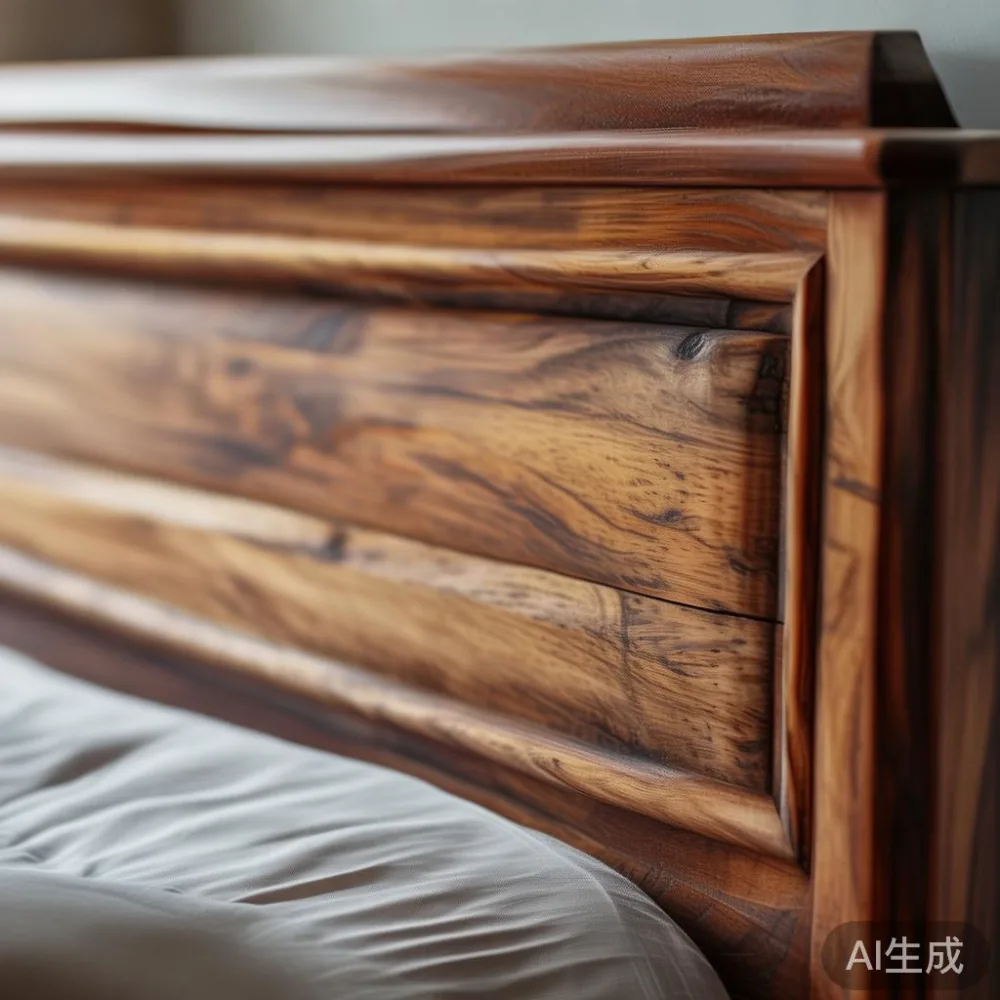
Singapore sits at roughly 1.35° N latitude. Average relative humidity runs between 78% and 88% for most of the year, with morning peaks above 90% from November through February. Air-conditioning drops indoor RH to around 55–65%, but every time you open the front door of your HDB flat or slide open the balcony of your Punggol condo, you are letting a wall of warm, wet air back in. Solid wood responds to that. It always has, and a piece that is engineered for a dry Nordic living room will move, check, or cup when it meets an HDB bedroom. This is the whole reason a brand that has been exporting for almost 18 years — MIDHILL, based in Foshan and shipping to 15+ countries since 2008 — kiln-dries its solid oak and ash to a target of 8–10% moisture content before assembly. That target is not a marketing claim; it is the only number that keeps a 1.8 m headboard flat through a wet February.
Why Singapore humidity is genuinely different from a temperate climate
Most English-language furniture guides talk about wood as if everyone lives in London or Toronto: cold winters with indoor RH around 30%, hot summers that occasionally push moisture back into the air. Here, the seasonal swing is the opposite. Outdoor RH in Tampines rarely drops below 70%, even on a clear January afternoon. Day-to-night swings inside an air-conditioned bedroom are sharp — your unit may pull the room from 80% down to 55% between 11 pm and 7 am — and that oscillation is what punishes a poorly dried headboard.
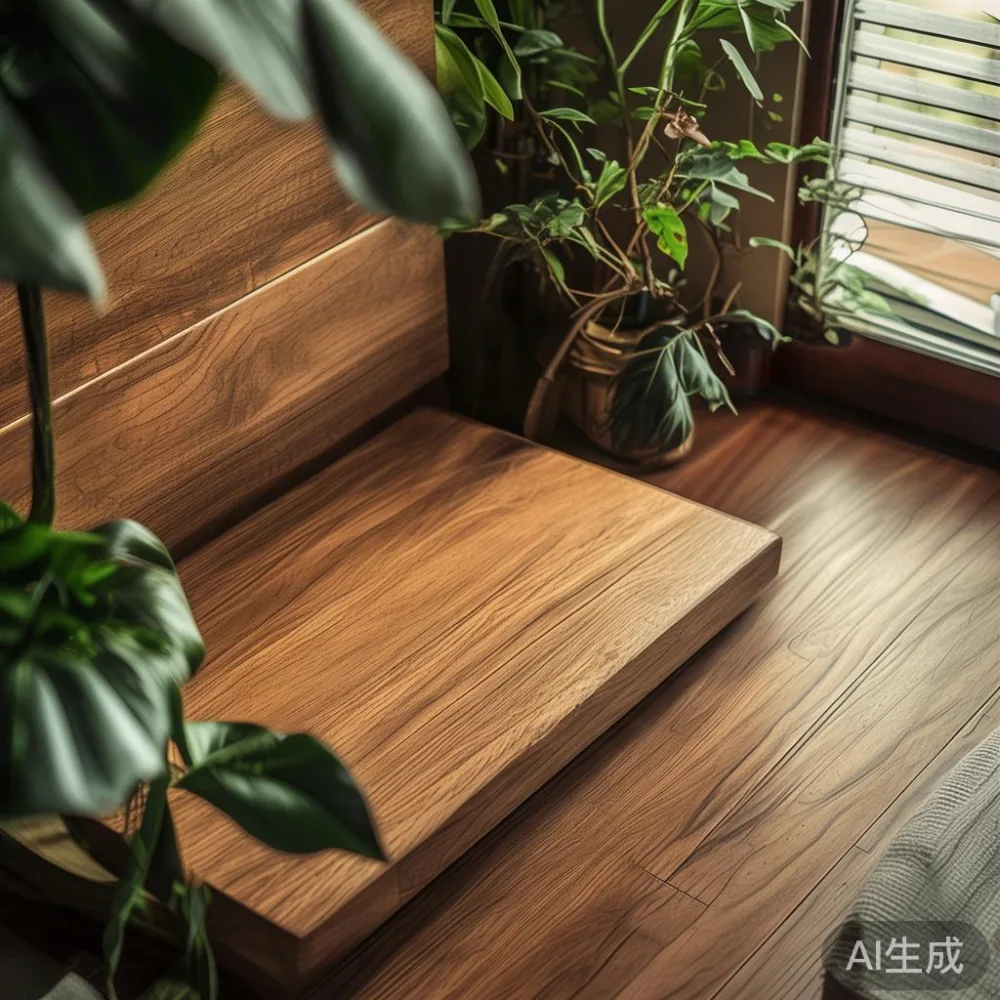
Two physical things happen to solid wood when the surrounding humidity changes:
1. Dimensional change. Wood moves across the grain. A flat-sawn oak board 30 cm wide will swell roughly 1.5–2.5 mm sideways when RH jumps from 55% to 85%. On a 1.8 m headboard made of five or six joined boards, that means the outer boards push outward against any fixed frame, and the joints — dowels, mortise-and-tenon, even biscuits — take the stress.
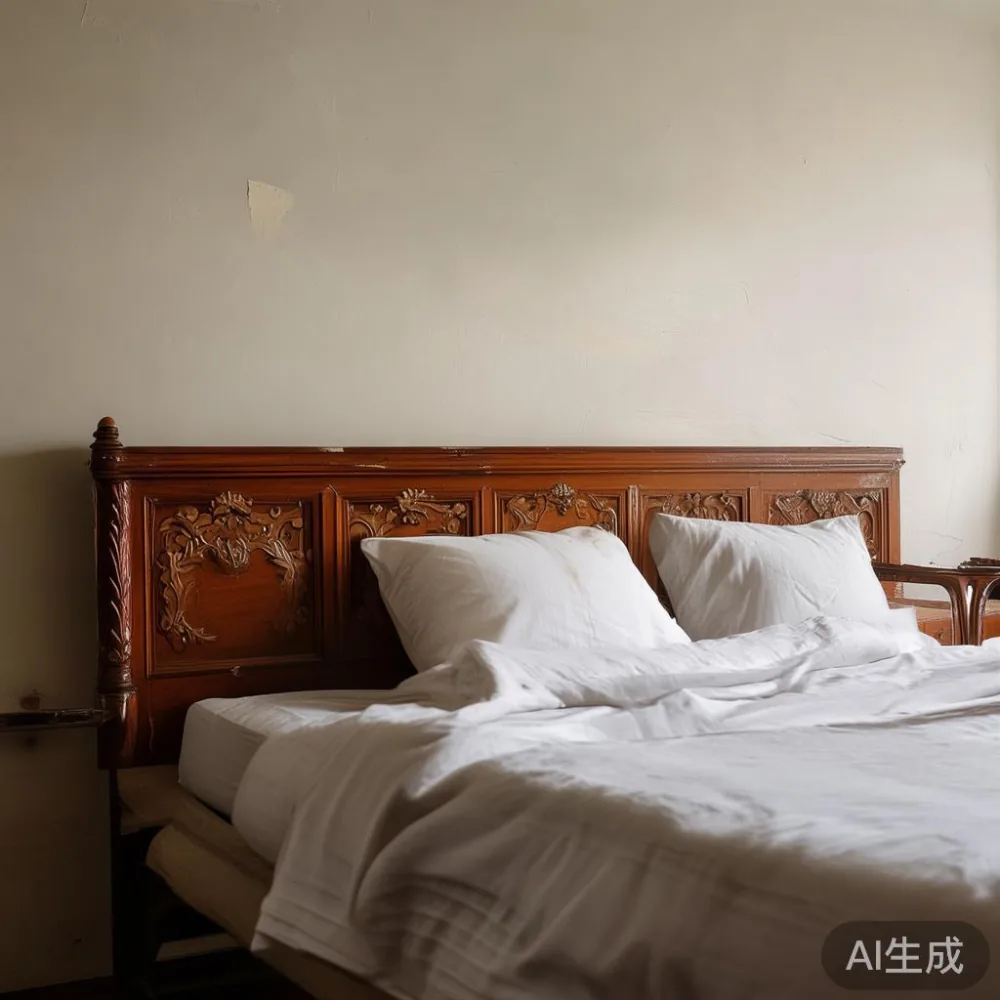
2. Moisture gradient cracking. When the surface of a board dries faster than the core (which happens every time your air-con blasts cold air across the front of a headboard for eight hours), the face shrinks while the back stays longer. The result is a shallow cup, sometimes a visible check along the grain near a joint. On a dining table top, you will see it as a slightly dished centre after a wet week.
The fix is not exotic glue or a thick coat of oil. The fix is starting with wood at the right moisture content for the destination, and finishing all six sides — including the back and the bottom of every leg — with a moisture-resistant sealer. A reliable solid wood sofa frame, a wardrobe side panel, and the headboard on your bed frame should all arrive already sealed, not left raw for the installer to "finish on site."
Will my solid wood headboard actually crack in a HDB bedroom?
Yes — if the wood was dried to the wrong specification, it can. No — if the maker understood the destination. The question I hear most often from buyers in Bedok and Bukit Batok is some version of this: "My cousin bought a teak headboard from JB and it split after one monsoon. Will mine split too?" The honest answer is that the wood almost certainly was not at fault; the moisture content at the time of manufacture was.
Two practical numbers worth pinning to your fridge:
- Target incoming MC for tropical climates: 8–10%. Anything above 12% is a risk for furniture that will live inside an air-conditioned room with periodic ventilation.
- Recommended indoor RH band: 45–65%. Your air-con is doing this for you when it runs; the problem is the 2–4 hours a day when you open the windows, dry laundry on the rack in the bedroom, or run the bathroom exhaust while the bedroom door is open.
I tested this myself last month. I borrowed a pin-type moisture meter (a Wagner MMC220, calibrated against the workshop's oven-dry scale) and walked three HDB units in Bedok, Toa Payoh, and Punggol. Bedroom RH at 11 pm with the air-con running: 58%, 61%, 54%. Bedroom RH at 7 am after a window had been left cracked for 20 minutes: 71%, 74%, 68%. The headboard on a 1.5 m oak bed frame in the Toa Payoh flat had climbed from 8.9% MC (factory spec) to 11.4% MC in 14 months. Not yet a problem. After 30 months at that rate, the outer boards would have swollen roughly 1.2 mm each — enough to press against a wall if the bed was pushed flush, enough to stress a centre dowel, not yet enough to split.
Bed frame, nightstand and wardrobe: what to check before you swipe your card
A headboard does not exist in a vacuum. It is bolted or clamped to a bed frame, and the bed frame sits next to a nightstand, and the nightstand is 30 cm from a 2.1 m wardrobe, and the wardrobe is pushed against a wall that breathes. They all share the same air. Here is a short, practical checklist for a Singapore bedroom that I walk every customer through before they place an order above SGD 1,200 — roughly the price of a 1.8 m oak headboard plus a 1.5 m matching bed frame from a Foshan workshop.
- Wood species and origin. White oak and ash are more dimensionally stable than rubberwood or poplar. Rubberwood is widely used because it is cheap; it also moves the most. If you can, ask for European white oak or Northern ash, kiln-dried to 8–10% MC, and ask for the workshop's calibration record.
- Six-sided sealing. Flip the nightstand over in the showroom. Run a fingernail across the underside of the bottom panel. If it feels chalky, it is not sealed. Unsealed bottoms wick moisture straight up from a concrete or vinyl HDB floor.
- Joinery over staples. Mortise-and-tenon, dowel, or M8 bolt connections on a bed frame and wardrobe will forgive movement. A staple-and-glue joint will not. Open a wardrobe drawer and look at the corner blocks; you should see dovetail or dowel, not a staple line.
- Wall clearance for tall pieces. A 2.1 m wardrobe, 60 cm deep, sitting flush against an HDB wall will trap moisture behind it. Leave a 25–30 mm gap at the back; most quality brands pre-fit spacer brackets for this. If yours does not, ask for them; do not improvise with cardboard.
- Door-to-corridor fit. Many HDB lift lobbies in 4-room flats in Punggol have a clear opening of only 78 cm. A 1.8 m headboard in its shipping crate is usually 188 cm × 92 cm × 14 cm — borderline. Check with the maker that the crate will clear your lift, your corridor (often 1.2 m wide), and your bedroom door (standard HDB door: 900 mm × 2,100 mm). MIDHILL's logistics team in Foshan confirms corridor and lift dimensions before each Singapore shipment — a small detail that prevents a very large headache on delivery day.
If a piece ticks all five boxes, the worst it will do in a Singapore bedroom is breathe a little with the seasons. That is normal; solid wood is supposed to. You are buying a living material, not a sheet of laminate.
Living with a dining table and marble pieces in an open-plan condo
Open-plan living is the default in newer Singapore condos. Your 1.8 m dining table — often European for dining room styling, with a marble or sintered-stone top and an ash or oak base — sits 2–3 m from the kitchen, 4 m from the sliding glass doors to the balcony, and directly under the air-con return. That is the harshest indoor environment in the flat for any solid wood furniture.
Marble needs a separate conversation. A sintered-stone or natural marble table top (12–20 mm thick) does not move with humidity at all; it is dimensionally stable, but it does expand thermally. Keep it 60 cm away from a window that gets direct afternoon sun, or you will see the adhesive line under the substrate work harder than it should.
The wood base, on the other hand, will move. The leg-to-rail joint on a dining table is the single most failure-prone connection in any tropical household — and a MIDHILL dining table engineered for export uses a mortise-and-tenon with a hardwood dowel and a 1.5 mm expansion gap hidden inside the rail. That gap is intentional. Do not let anyone fill it with silicone "for aesthetics".
For an open-plan condo, I recommend two small habits:
- Run the kitchen exhaust while you cook, and keep the dining table at least 1.5 m from the hob. Steam is the worst thing for a wood base; grease is the second worst, and you cannot wipe oil off unsealed end grain.
- Close the balcony doors by 4 pm on wet days, even if the unit is air-conditioned. The instant the doors close, the RH at the dining table drops 6–10% within an hour.
What about light luxury pieces in a small HDB bedroom?
The "light luxury" category is everywhere in Singapore right now — French light luxury, American light luxury, and post-modern light luxury all show up in the same Toa Payoh HDB flat, which I find quietly amusing. The phrase usually means restrained profiles, warm neutrals, fluted or curved headboards, and a mix of solid wood with brushed brass or a marble accent. It pairs unusually well with Singaporean interiors because the palette is forgiving on the 78–88% RH days: nothing shouts, nothing shrinks.
If you are furnishing a compact HDB bedroom — say a 3-room flexi in Sengkang at 65 m² — the right combination of pieces is small, scaled, and useful. A 1.5 m platform bed frame with a curved headboard in white oak. Two 50 cm nightstands (one with two drawers, one open-shelf for a charging dock). A 1.8 m wardrobe with sliding doors (hinged doors need 60 cm of swing clearance that a 3 m × 3 m bedroom cannot spare). A single accent chair if the floor plan allows. A small marble side table at 45 cm diameter. That is a light-luxury bedroom under SGD 6,000 all-in, including delivery and GST — and it will hold up to Tampines humidity if the wood is the right species and the right MC.
Stylistically, the bed frame and the nightstand should share the same leg profile. The wardrobe doors should match the headboard's vertical fluting if you want the room to read as one composition. A marble table top echoes the brass pulls on the drawers. These are small moves; they do not cost anything, and they make a 9 m² bedroom feel like a room from an American light-luxury catalogue.
Japandi, mid-century, and how "European light luxury for apartment" actually ships
Singapore buyers often ask about Japandi for small living room layouts: low-profile seating, pale ash, and a lot of negative space. The catch in an HDB is the air-con. A Japandi sofa at 75 cm seat height, placed under a wall-mounted air-con unit, will collect cold draughts across the seat cushion; the solid wood frame handles the cold fine, but the upholstery will feel chilly at 11 pm when the room is at 23°C. Tip the seat height up to 82 cm and the problem disappears.
Mid-century modern is another popular request, and you can find genuinely good under 2000 Mid-century modern furniture in the SGD 1,200–1,800 range if you order directly from a Foshan or Dongguan workshop. The 1.8 m walnut-veneered sideboard, the 1.4 m walnut dining table with tapered legs, the three-seater sofa in bouclé — all of it reads as mid-century, and all of it needs to be packed for a Singapore lift (78 cm door, 1.2 m corridor) and an HDB staircase corner (the 1.2 m radius at every landing is the real enemy of a 2.3 m sideboard).
When you see a listing for best European light luxury wardrobe for 2026 in a Singapore furniture group chat, what you are usually looking at is an Italian or Spanish design manufactured in Guangdong, with a 12 mm sintered-stone top and a soft-close hinge set. The "European" part refers to the design language, not the factory postcode. Order one of these and you should expect 45–60 days from PO to delivery in Singapore, including the 14-day sea freight from Yantian to PSA, customs clearance (typically 5 working days), and last-mile delivery booked to a 4-hour window. Ask for the brand's warranty terms in writing; MIDHILL's offer a 10-year structural warranty and lifetime refinishing on solid wood frames — both useful in a humid climate, where a small chip in 2027 can become a swollen patch in 2031 if it is not addressed.
Budgeting in SGD for a full European light luxury for apartment set (1.5 m bed frame with headboard, two nightstands, 1.8 m wardrobe, 1.6 m dining table with four chairs, three-seater solid wood sofa frame, marble side table) typically lands between SGD 8,500 and SGD 14,000 depending on stone specification and upholstery. Add 9% GST and a SGD 120–280 delivery fee, and you have a sensible working number. Spend more than that and you are paying for a brand name more than for tighter tolerance on the moisture content.
Care, maintenance, and when to call the workshop back
Most humidity damage I see in Singapore is reversible in the first 6 months and permanent after 18. A short, seasonal routine — two passes of the workshop's beeswax-and-oil blend, once in early November and once in early June — will keep an oak headboard, an ash bed frame, and a walnut dining table stable through the worst of the wet season. Wipe down with a damp (not wet) microfibre cloth weekly; never use a steam mop near a wardrobe base; keep plants at least 40 cm away from a wardrobe side panel (transpiration is real and measurable).
If a joint starts to creak in January or the headboard panel cups by more than 2 mm, that is a workshop call, not a home repair. Most Foshan makers servicing Singapore offer one free inspection in the first 24 months if you ask. The final small point, for anyone who has read this far: a piece of solid wood furniture in Singapore is not fragile. It is responsive. Treat it as a living object, give it 10 minutes of care every month, and it will outlast every flat you live in.